
Syndicated Loans Market Insights 2025–2035: Leveraged Finance, Infrastructure Funding, and Corporate Borrowing
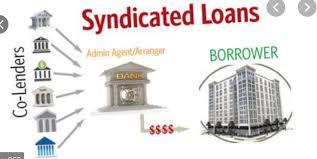
The administrative burden of managing large-scale, multi-lender credit portfolios has historically been a slow, paper-heavy process prone to operational friction. Settlement times for secondary market loan trades can frequently stretch into weeks, tying up vital institutional capital and creating unnecessary counterparty risks. To combat these inefficiencies, forward-thinking financial networks are increasingly piloting distributed ledger technology, smart contracts, and cloud-based portfolio management platforms. Digitizing the underlying documentation and automating payment distributions can drastically accelerate settlement times, reduce administrative overhead, and provide all syndicate participants with an unalterable, real-time record of loan balances and compliance statuses. For a closer look at the empirical metrics and technological benchmarks driving this ongoing operational modernization, explore the comprehensive resources within the Syndicated Loans Market Data.
By replacing legacy email-and-spreadsheet workflows with integrated digital ecosystems, agent banks can instantly process complex interest rate calculations across multiple tranches and currencies. Smart contracts can be programmed to automatically adjust interest margins the moment a certified sustainability or financial metric is uploaded to the ledger. This level of automation minimizes the potential for human error and eliminates the frequent disputes that arise over covenant interpretations or payment timelines. As regulatory bodies continue to demand faster reporting and greater operational transparency, the widespread adoption of secure, scalable digital ledger systems is rapidly becoming an industry standard, ensuring that global corporate credit networks can operate with unprecedented speed, accuracy, and security.
Why do secondary market trades of large corporate credit facilities historically take weeks to settle? Settlement delays stem from the heavy reliance on manual administrative verification, customized legal documentation, and the need for agent bank approvals for every transfer of ownership. This creates operational bottlenecks that slow down capital reallocation.
How can smart contracts automatically enforce financial covenant adjustments within a digital loan platform? Smart contracts can pull verified financial data via secure digital feeds. The moment a borrower's debt-to-equity ratio or carbon output crosses a pre-negotiated threshold, the code automatically recalculates the applicable interest margin and updates the payment schedule without manual intervention.
➤➤➤Explore MRFR’s Related Ongoing Coverage In Semiconductor Industry:
Magnetic Proximity Sensors Market
Material Jetting Process 3D Printing Market
Medium Voltage Electric Drives Market
Merchant Banking Services Market
Microelectronics Cleaning Equipment Market

 English
 Arabic
 French
 Spanish
 Portuguese
 Deutsch
 Turkish
 Dutch
Dutch
 Italiano
 Russian
 Romaian
 Portuguese (Brazil)
