
Smart Plug Market Share Analysis: Leading Companies and Strategic Developments
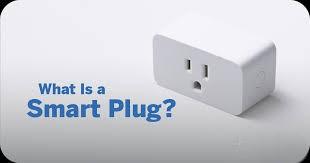
Data-focused group discussions spend considerable time analyzing the massive streams of telemetry information generated by millions of connected home devices worldwide. Participants discuss how aggregated, anonymized energy consumption data provides utility companies with unprecedented real-time insights into grid demand patterns. This detailed information allows power companies to optimize electricity distribution, balance peak loads, and plan infrastructure upgrades with high precision. Group members debate the ethics of data collection, examining the fine line between helpful grid optimization and invasive corporate surveillance of household habits. The conversation emphasizes that if managed responsibly, the data collected from automated home hardware can accelerate the integration of renewable energy sources into municipal grids. These discussions show that the true value of home automation extends far beyond simple personal convenience, serving as a vital data source for building smarter, more resilient public infrastructure.
Translating raw technical information into clear, actionable business strategies requires a reliable source of aggregated industry data. Utilizing centralized Smart Plug Market Data clearinghouses allows researchers to spot hidden correlations between changing weather patterns and consumer power consumption habits. Group members often discuss how utility companies use these data points to design localized rebate programs that encourage consumers to buy energy-efficient automation hardware. This corporate collaboration creates a win-win scenario where utilities reduce strain on the power grid while hardware manufacturers enjoy a steady bump in sales. By analyzing these data patterns, group participants gain a clear perspective on how data sharing drives mutual growth across both public utilities and private consumer technology sectors.
How can anonymized home energy data help public utility companies integrate solar energy? By revealing exact daytime energy consumption patterns, the data helps utilities calculate precisely how much solar energy needs to be stored in batteries versus distributed directly to active households.
What privacy techniques are used to ensure individual household habits are not exposed? Manufacturers use data aggregation and differential privacy algorithms, which scramble individual user details and group data into large regional blocks to hide specific household activities.
➤➤➤Explore MRFR’s Related Ongoing Coverage In Semiconductor Industry:
Inertial Systems Land Based Applications Market
Inertial Systems Transportation Market
Insurance Bpo Services Industry Market
Integrated Quantum Optical Circuit Market
Intellectual Property Fraud Market
Internet Of Things Iot In Bfsi Market
Lab Automation In Genomic Market

 English
 Arabic
 French
 Spanish
 Portuguese
 Turkish
 Dutch
Dutch
 Italiano
 Russian
 Romaian
 Portuguese (Brazil)
 Greek
Greek
