
Combining Function, Finish, and Fit in Machined Metal Components
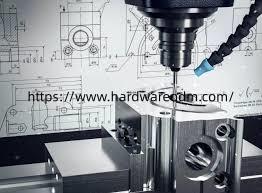
Metal components often need to perform several roles within a finished product, from supporting connected parts to providing a carefully shaped interface for assembly. Their usefulness depends not only on the selected material but also on how accurately the required features are created. For product developers, CNC Metal Machining brings together digital design, cutting tools, material behavior, and manufacturing planning to turn a concept into a practical component. Understanding these elements helps buyers assess whether a machined part can meet the needs of its application and integrate smoothly with the surrounding structure.
Material choice influences how a component responds during machining and throughout its working life. Steel is often selected for parts that need to maintain structural integrity, while stainless steel may be suitable when corrosion resistance or a particular surface appearance is important. Aluminum can be attractive for applications where lower weight and efficient machining are considerations. Other metals may be chosen for specific functional or environmental needs. Buyers should evaluate the material in relation to the component's purpose, its contact with neighboring parts, and the conditions in which it will be used. A material that is suitable in isolation may not be the best choice for the complete assembly.
Selecting a machining solution begins with understanding the part's function. A component used as a mounting interface may require carefully positioned holes and contact surfaces, while a housing may need internal spaces that accommodate other elements. Buyers should identify which features are essential, which surfaces are visible, and how the part will be installed or serviced. Drawings, CAD files, physical samples, and assembly references can help communicate these requirements. It is also useful to discuss the expected production context, since a design intended for a one-off prototype may be approached differently from a part that will be manufactured repeatedly.
The technical process starts with translating a digital design into a machining plan. CNC equipment follows programmed tool paths to remove material and create the intended geometry. Depending on the component, milling, turning, drilling, or other machining operations may be used. Tool selection, workholding, cutting sequence, and access to different surfaces all influence the process. A well-planned sequence can reduce unnecessary repositioning and help maintain consistency between related features. Machining strategy should therefore be considered alongside the part design rather than treated as a separate step after the geometry has been finalized.
Design for manufacturability is particularly valuable when a component includes complex contours, narrow recesses, or features that must align with other parts. Some shapes may be difficult to reach with a cutting tool, while certain transitions can require additional operations. Manufacturing engineers can review the design and identify practical alternatives that preserve the intended function. Simplifying a feature where appropriate may reduce process complexity without changing how the component performs. Early communication between designers and manufacturers can help resolve these issues before production begins and make sample evaluation more productive.
The user experience of a machined component is often visible in the way it fits and feels within a finished product. Smoothly finished edges can make parts easier to handle during assembly, while consistent interfaces can help components connect without unnecessary adjustment. For products that users touch directly, surface texture and edge treatment may influence comfort and perceived quality. Machined parts can also support maintenance when their features allow convenient access to fasteners or connected components. Evaluating a sample within the intended product helps reveal whether the design works in practice, beyond what can be understood from a drawing.
Appearance remains an important consideration for visible metal parts. Machining can create clean lines, defined contours, and functional surface details that contribute to a product's overall character. Additional finishing processes may change the texture, color, or protective qualities of the surface. The appropriate choice depends on the material, environment, and desired visual effect. A refined appearance should be coordinated with functional needs, since a surface finish must remain suitable for handling, assembly, and ongoing use. When appearance and practicality are considered together, the component can support the design language of the complete product.
Yongkang Ruizan Industry and Trade Co., Ltd. is a potential partner for businesses exploring customized metal hardware and machined components. Buyers can discuss material preferences, component geometry, assembly interfaces, surface finishing, and inspection expectations to clarify their project requirements. Sharing design files or sample references can help establish a common understanding of the intended part and its role within the finished product. Further information about the company's products and services is available at https://www.hardwareodm.com/product

 English
 Arabic
 French
 Spanish
 Portuguese
 Deutsch
 Dutch
 Italiano
 Russian
 Romaian
 Portuguese (Brazil)
 Greek
