
NDT Testing Kit: A Guide for Australia Industry
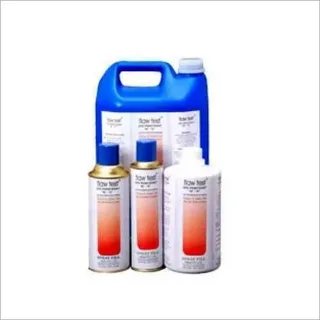
Quality, safety, and reliability are major priorities for Australia industries. From manufacturing plants and construction sites to oil and gas facilities, companies need dependable ways to check materials and components without causing unnecessary damage. A properly selected NDT Testing Kit can help inspection teams identify certain defects, assess material conditions, and make better-informed maintenance decisions while keeping the inspected component intact. For businesses working with valuable equipment, that can be a practical way to support quality control and reduce avoidable downtime.
An NDT Testing Kit brings together tools and materials used for non-destructive testing, a group of inspection methods designed to examine materials, components, and structures without destroying their intended usefulness. Depending on the method, a kit may help technicians identify surface-breaking cracks, evaluate internal conditions, or inspect components for other relevant discontinuities. The right setup depends on the material, component design, inspection objective, applicable standards, and the level of expertise available to perform the work.
For Australia businesses, choosing inspection equipment is not simply about finding the lowest price online. A suitable NDT Testing Kit should match the actual inspection requirements, provide consistent results when used correctly, and come with clear product information. A low-cost purchase may look attractive at first, but missing accessories, unsuitable materials, unclear instructions, or inadequate training can create additional costs later. A little research upfront can help companies avoid that headache.
Why Non-Destructive Testing Matters in Australia
Australia has a diverse industrial economy that includes manufacturing, transportation, energy, mining, construction, and infrastructure maintenance. These sectors regularly use metal components, pressure-related equipment, structural materials, pipelines, machinery, and fabricated parts that may require inspection throughout their service life. An NDT Testing Kit can support inspection activities by giving qualified personnel access to tools suited to specific testing methods.
One major advantage of non-destructive testing is that it allows certain defects to be investigated without cutting apart or permanently damaging the component. This can be especially useful when inspecting expensive machinery, welded structures, production parts, and equipment that businesses need to keep in service. An appropriate NDT Testing Kit can therefore contribute to maintenance planning, production quality checks, and documented inspection programmes.
Non-destructive testing can also help businesses identify potential issues before they develop into larger operational problems. For example, a surface inspection may reveal a crack that needs further evaluation. An ultrasonic examination may help investigate internal discontinuities in a suitable material. However, no single NDT Testing Kit can identify every possible defect in every material. The inspection method must be selected according to the component, the expected flaw type, and the required level of examination.
Understanding the Main Types of Non-Destructive Testing
Different non-destructive testing methods serve different purposes. Before purchasing an NDT Testing Kit, businesses should understand what each method can and cannot detect. Choosing equipment without understanding the inspection process can lead to unsuitable purchases and unreliable conclusions.
Dye Penetrant Testing
Dye penetrant testing is commonly used to identify discontinuities that are open to the surface of suitable non-porous materials. The method involves applying a penetrant to a clean surface, allowing it to enter surface openings, removing excess penetrant according to the procedure, and applying a developer when required. The developer helps draw penetrant back out of discontinuities so that relevant indications can be observed.
A Dye Penetrant Inspection Kit may include cleaner, visible dye penetrant, developer, and supporting accessories. The exact contents vary by manufacturer and product configuration, so buyers should check the product description rather than assume every kit includes the same items.
Dye penetrant testing is useful for many non-porous materials, including certain metals and other compatible surfaces. However, it does not detect discontinuities that are fully below the surface and have no opening to the surface. Surface condition also matters: coatings, dirt, oil, roughness, and unsuitable materials can interfere with the process. An NDT Testing Kit designed for penetrant inspection should be selected with these limitations in mind.
Liquid Penetrant Testing
Liquid penetrant testing is a widely used method for finding surface-breaking discontinuities in suitable non-porous materials. It relies on the ability of a liquid penetrant to enter small openings on the surface through capillary action. After excess penetrant is removed using the specified process, the inspection may reveal relevant indications during the examination stage.
Liquid Penetrant Testing Equipment generally includes the consumable products required for the chosen penetrant process. Depending on the system, this may involve cleaner or remover, penetrant, developer, and related application materials. Buyers should confirm that the products are compatible with one another and appropriate for the intended inspection procedure.
A reliable NDT Testing Kit for liquid penetrant work should be evaluated based on more than the number of cans or accessories included. Product instructions, material compatibility, application requirements, storage conditions, and inspection conditions all matter. Dwell time, removal technique, and development time should follow the manufacturer's instructions and the approved inspection procedure rather than an arbitrary timetable.
Ultrasonic Testing
Ultrasonic testing uses high-frequency sound waves to examine material conditions. A transducer introduces sound energy into the test material, and the equipment analyses returning signals to help identify relevant features or discontinuities. Depending on the technique and setup, ultrasonic testing can be used to investigate certain internal defects, measure thickness, and assess components in a range of industrial applications.
An Ultrasonic Testing Kit may include a flaw detector or thickness gauge, probes, cables, couplant, calibration blocks, and other accessories. The required configuration depends on the inspection task. For example, thickness measurement and weld inspection may require different equipment capabilities, probes, and procedures.
An ultrasonic NDT Testing Kit should be selected with careful attention to material type, component geometry, thickness range, probe compatibility, calibration requirements, and operator qualifications. Ultrasonic inspection is not a simple plug-and-play process. Reliable interpretation depends on suitable calibration, a well-developed technique, and personnel who understand the limitations of the method.
Magnetic Particle Testing
Magnetic particle testing is used to identify surface and near-surface discontinuities in ferromagnetic materials. The component is magnetised, and magnetic particles are applied to the inspection area. Discontinuities can disturb the magnetic field and cause particles to gather in patterns that may indicate a relevant flaw.
A magnetic particle NDT Testing Kit may include magnetic particles, application equipment, lighting, and magnetising tools, depending on the method and product configuration. Some inspections use visible particles, while others use fluorescent particles under suitable UV-A lighting conditions.
This method is not suitable for every material. It is generally intended for ferromagnetic materials, so it is not an appropriate choice for many non-ferrous metals. Businesses should confirm material compatibility and inspection requirements before investing in magnetic particle equipment.
Visual Inspection
Visual inspection is often an important part of an overall non-destructive testing programme. It involves examining a component or surface for visible conditions such as corrosion, deformation, surface damage, poor workmanship, or other observable concerns. Depending on the task, inspectors may use lighting, mirrors, magnification tools, cameras, or measuring devices.
A visual inspection NDT Testing Kit may be relatively simple compared with equipment used for ultrasonic or magnetic particle testing. However, the method still requires a defined inspection scope, suitable viewing conditions, trained personnel, and clear acceptance criteria. Visual inspection can provide useful information, but it should not be treated as a replacement for another method when the inspection requirement calls for deeper examination.
Essential Components of an NDT Testing Kit
The contents of an NDT Testing Kit depend on the inspection method and intended application. Some kits are designed for a specific testing process, while others are assembled around a particular inspection task. Understanding the components helps buyers compare products accurately and avoid paying for accessories they do not need.
For penetrant inspection, a kit may include cleaner, penetrant, developer, application materials, and instructions. Some products are supplied in aerosol containers, while others use different packaging formats. Buyers should confirm the intended sequence of use and whether the consumables are compatible with the surface material and inspection procedure.
For ultrasonic work, an NDT Testing Kit may include an instrument, one or more probes, connecting cables, couplant, calibration accessories, and a carrying case. The instrument's display, measurement range, data storage options, and probe compatibility may be important depending on the work being performed.
For magnetic particle inspection, the required components may include magnetising equipment, particles, application accessories, and suitable lighting. Additional equipment may be necessary for specific techniques or inspection environments. Businesses should compare the complete setup rather than relying on a short product title.
Documentation is another important part of an NDT Testing Kit purchase. Product instructions, technical data sheets, safety information, calibration information where applicable, and maintenance guidance help users understand how to operate and care for the equipment. Missing documentation can make it harder to establish a consistent inspection process.
How to Choose the Right NDT Testing Kit
Choosing the right NDT Testing Kit starts with identifying the inspection problem. Businesses should establish what material needs to be examined, what type of discontinuity is relevant, whether the expected defect is surface-breaking or internal, and what the inspection procedure requires. These details help narrow down the suitable methods and equipment.
The first consideration is material compatibility. A penetrant product intended for suitable non-porous surfaces may not be appropriate for porous or contaminated materials. Magnetic particle testing is generally used on ferromagnetic materials. Ultrasonic testing depends on factors such as material properties, geometry, thickness, and the required inspection technique. A kit that works for one application may not be suitable for another.
The second consideration is the required inspection coverage. A business looking for surface-breaking crack detection may consider a penetrant inspection system. A company investigating internal discontinuities may need ultrasonic equipment or another suitable method. The NDT Testing Kit should match the inspection objective rather than being selected simply because it is advertised as an all-purpose solution.
The third consideration is ease of use and available training. Equipment should come with understandable instructions and appropriate technical support. More advanced instruments may require specific training and experience. Even a straightforward NDT Testing Kit can produce misleading results if users do not follow the correct process.
Finally, consider long-term operating costs. Consumables, replacement probes, calibration services, maintenance, training, and storage can affect the overall cost of ownership. Comparing these expenses before purchasing can help Australia businesses make a more informed decision.
Industries That Use NDT Testing in Australia
Non-destructive testing supports a wide range of Australia industries. The specific inspection method and NDT Testing Kit depend on the materials, equipment, operating environment, and applicable requirements in each sector.
Manufacturing and Fabrication
Manufacturers use inspection methods to assess components, fabricated parts, welds, and production quality. A suitable NDT Testing Kit may help inspection teams identify relevant surface or internal discontinuities before parts move to the next production stage. The appropriate method depends on the material and the type of defect being investigated.
Oil, Gas, and Energy
Energy-related facilities may involve pipelines, storage equipment, machinery, structural components, and other assets that require inspection and maintenance. An NDT Testing Kit can support selected inspection tasks, but the method must be appropriate for the component and the inspection programme. Businesses should follow applicable codes, standards, procedures, and site requirements.
Construction and Infrastructure
Construction and infrastructure projects may involve steel structures, welded connections, bridges, and other components where inspection can support quality assurance. Depending on the application, an NDT Testing Kit may be used as part of a broader inspection process to examine accessible surfaces or investigate internal conditions.
Mining and Heavy Equipment
Mining operations rely on machinery and structural components that can experience wear, fatigue, and demanding operating conditions. An NDT Testing Kit may support maintenance teams when checking suitable components for relevant discontinuities. The selected method should reflect the material, equipment design, and consequences of a potential failure.
Transportation and Automotive
Transportation and automotive manufacturers may use non-destructive testing to assess selected components, welds, and assemblies. A suitable NDT Testing Kit can form part of quality control or maintenance activities, provided that inspection procedures are established and results are evaluated by qualified personnel.
Equipment Quality, Accuracy, and Reliability
A good purchasing decision involves evaluating the quality and suitability of the NDT Testing Kit, not just its advertised features. Equipment should be appropriate for the intended method, supported by clear documentation, and capable of meeting the inspection procedure's requirements.
For instrument-based methods, buyers should review the instrument specifications, measurement range, probe options, calibration requirements, and available technical support. For consumable-based methods, product compatibility, shelf life, storage conditions, and application instructions deserve attention. A product that is unsuitable for the material or environment can create unreliable inspection conditions even when it appears well packaged.
Reliability also depends on the inspection process. An NDT Testing Kit does not independently guarantee accurate results. Equipment condition, calibration where required, surface preparation, environmental conditions, operator competence, and correct interpretation all influence inspection quality. Businesses should treat equipment as one part of a complete quality system.
It is also worth checking whether the supplier can provide technical information before purchase. Clear specifications and product documentation make it easier to compare options and confirm that the equipment matches the intended application. If important information is missing, buyers should ask questions before committing to an order.
What Affects the Cost of an NDT Testing Kit?
The price of an NDT Testing Kit can vary significantly depending on the testing method, equipment complexity, brand, included accessories, and intended application. A basic consumable kit may cost considerably less than an ultrasonic instrument package with specialised probes and calibration accessories.
The testing method is one of the biggest cost factors. A penetrant inspection kit may include a relatively small set of consumables, while an ultrasonic system may require electronic instruments, probes, cables, calibration blocks, and supporting accessories. A magnetic particle system may also involve additional equipment depending on the inspection technique.
The scope of supply is another factor. Two products described as an NDT Testing Kit may contain very different components. One may include only the main consumables, while another may provide application accessories, protective packaging, instructions, and other supporting items. Comparing product names alone is not enough to determine value.
Businesses should also account for recurring expenses. Consumables need replenishment, instruments may require maintenance or calibration, and personnel may need training. Shipping, taxes, import considerations, and delivery times can also affect the final purchasing cost for Australia buyers.
A price-conscious business should compare the total cost of ownership rather than focusing only on the initial purchase price. The most economical NDT Testing Kit is the one that meets the actual inspection requirement, provides suitable documentation, and avoids unnecessary spending on equipment that will not be used.
Choosing a Dependable NDT Equipment Supplier
Finding a dependable supplier is an important step when purchasing an NDT Testing Kit. Buyers should look for clear product specifications, transparent information about included components, accessible technical documentation, and realistic details about delivery and support.
A supplier should be able to explain what a product is designed to do and identify any important limitations. For example, a penetrant inspection kit should not be presented as equipment for detecting fully internal defects. Similarly, an ultrasonic system should not be assumed suitable for every material or component without checking its specifications and application requirements.
Australia businesses can include vanderstahl in their supplier research when comparing available inspection products and equipment information. Before purchasing an NDT Testing Kit, buyers should review the specific product details, confirm what is included, and ask any questions needed to establish suitability for their inspection process. This kind of careful comparison helps build confidence without relying on unsupported promises.
It is also useful to review the supplier's approach to customer communication. A clear response to technical questions, accurate product descriptions, and accessible documentation can make the buying process more straightforward. For industrial equipment, trust is built through reliable information and transparent expectations.
Common Mistakes to Avoid When Buying an NDT Testing Kit
One common mistake is choosing an NDT Testing Kit based only on price. While budget matters, the cheapest option may not include the accessories, documentation, or technical capabilities needed for the job. A product that cannot meet the inspection requirement is not a bargain.
Another mistake is assuming that all non-destructive testing methods do the same thing. Penetrant testing, ultrasonic testing, magnetic particle testing, and visual inspection have different capabilities and limitations. Selecting the wrong method can leave important defects undetected or produce results that are not relevant to the inspection objective.
Some buyers also overlook consumable compatibility. When purchasing a penetrant NDT Testing Kit, for example, users should check whether the cleaner, penetrant, and developer are intended to work together. Mixing unrelated products without confirming compatibility can compromise the inspection process.
Ignoring training is another avoidable issue. Even when equipment appears simple, users need to understand the procedure, surface preparation, environmental conditions, and interpretation requirements. Advanced inspection methods require appropriate competence and may involve formal qualification requirements.
Finally, businesses should avoid treating an inspection indication as an automatic pass-or-fail decision. An NDT Testing Kit helps produce information, but qualified personnel must evaluate the findings against the relevant acceptance criteria and applicable procedure.
Final Considerations for Australia Businesses
Selecting an NDT Testing Kit is an important decision for companies that rely on inspection to support product quality, equipment reliability, and maintenance planning. The right equipment depends on the material being examined, the type of discontinuity being investigated, the inspection environment, and the applicable procedures or standards.

 English
 Arabic
 French
 Spanish
 Portuguese
 Deutsch
 Turkish
 Dutch
 Russian
 Romaian
 Portuguese (Brazil)
 Greek
