
Aluminium Boat Building: Innovative Hull Structures for Better Stability
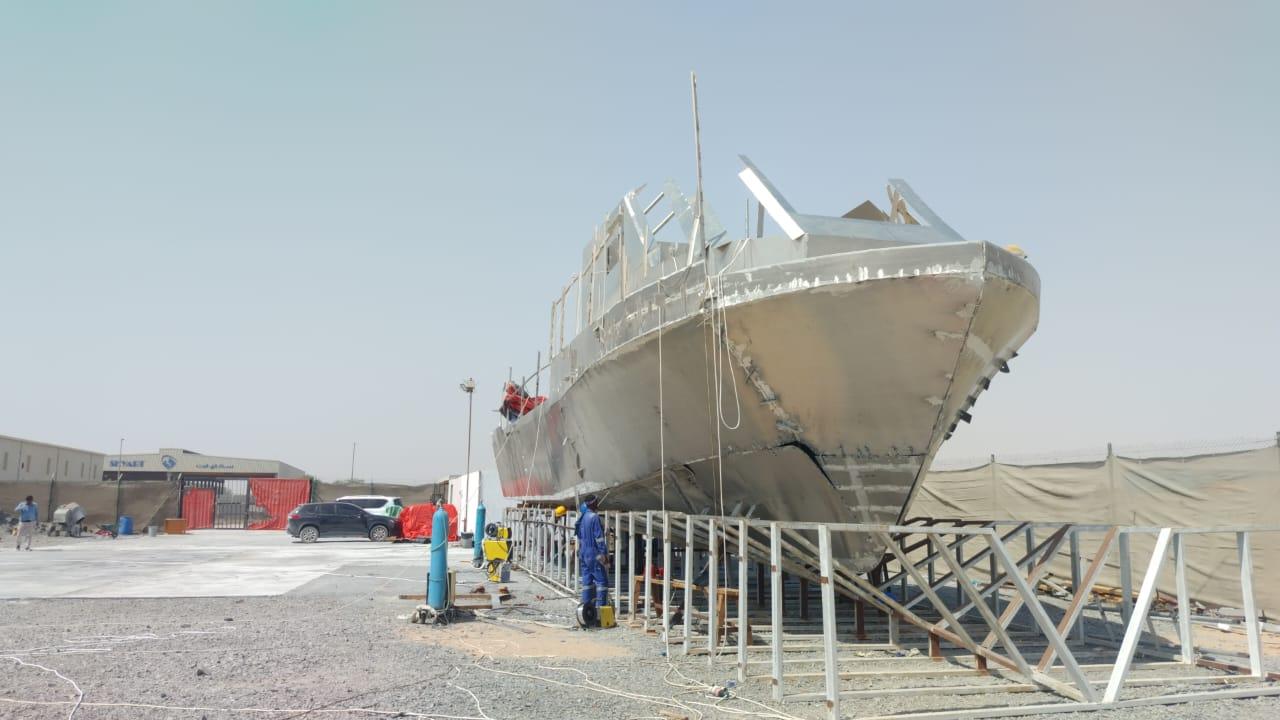
Modern boat design focuses on safety, durability, fuel efficiency, and reliable performance in different water conditions. One of the most important aspects of this process is hull design, as the hull directly influences how a boat floats, moves, and responds to waves. Aluminium boat building has become an important option for commercial marine operations because aluminium offers a useful combination of low weight, structural strength, and flexibility in fabrication.
Innovative hull structures help improve stability by controlling how a vessel distributes its weight and interacts with the water. From commercial transport boats to workboats and offshore support vessels, a well-designed hull can provide better balance, smoother movement, and improved operational efficiency. VU Marine recognizes the importance of modern marine engineering in developing vessels suitable for demanding working conditions.
Understanding the Importance of Hull Stability
Hull stability refers to a vessel's ability to resist unwanted tilting and return toward an upright position after being disturbed by waves, wind, or changes in loading. A stable boat is easier to operate and can provide a safer working environment for passengers and crew.
Stability depends on several factors, including hull shape, beam width, draft, displacement, the position of the centre of gravity, and the distribution of onboard equipment. Even a strong hull may perform poorly if its weight is distributed incorrectly.
The International Organization for Standardization published ISO 12217-1:2022, which provides methods for evaluating the stability and buoyancy of certain non-sailing boats with hull lengths generally ranging from 6 to 24 metres. The standard helps assess whether a vessel is suitable for its intended operating conditions. This demonstrates why stability must be considered during the design stage rather than only after construction.
Why Aluminium Is Suitable for Modern Hull Structures
Aluminium offers several advantages for marine construction. Its relatively low density allows designers to build lighter structures than comparable steel structures of similar volume, although the final weight depends on material thickness, reinforcements, welding, and the overall design.
A lighter hull can provide greater flexibility when allocating weight to engines, fuel systems, equipment, and payload. It may also help reduce the power required for certain operating profiles. However, these benefits depend on the vessel's complete design and cannot be guaranteed by material selection alone.
Another advantage is aluminium's natural oxide layer, which helps protect the metal from further corrosion. Marine-grade alloys, appropriate welding procedures, protective coatings, and careful management of contact between dissimilar metals remain necessary for long-term durability.
These properties make aluminium useful for vessels that require a balance of structural strength, manageable weight, and practical maintenance.
Innovative Hull Structures That Improve Stability
1. Wider Beam Designs
Beam refers to the maximum width of a boat. A wider beam can increase initial stability by changing how the hull responds when it tilts to one side. This can be particularly useful for workboats that carry equipment, transport materials, or operate in busy ports.
However, simply increasing width is not always the best solution. Excessive beam may increase water resistance, affect manoeuvrability, or create additional structural requirements. Designers must balance width, hull length, draft, speed, and operating conditions to achieve the desired performance.
2. Multi-Chine Hull Geometry
A chine is the area where two hull surfaces meet. Multi-chine structures use several angled surfaces instead of relying on a single smooth transition from the bottom to the sides.
This arrangement can help designers control the hull's shape and internal structure while creating practical surfaces for fabrication. Depending on the geometry, multi-chine hulls can also influence spray patterns, handling, and stability.
For commercial vessels, the main objective is to select a chine arrangement that matches the expected load, speed, and water conditions. Accurate calculations and testing remain essential because chine design alone does not guarantee better stability.
3. Catamaran Hull Configurations
Catamarans use two parallel hulls connected by a deck or supporting structure. The separation between the hulls creates a broad overall platform, which can provide strong resistance to rolling under suitable design and loading conditions.
This configuration can be valuable for passenger transport, marine research, and specialised working operations where deck space and platform stability are important.
Nevertheless, catamarans require careful evaluation of the interaction between their hulls, wave conditions, cross-structure strength, and weight distribution. Their performance differs from that of conventional single-hull boats, particularly in waves.
4. Reinforced Bottom Structures
The bottom of a boat experiences pressure from the water, impacts from waves, and loads generated during operation. Reinforcing this area with properly designed longitudinal and transverse members helps distribute loads throughout the structure.
Longitudinal stiffeners generally run along the length of the vessel, while transverse frames support the hull across its width. Together, they help maintain the intended hull shape and resist deformation.
The thickness and spacing of these components must be calculated according to the vessel's dimensions, design pressures, material properties, and intended service. Excessive reinforcement can add unnecessary weight, so structural efficiency is just as important as strength.
5. Balanced Hull Forms and Flotation Compartments
A balanced hull form distributes buoyancy in a way that supports the vessel's intended load and operating conditions. Designers consider the relationship between displacement, waterline shape, draft, and the position of the centre of gravity.
Watertight compartments can also help limit the spread of flooding if a compartment is damaged. Where appropriately designed, buoyancy arrangements may improve a vessel's ability to remain afloat after certain types of damage.
However, compartments must be correctly constructed, sealed, and maintained. Their presence does not automatically guarantee that a damaged boat will remain stable.
The Role of Weight Distribution in Stability
Hull geometry is only one part of stability engineering. The location of heavy equipment can significantly affect how a boat responds to external forces.
Heavy machinery, batteries, fuel tanks, and other major components are positioned with the centre of gravity in mind. Placing excessive weight high above the waterline can reduce stability, while unevenly distributed cargo may cause the boat to list to one side.
Fuel consumption and changing payloads can also alter the vessel's operating condition. For example, a commercial workboat carrying a full load of equipment may behave differently from the same boat operating with empty storage areas.
For this reason, stability calculations should consider several loading conditions rather than a single ideal scenario. Proper loading instructions and operational limits help crews use the vessel safely.
Statistics and Standards in Modern Boat Design
Marine engineering relies on measurable design limits and established assessment methods rather than appearance alone.
The following figures provide useful context for understanding stability requirements:
-
6–24 metres: ISO 12217-1:2022 primarily covers non-sailing boats within this hull-length range, subject to the standard's scope and exceptions.
-
Three main dimensions: Length, beam, and draft are fundamental inputs when evaluating hull geometry and displacement.
-
Four design categories: ISO 12217-1 uses categories A, B, C, and D to classify suitable operating conditions based on its assessment requirements.
These figures describe the framework of stability assessment; they are not performance guarantees or universal limits for every vessel.
The International Maritime Organization also addresses vessel stability through relevant safety instruments, including the International Code on Intact Stability, 2008, and applicable SOLAS provisions. The requirements depend on the vessel's size, type, use, and regulatory status.
Modern Fabrication and Digital Design Techniques
Computer-aided design software allows naval architects to develop hull shapes and examine how changes in dimensions affect a vessel. Engineering analysis can help evaluate structural stresses, buoyancy distribution, and potential areas of weakness before fabrication begins.
Digital cutting equipment can improve the accuracy of aluminium plate preparation, while controlled welding procedures help maintain structural quality. Careful alignment during assembly is particularly important because unwanted distortion can affect hull geometry and fit.
Where appropriate, computational fluid dynamics can help estimate water flow around a hull, while physical testing and sea trials provide additional information about real operating behaviour. These methods complement one another rather than replacing professional engineering judgement.
Experienced aluminium boat builders must combine accurate fabrication with a hull design that meets the vessel's practical operating requirements. Proper material selection, precise measurements, and quality control are essential for achieving consistent results.
Maintenance for Long-Term Hull Performance
Even a well-designed aluminium hull needs regular inspection. Owners and operators should check welds, structural members, protective coatings, bilge areas, and watertight closures for signs of damage or deterioration.
Corrosion should receive particular attention where aluminium contacts other metals or where moisture and deposits remain trapped. Suitable isolation materials and maintenance practices can reduce the risk of galvanic corrosion.
Changes to engines, deck equipment, passenger capacity, or cargo arrangements should also be reviewed because they may affect the vessel's weight distribution and stability. Significant modifications should be evaluated by a qualified naval architect, and stability information should be updated where required.
These practices help preserve structural integrity and ensure that the boat continues to operate within its approved limits.
Choosing the Right Boat Construction Approach
Selecting the right hull design depends on the vessel's intended purpose, operating environment, payload, speed requirements, and maintenance expectations. A boat designed for calm inland waters may need a different structure from one intended for offshore operations or challenging coastal conditions.
Reliable aluminium boats manufacturers consider these requirements before finalising hull dimensions, structural reinforcements, and fabrication methods. They must also account for applicable safety standards, loading limits, and the long-term needs of vessel operators.
A carefully planned design can help reduce unnecessary weight while maintaining sufficient strength. Equally important are inspections during construction and appropriate testing before the vessel enters regular service.
Conclusion
Innovative hull structures are essential for improving the stability, safety, and efficiency of modern aluminium boats. Wider beam designs, multi-chine geometry, catamaran configurations, reinforced bottom structures, and carefully arranged flotation compartments can all contribute to better performance when selected for the right application.
Successful design requires more than choosing a strong material. Hull geometry, weight distribution, structural reinforcement, fabrication quality, and stability assessment must work together. Relevant standards and practical testing help confirm that a vessel is suitable for its intended operating conditions.
VU Marine understands the importance of engineering-led marine solutions that focus on reliability, durability, and practical performance. A professional boat building company must combine appropriate material selection with thoughtful hull design, precise construction, and consistent maintenance to develop vessels that meet demanding marine requirements.
By applying these principles, the marine industry can continue developing aluminium vessels that deliver dependable performance, improved stability, and long-term value for commercial and specialised marine operations.

 English
 Arabic
 French
 Spanish
 Portuguese
 Deutsch
 Turkish
 Dutch
 Italiano
 Russian
 Portuguese (Brazil)
 Greek
