
Common Myths About Eavesdropping Detection and Electronic Bug Sweeping
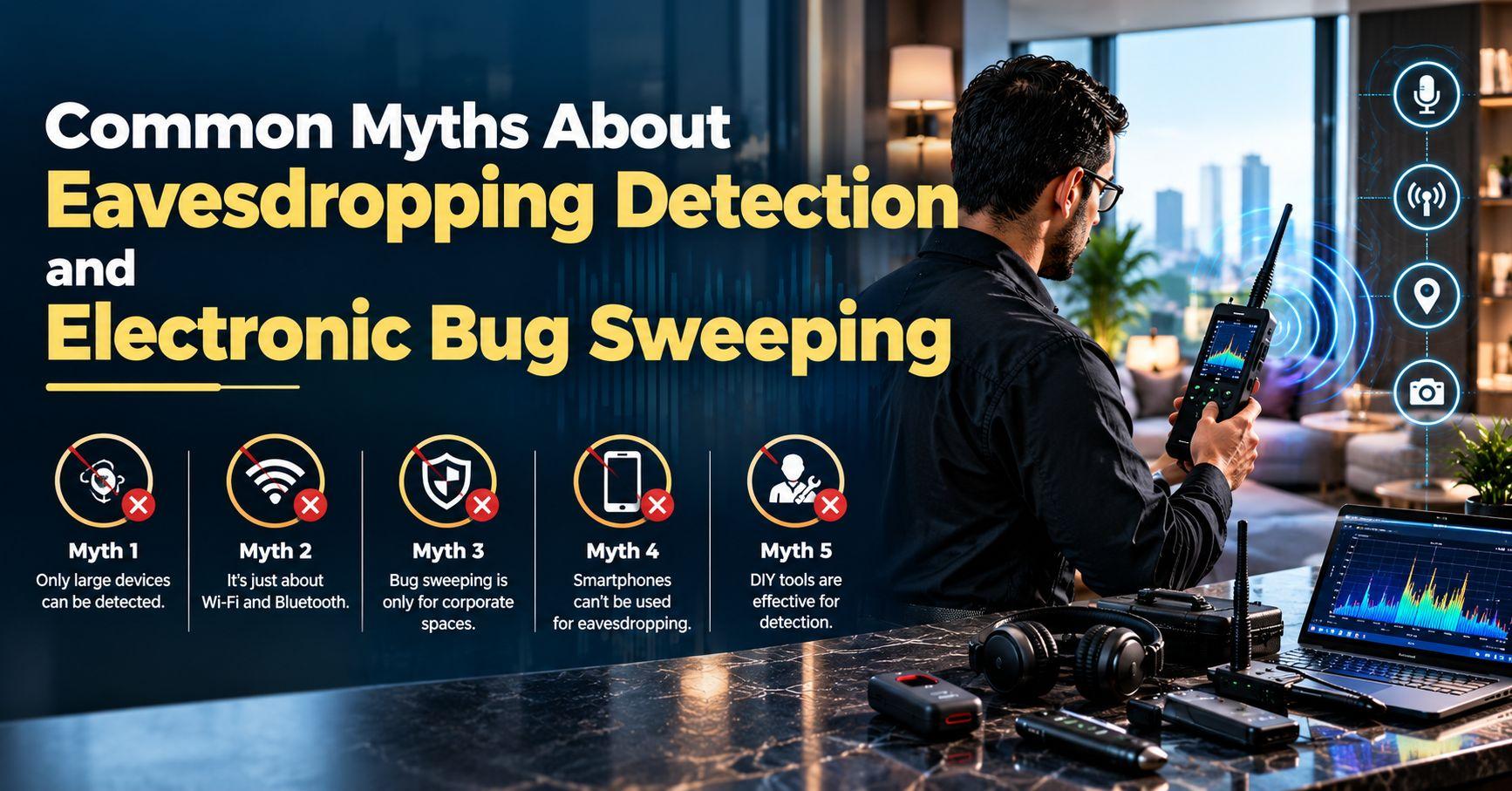
Concerns about unauthorized listening devices and electronic surveillance can raise important questions for businesses and individuals. Whether the concern relates to a corporate boardroom, an executive office, a meeting room, or another sensitive environment, understanding the available inspection methods can help people make informed decisions.
However, misconceptions about hidden microphones, radio-frequency (RF) scans, detection equipment, and inspection results can create unrealistic expectations. Some people assume that a single scan can identify every surveillance device, while others believe that an inspection report guarantees complete protection against future surveillance risks. Neither assumption accurately reflects the technical limitations of a professional assessment.
Eavesdropping detection and electronic bug sweeping in Gurgaon involve examining a defined environment for potential indicators of unauthorized electronic surveillance. The methods used depend on the suspected technology, the inspection scope, the environment, and the capabilities of the equipment available.
This article examines common eavesdropping detection myths, explains what professional Technical Surveillance Countermeasures (TSCM) procedures can assess, and outlines what clients should understand before arranging an inspection in Gurgaon.
What Is Eavesdropping Detection and Electronic Bug Sweeping?
Eavesdropping detection refers to the assessment of potential risks associated with unauthorized listening or electronic surveillance. Electronic bug sweeping is a commonly used term for inspections that may examine premises for indicators of concealed cameras, microphones, wireless transmitters, and other surveillance-related devices.
A professional TSCM inspection may involve physical examination, radio-frequency analysis, and other suitable technical procedures, depending on the assignment.
The objective is to investigate relevant concerns and document findings within the agreed scope. It is not simply a matter of scanning a room and declaring it completely free of surveillance devices.
Understanding this distinction is essential when evaluating the claims made by any eavesdropping detection or bug sweeping service provider.
Myth 1: One RF Scan Can Detect Every Hidden Listening Device
One common misconception is that a radio-frequency scan can identify every concealed microphone, camera, or other surveillance device in a room.
In reality, RF analysis assesses radio signals within the capabilities and frequency ranges of the equipment being used. Some surveillance devices transmit wirelessly, so their activity may be relevant to an RF assessment. However, other devices may store information locally, transmit intermittently, remain inactive during the inspection, or use technologies outside the equipment's capabilities.
The inspection environment also matters. Nearby wireless networks, mobile devices, and legitimate electronic systems can create a complex signal environment that requires careful interpretation.
A professional assessment may therefore combine RF analysis with physical examination or other appropriate methods rather than relying on one scan alone.
What clients should know: Ask which methods are included in the inspection, what technologies they can assess, and what limitations may affect the findings.
Myth 2: Every Unusual Signal Means Someone Is Listening
An unexpected signal or an equipment alert can understandably prompt questions, but it does not automatically establish that an unauthorized listening device is present.
Modern offices and commercial properties contain numerous electronic systems. Wi-Fi routers, Bluetooth devices, mobile phones, wireless peripherals, and other communication equipment can generate RF activity.
During a technical surveillance inspection, specialists must evaluate observations in context and determine whether they warrant additional examination. An unfamiliar signal may have a legitimate source, and its origin may not be immediately apparent.
Treating every unusual reading as evidence of surveillance can lead to unnecessary concern and incorrect conclusions.
What clients should know: A detected signal is an observation, not proof. Ask the service provider how it interprets readings, distinguishes ordinary electronic activity from relevant concerns, and documents unresolved findings.
Myth 3: Hidden Microphones Always Look Suspicious
Another misconception is that a concealed listening device will have an unusual appearance or be easy to recognize during a visual search.
Electronic components can be incorporated into objects or equipment that look ordinary. Conversely, an unfamiliar device or fixture may have a legitimate purpose and should not automatically be treated as suspicious.
A physical examination may help identify objects, installations, or components that warrant further assessment. Depending on the concern, suitable technical checks may also be necessary.
The effectiveness of an inspection depends on the areas examined, the access available, the methods selected, and the characteristics of the technology being assessed.
What clients should know: Visual examination can be useful, but it is not a universal detection method. A professional inspection should be planned around the specific concern and should avoid drawing conclusions based on appearance alone.
Myth 4: More Expensive Equipment Guarantees Better Results
Specialized equipment can be an important part of a TSCM inspection, but its price or complexity does not independently establish the quality of the assessment.
Different instruments are designed for different purposes. Their capabilities may vary according to frequency coverage, sensitivity, supported technologies, and operating conditions.
The way equipment is selected, used, and interpreted also matters. A technically capable instrument cannot compensate for an unsuitable inspection scope or an incorrect interpretation of its readings.
When evaluating bug sweeping services, clients should consider the relevance of the proposed methods, the provider's ability to explain the procedure, and the quality of the reporting.
What clients should know: Ask what equipment and methods are appropriate for your requirements, what they can assess, and what limitations apply. Focus on the inspection methodology rather than equipment claims alone.
Myth 5: A Clean Inspection Report Proves No Surveillance Device Exists
Even if a report identifies no relevant findings within the agreed scope, it can still be useful; however, it should not be interpreted as proof that surveillance is impossible.
An inspection reflects the areas examined, procedures performed, and observations available under the conditions at that time. A device may be inactive, inaccessible, outside the equipment's capabilities, or undetectable by the methods used.
Similarly, an inspection cannot establish whether a new surveillance risk will arise later.
Responsible reporting should explain what was examined, which methods were used, and whether any limitations affected the assessment. It should not make claims that exceed what the work can reasonably establish.
What clients should know: Ask the provider to define the meaning of the final findings and identify any exclusions or limitations. A clear report is more useful than an unsupported guarantee.
Myth 6: Electronic Bug Sweeping Is Only About Finding Hidden Cameras
Although hidden cameras receive considerable attention, eavesdropping detection and TSCM inspections may address a broader range of potential electronic surveillance concerns.
Depending on the assignment, the inspection may consider listening devices, wireless transmitters, suspicious electronic components, or other relevant indicators. Physical examination and RF analysis may be among the methods considered, but not every assignment requires every technique.
The appropriate approach depends on the purpose of the inspection and the environment involved.
For example, the requirements for assessing a boardroom used for confidential business discussions may differ from those for a private office or another designated space.
What clients should know: Explain your concern clearly before booking a service. This helps the provider determine which areas and methods are relevant instead of assuming that every inspection should follow an identical procedure.
Myth 7: A Quick Inspection Is Always Sufficient
The time required for a technical inspection can vary according to the size of the area, its complexity, the agreed scope, access conditions, and the methods required.
A limited assessment of a small, clearly defined space may have different requirements from a more extensive examination of several rooms containing numerous electronic systems.
Time alone does not establish inspection quality. However, clients should understand how the proposed duration relates to the scope and what work is included.
An inspection covering only part of a property should not be represented as having assessed every area within it.
What clients should know: Confirm the locations to be examined, the estimated duration, the procedures included, and whether additional areas or follow-up work will incur separate charges.
Myth 8: Professional TSCM Inspections Can Guarantee Complete Privacy
A professional TSCM assessment can help evaluate specific electronic surveillance concerns, but it cannot guarantee complete privacy in every circumstance.
Some surveillance methods may not be detectable through the techniques available for a particular assignment. Technical conditions can change, new devices can be introduced, and an inspection only reflects its defined scope and operating conditions.
Privacy also depends on factors beyond electronic surveillance, including access permissions, information-handling practices, device security, and the way sensitive discussions and records are managed.
What clients should know: Treat a TSCM inspection as one part of a broader approach to managing sensitive information. Ask what the assessment can establish and which concerns may require separate technical or professional advice.
Myth 9: Eavesdropping Detection Always Requires the Same Procedure
There is no single inspection procedure that is appropriate for every environment and concern.
A corporate office may contain extensive wireless infrastructure and connected equipment. A meeting room may have a different layout and operational purpose, while another property may present different access or technical requirements.
The inspection provider should assess the circumstances and define a suitable scope before selecting the methods they will use.
This is particularly important when arranging eavesdropping detection services in Gurgaon, where clients may need assessments for offices, commercial premises, executive spaces, and other designated environments.
What clients should know: Ask the provider to explain why the proposed methods suit your requirements and whether any additional assessment may be necessary. A tailored, clearly defined process is preferable to unsupported claims that one procedure suits every situation.
Myth 10: A Technical Alert Is Enough to Confirm a Surveillance Incident
A detection instrument may indicate activity that deserves investigation, but an alert alone does not necessarily identify its source or establish that surveillance has occurred.
Further assessment may be needed to understand the observation, evaluate legitimate explanations, and determine whether the available evidence supports a conclusion.
A responsible provider should distinguish between an initial indication, an unresolved observation, and a finding that has been adequately assessed. Where the evidence is inconclusive, that uncertainty should be documented.
This approach helps prevent unverified assumptions from being presented as facts.
What clients should know: Request a clear explanation of the findings, the basis for any conclusions, and whether additional examination is recommended. Do not rely on unexplained alerts or dramatic claims.
What Should You Look for in a Professional TSCM Inspection in Gurgaon?
Understanding common eavesdropping detection myths can help clients ask more useful questions before hiring a service provider.
Consider the following factors:
Clearly Defined Inspection Scope
Confirm which rooms, areas, or systems are included. Clarify whether adjoining spaces or additional locations require separate authorization and assessment.
Suitable Technical Methods
Ask which procedures are proposed and how they relate to your concerns. RF analysis, physical examination, and other methods have different purposes and limitations.
Transparent Reporting
Establish whether the service includes a written report or a briefing on the findings. The expected deliverables should explain the work performed and any relevant limitations.
Confidentiality Practices
Discuss how information about your premises, assignment, and findings will be handled. Access to sensitive information should be appropriately controlled.
Realistic Expectations
Be cautious of claims that every device can be detected, that every signal proves surveillance, or that a service can guarantee complete protection. A credible provider should explain what can reasonably be assessed.
Clear Pricing and Timelines
Request a quotation outlining the agreed scope, included services, estimated duration, and any additional charges for expanded or follow-up work.
These considerations can help individuals and businesses evaluate whether a proposed inspection meets their needs.
How Trace Point India Can Help With TSCM Debugging in Gurgaon
When specific concerns warrant a technical assessment, the first step is to understand the environment, identify the areas requiring examination, and establish a suitable inspection scope.
Trace Point India offers TSCM debugging and bug sweeping services for clients seeking to assess potential electronic surveillance risks on designated premises. Depending on the assignment, we will use appropriate technical procedures to examine relevant observations and document findings within the agreed scope.
Before proceeding, clients should discuss their concerns, the proposed methods, the expected deliverables, and the limitations that may affect the assessment. This helps establish realistic expectations and supports an informed decision about the service.
For those exploring eavesdropping detection and electronic bug sweeping in Gurgaon, a structured, fact-focused approach can help evaluate specific concerns without treating unverified suspicions as proof.
Conclusion
Common myths about eavesdropping detection often arise from unrealistic expectations about hidden microphones, RF scans, specialized equipment, and inspection reports. In practice, professional TSCM procedures define their capabilities and limitations, and you must interpret their findings in context.
RF activity may indicate surveillance, a physical examination may miss some devices, and a report with no relevant findings does not rule out surveillance. The value of an inspection lies in its defined scope, suitable methods, careful interpretation, and clear documentation.
Before arranging an inspection, ask about the procedures, equipment capabilities, reporting, confidentiality, costs, and limitations. Understanding these details can help you assess the suitability of the service and make a more informed decision.
Looking for a professional assessment of potential electronic surveillance risks? Get a clearer understanding of technical surveillance inspections by exploring TSCM debugging and bug sweeping services in Gurgaon or calling 9999335950 to discuss your requirements.

 English
 Arabic
 French
 Spanish
 Portuguese
 Deutsch
 Turkish
 Italiano
 Russian
 Romaian
 Portuguese (Brazil)
 Greek
