
Grip Strength: An Indispensable Biomarker For Older Adults
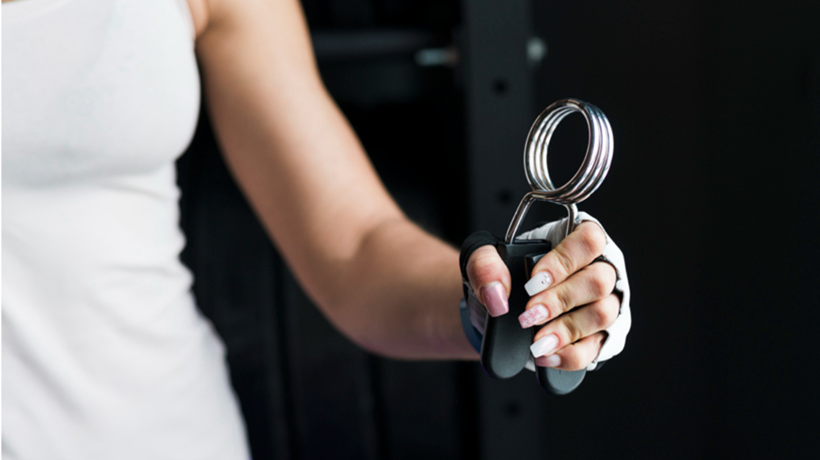
Ask a geriatrician what they'd measure if they only had a minute and one cheap tool, and a lot of them would pick a handheld dynamometer. It looks almost too simple. You squeeze a handle, a number appears, and that number turns out to say a fair amount about how someone is ageing.
This article explains why hand grip strength matters more as we get older, what the research actually shows, and how to use the information without worrying more than you need to.
Why grip says so much about older bodies
After about 60, muscle slowly shrinks and weakens for most people. Hand grip strength is one of the easiest ways to catch that happening, because it reflects the whole system and not only the hand. Muscle, nerves and the brain's signals all have to work for you to squeeze hard.
It's also practical. It takes a minute, it doesn't tire anyone out, and a clinic can do it between other checks. For a measure to be useful in older patients, that matters more than elegance.
Strong in midlife, safer in old age
One of the most quoted studies in this area is from the Honolulu Heart Program, published in JAMA in 1999. Researchers measured the grip of 6,089 healthy men aged 45 to 68, then checked back about 25 years later on the 3,218 survivors, by then aged 71 to 93.
The men who'd had the weakest grip in midlife were more likely to walk slowly and to have trouble looking after themselves. For slow walking, the odds were almost three times higher in the weakest third than in the strongest. Self-care disability was more than twice as likely. Chronic illnesses explained very little of the gap.
The authors suggested that good muscle strength early on might act as a safety margin. You spend some of it as you age, so it helps to arrive with plenty. It's a nice way to think about it.
Mortality and dementia
Large studies now back this up across many populations. The PURE study followed 139,691 adults in 17 countries and found each 5 kg drop in grip went with a 16% higher risk of death from any cause. In the UK Biobank, with over half a million adults aged 40 to 69, the same drop meant a 20% higher risk in men and 16% in women.
Dementia is the newer finding. A UK Biobank analysis of 466,788 people, with a median age of 56.5, tracked them for around nine years. Those in the weakest fifth for grip had a 72% higher risk of developing dementia than those in the strongest fifth, and an 87% higher risk of dying from it. The researchers estimated that low grip strength could account for roughly 30% of dementia cases in that group.
Notice the wording, though. These are links, found by looking at large groups over time. They don't show that weak grip causes dementia, or death.
The caution that matters most
A weak grip is a flag, not a verdict. People who are already unwell, less active or losing muscle will often grip less firmly, and those things carry health risks of their own. So low hand grip strength doesn't predict what will happen to you personally.
What it does is point you towards questions worth asking. Am I getting enough exercise? Have I lost weight without trying? Is something affecting my nerves or joints? It's a prompt, and that's valuable by itself.
What the numbers look like
Grip declines with age, and it differs between men and women, so compare with the right group. In large British norms by Dodds and colleagues (2014), based on around 60,800 measurements, the middle 80% of men in their seventies fall between roughly 29 and 49 kg, and women between 16 and 31 kg. In the eighties, those ranges move to about 23 to 42 kg for men and 13 to 26 kg for women. I'm quoting these from a summary of the paper, so check the original if you need exact figures.
Clinicians also use screening cut-points from the European sarcopenia guidelines (EWGSOP2, 2019). Below 27 kg for men or 16 kg for women suggests probable sarcopenia, the age-related loss of muscle. That's a reason for further assessment, not a diagnosis.
How to measure it properly
Posture changes the reading. The standard position recommended by hand therapists has you seated with your elbow bent at 90 degrees and held against your side, forearm and wrist neutral. In one research protocol people squeezed for three to five seconds, three times per hand, and the average was used.
Use the same device, the same posture and, if you can, the same time of day. Readings from different devices aren't always comparable. If you have painful arthritis or a recent hand or wrist injury, check with a clinician before testing yourself.
What you can do
Nothing here proves that boosting hand grip strength will add years. What's reasonable is that the habits that build it are good for older bodies anyway. Regular resistance exercise, carrying shopping or weights, and keeping active every day all help maintain muscle. A physiotherapist or doctor can tailor it if you have joint pain, heart conditions or balance problems.
And if grip drops noticeably over a few months, or opening jars and carrying bags suddenly feels harder, mention it to your doctor. Most of the time there's a simple explanation. Occasionally there isn't, and it's better to find out early.
Quick questions
What's a good grip strength for someone in their seventies?
It depends on sex and body size. Roughly 29 to 49 kg for men and 16 to 31 kg for women covers the middle of the range in large British data. Your own trend matters more than where you sit in that range.
Can I rely on a home device?
For tracking your own changes, yes, if you use the same device and posture each time. It isn't a medical assessment.
Does a low reading mean I have sarcopenia?
Not on its own. It's a screening signal that muscle deserves a proper check.

 English
 Arabic
 French
 Spanish
 Portuguese
 Deutsch
 Turkish
 Dutch
 Italiano
 Russian
 Romaian
 Portuguese (Brazil)
