
Bathroom Mosaics: How Scale Changes the Room
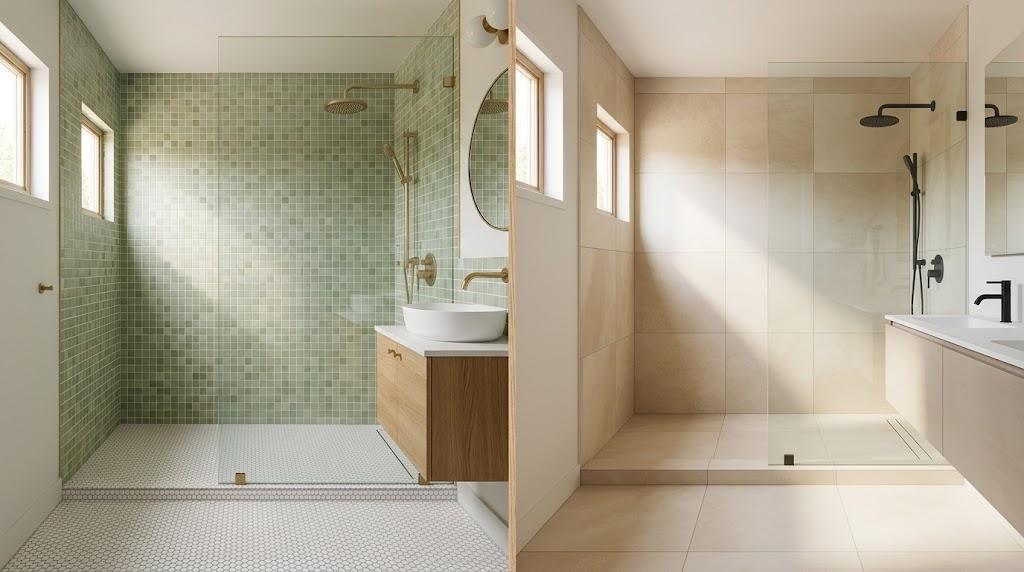
A showroom display often places two mosaic formats near each other. One uses tiny squares; the other uses wide sheets that look like panels. Both belong to the same family and come in many colors and finishes. Their roles in a bathroom are not interchangeable.
Scale is a primary design decision. It influences visual energy, grout visibility, sightlines, and perceived space. A poor scale choice can make good material look wrong. This guide compares compact and broad formats and explains where each performs well.
Compact Mosaic Formats
Formats under two inches fall into the compact category. One-inch squares, penny rounds, and two-inch hexagons are common examples. Mesh backing holds the pieces together for faster installation. The small units create a fine grain across the surface.
Texture is the main advantage. These mosaic tiles form a detailed, repeating pattern that catches light and shadow. The surface looks handcrafted even when it is factory-made. Smaller pieces also improve footing in wet areas.
Compact units bend around niches, benches, and curved walls with less cutting. That flexibility saves time on complicated layouts. The downside is grout: many joints create visual activity and demand more cleaning. Soap film and mineral deposits collect faster on grout than on smooth faces.
Installers often use a notched trowel and a grout float on these sheets. Mesh backing keeps spacing consistent across the field. Layout planning still matters because small units can drift out of alignment. A dry fit helps reveal trouble before adhesive sets.
Broad Mosaic Formats
Broad formats begin near four inches and can exceed twelve inches. Many are sold in sheets so installers can set larger units at once. Some are single pieces scored to imitate smaller modules. The scale changes how the surface reads.
Calm is their strength. A broad face reduces pattern and joint lines, giving walls a more continuous appearance. A ceramic tile shop often displays them in room-like settings. That helps buyers judge the quieter effect before installation.
Substrate tolerance is the limitation. Wide pieces need flat walls and square corners. They do not wrap around curves. Lippage becomes more noticeable when edges are larger, especially on uneven framing.
Edge conditions deserve attention with wide units. Outside corners may need trim pieces or mitered cuts. Door openings and window returns can consume more material than expected. Planning those details early avoids interrupted layouts.
How Scale Alters the Room's Appearance
Many people assume larger formats always make a small bathroom feel larger. The opposite can happen. A twelve-inch piece in a narrow powder room reads as a giant slab. Corner cuts and door trim become awkward quickly.
Compact mosaic tiles handle odd layouts with more grace. Each small unit absorbs angles and offsets. This flexibility matters in older bathrooms with imperfect geometry. The format can follow the room instead of fighting it.
In a large bathroom, however, compact formats can feel restless. A ceramic tile shop can lend samples for a test in the actual room. A floor of one-inch hexagons across a hundred square feet becomes a field of pattern. From afar it reads as texture; up close it is a grid of joints.
Lighting also changes the way scale reads. A dark room can make a broad surface feel heavy. A bright room can make a busy pattern feel louder. Test samples under morning and evening light before committing.
Suitable Locations by Format
Shower floors favor compact formats. Many joints improve traction on a sloped wet surface. Small sheets also follow the pan's slope without complicated cuts. Broad pieces can be slippery and may pond water unless the slope is exact.
Shower walls accept either format. Compact mosaic tiles add texture and a handcrafted feel. Broad units deliver a clean, spa-like plane. Style should guide the choice more than function here.
Bathroom floors outside the shower also accept either, with one condition. Broad formats require a stiff, flat subfloor. Compact formats are more forgiving and improve grip on wet feet. Around curves, niches, and benches, compact units are the clear choice; broad pieces need unattractive cuts and rarely sit cleanly.
Wet areas also need proper waterproofing behind the tile. The format does not replace that layer. Slope and drainage matter as much as surface choice. Address those basics before selecting a layout.
Grout's Role in the Final Look
Format controls how much grout remains visible. Grout can account for a large share of the surface you actually see. That makes joint width and color a design decision, not an afterthought. The choice affects both appearance and upkeep.
With compact mosaic tiles, grout becomes part of the pattern. A contrasting color turns joints into a deliberate feature. A matching color lets the lines recede. Either approach changes the room's visual rhythm.
With broad units, grout nearly vanishes. A dark joint on a light field looks like a grid, while a matched joint supports a seamless look. Maintenance follows joint volume. Light grout discolors quickly on a shower floor, and dark grout hides stains but may show residue.
Sealer choice varies by grout type and location. Some grouts resist staining better than others. Ventilation and drying time also affect long-term appearance. Follow the manufacturer's guidance for the specific product.
Installation Time and Material Balance
Compact sheets contain many small pieces, so setting and grouting take longer. Broad units cover area faster and may reduce labor hours. A ceramic tile shop can explain how sheet format affects setting time. The total effort often ends up closer than expected.
Substrate preparation can shift the balance. Broad formats demand flat walls and careful alignment. Compact formats tolerate more irregularity. Compare the full installation scope, not one part of the job.
Tooling also changes with format. Small units may need smaller trowels and more attention to coverage. Large units may need suction cups and leveling clips. Those details affect the pace of the job.
Material quantities differ as well. Small sheets may require more adhesive and grout by volume. Large units may generate more waste at edges and corners. Plan quantities with the installer before ordering.
A Practical Selection Process
Begin with the room, not the product. Check wall flatness, corner squareness, and overall dimensions. Note curves, niches, benches, and transitions. These conditions narrow the sensible options.
Next, view samples in the actual bathroom. Color changes under artificial and natural light. A surface that looks balanced in a ceramic tile shop may read differently at home. Keep the sample in place for a full day.
Finally, consider cleaning. Compact formats mean more joints to scrub. Broad formats mean more visible spots on a flat face. Neither choice is maintenance-free, so choose the trade-off you can accept.
Ask about lead times before finalizing a layout. Special-order formats can extend the schedule. Order a little extra for cuts and future repairs. Store spares in a dry place.
A Short Decision Guide
Choose compact formats for texture, traction, and flexibility around curves. Choose broad formats for calm lines and a contemporary surface. Many bathrooms combine both. Compact mosaic tiles suit shower floors, while broad units cover walls.
That mix works because each format handles a different job. Size sets the room's tone before color or finish enters the conversation. A well-matched scale makes the bathroom feel intentional. A poor match can make good material look out of place.
Write down the final choice before installation begins. Confirm the layout with the installer. Check that the selected format suits the substrate and drainage. A short review prevents avoidable changes later.

 English
 Arabic
 French
 Spanish
 Deutsch
 Turkish
 Dutch
 Italiano
 Russian
 Romaian
 Portuguese (Brazil)
 Greek
