
Frozen Bakery Market Growth Drivers and Challenges
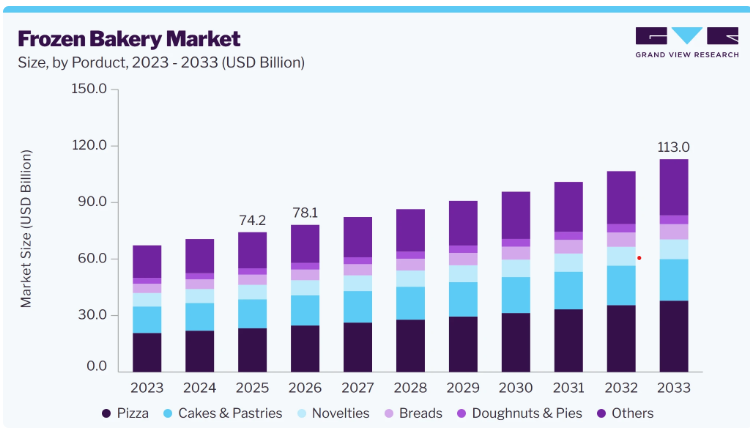
The frozen bakery market is evolving as consumers and foodservice businesses look for ways to balance convenience, product quality, and preparation time. Frozen bakery products provide longer storage periods and allow baked goods to be prepared when needed, making them useful across households, cafés, restaurants, and organized foodservice operations. The global Frozen Bakery Market was valued at USD 74.2 billion in 2025 and is projected to reach USD 113.0 billion by 2033, growing at a CAGR of 5.4% from 2026 to 2033. North America held the largest regional revenue share at 37.9% in 2025.
Inside the Frozen Bakery Market: Four Forces Driving Change
Convenience-led consumption: Frozen bread, pastries, cakes, and pizzas reduce preparation requirements and help consumers manage busy schedules. Longer shelf life also supports household storage and can reduce food waste.
Foodservice efficiency: Cafés, hotels, and quick-service restaurants use frozen bakery products to maintain consistent quality, simplify inventory management, and bake products on demand.
Product diversification: Gluten-free, vegan, organic, low-sugar, and high-protein options are expanding product variety in response to changing dietary preferences.
Distribution requirements: Cold-chain infrastructure remains essential for maintaining product quality, while refrigeration expenses create operational challenges for businesses.
Pizza, Bread, and the Products Consumers Prefer
Pizza was the leading product category in 2025, accounting for 31.5% of market revenue, and is expected to register the fastest CAGR over the forecast period. Its appeal comes from affordability, preparation convenience, and the availability of different crusts and toppings. Traditional wheat, whole wheat, gluten-free, and cauliflower crusts allow manufacturers to address varied dietary preferences.
Frozen bread presents a different opportunity. The segment is projected to grow at a CAGR of 4.9% from 2026 to 2033. Its longer shelf life allows consumers to store bread for later use, reducing the need for frequent purchases and helping minimize spoilage.
The shift is not limited to product selection. Manufacturers are also improving freezing technology to retain taste and texture while introducing new ingredient combinations. These developments support the expansion of frozen bakery offerings across both conventional and specialty categories.
Want to Understand What’s Driving Market Growth? Ask Prism AI for research-backed insights into market size, evolving opportunities, and the forces shaping the Global Veterinary Diagnostics Market.
A Closer Look at Consumption Formats
The market's consumption formats reveal how preparation preferences influence demand.
Ready-to-bake products
56.5%: Market revenue share, 2025
This format led the market because it offers freshly baked results with limited preparation. Healthier ingredients, gluten-free alternatives, and new flavors are supporting product development.
Ready-to-cook products
5.5%: Projected CAGR, 2026–2033
Demand is expected to increase as consumers seek time-saving meal solutions and consistent product quality.
Foodservice Leads While Online Distribution Expands
Foodservice accounted for 58.1% of frozen bakery market revenue in 2025. Establishments serving breads, rolls, pastries, and desserts benefit from having a wide selection of products available without preparing every item from scratch. Consistency and inventory flexibility further support demand through this channel.
Online sales, however, are expected to grow at a CAGR of 6.4% from 2026 to 2033. Digital platforms offer consumers access to specialty products that may be less readily available in local stores. They also make it easier to explore products suited to vegan and gluten-free diets.
The two channels address different purchasing needs: foodservice relies on dependable product availability and operational efficiency, while online distribution broadens access and product discovery.
Download a free sample report or claim your copy of this full market intelligence report
Regional Market Performance
North America: 37.9% share in 2025
Established cafés, coffee chains, in-store bakeries, and quick-service restaurants support regional demand. In the U.S., convenient preparation, longer storage periods, and reduced food waste contribute to household adoption.
Europe: Demand for convenient breakfast products and grab-and-go bakery items supports market development. Gluten-free offerings and improvements in freezing technology are also contributing to product acceptance.
Asia Pacific: 6.5% projected CAGR
Urbanization, dual-income households, expanding e-commerce, and interest in Western-style baked goods are creating opportunities across China, India, Japan, and other Asian markets.
What Could Slow Market Expansion?
Cold-chain dependence remains a significant challenge for frozen bakery manufacturers and distributors. Refrigeration costs and the need to maintain appropriate storage and transportation conditions can complicate distribution, particularly in markets with less-developed infrastructure.
Regulatory requirements also influence product formulation and market access. Food safety, allergen declarations, preservatives, artificial additives, and regional labeling standards must be considered when products are manufactured and distributed.
Frozen bakery products additionally compete with fresh bakery items, homemade goods, and convenient alternatives such as protein bars and granola. Longer shelf life and ease of preparation remain important advantages, but manufacturers must continue to maintain product quality and introduce offerings that match consumer preferences.
Competition and Strategic Development
The competitive landscape includes international manufacturers, regional producers, and private-label brands. Retailers are expanding in-house frozen bakery selections at competitive prices, while established manufacturers are pursuing acquisitions and geographic expansion to strengthen their portfolios.
Companies profiled in the market include Grupo Bimbo, Conagra Brands, Inc., Vandemoortele NV, Europastry, and Kellogg Company. Product development, research and development, freezing technology, and distribution capabilities are important areas of competition.
The frozen bakery market's projected growth reflects a combination of convenience-led consumption, foodservice demand, product diversification, and changing distribution channels. Its future development will depend on maintaining quality, controlling cold-chain costs, and providing products that meet evolving dietary and preparation preferences.

 English
 Arabic
 French
 Portuguese
 Deutsch
 Turkish
 Dutch
 Italiano
 Russian
 Romaian
 Portuguese (Brazil)
 Greek
