
CPCB Certificate: Everything You Need to Know About CPCB Approval in India
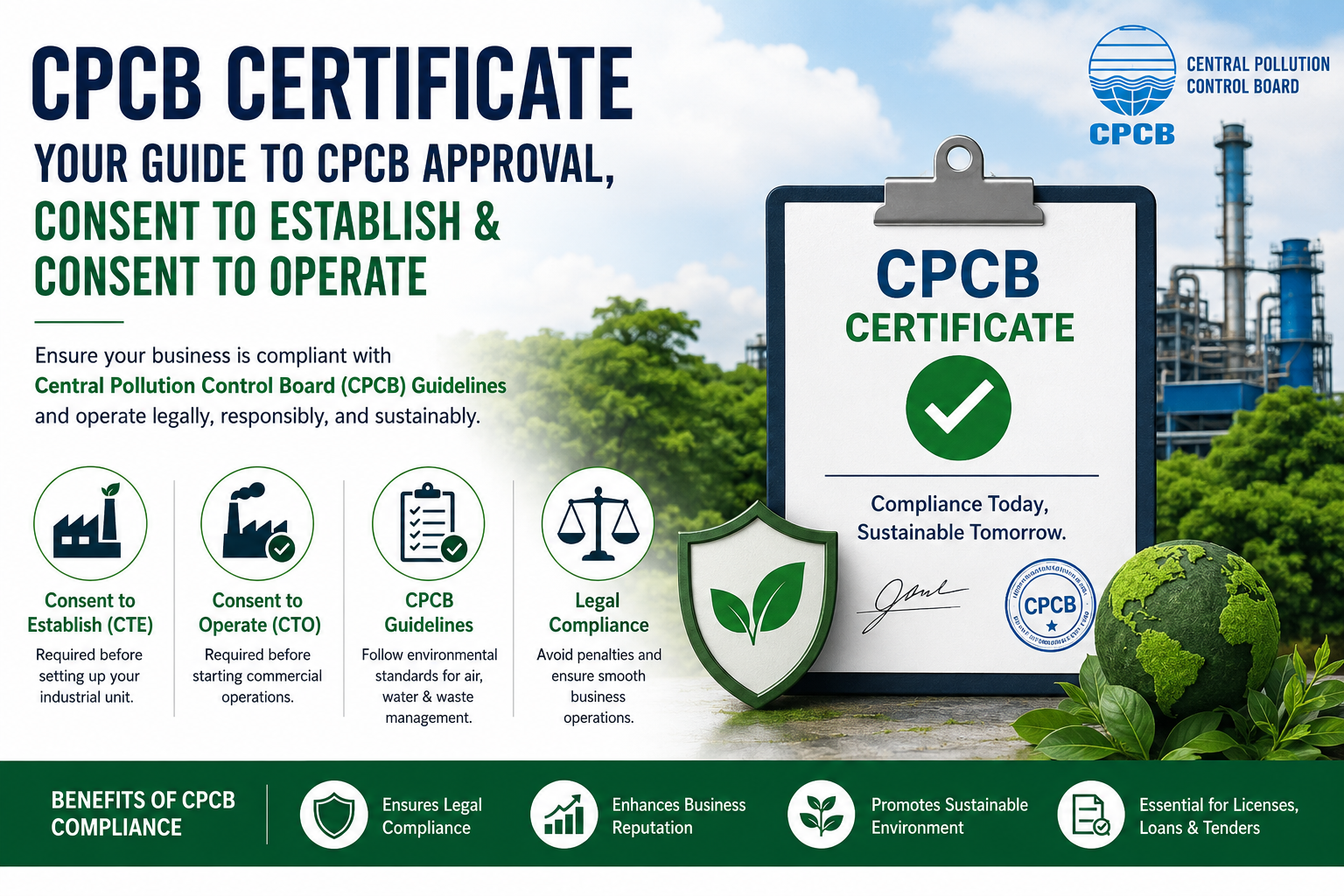
Businesses operating in manufacturing, waste management, healthcare, chemicals, and other pollution-generating industries must comply with environmental regulations. One of the key requirements is obtaining the CPCB Certificate or the necessary approvals as per the Central Pollution Control Board (CPCB) guidelines. These approvals help businesses operate legally while protecting the environment.
In this guide, you'll learn what a CPCB certificate is, why it is important, and how Consent to Establish and Consent to Operate fit into the approval process.
What is a CPCB Certificate?
A CPCB Certificate generally refers to the approvals, authorizations, or No Objection Certificates (NOCs) issued under the framework of the Central Pollution Control Board (CPCB) and State Pollution Control Boards (SPCBs). While the CPCB sets national environmental standards, many operational approvals are issued by the respective SPCBs following CPCB regulations.
Businesses involved in activities that may affect air, water, or land quality are often required to obtain these permissions before starting and continuing operations.
Role of the Central Pollution Control Board (CPCB)
The Central Pollution Control Board is a statutory organization established under the Water (Prevention and Control of Pollution) Act, 1974. It works under the Ministry of Environment, Forest and Climate Change (MoEFCC).
Its key responsibilities include:
- Developing environmental pollution control standards.
- Monitoring air and water quality across India.
- Issuing technical guidelines for pollution control.
- Coordinating with State Pollution Control Boards.
- Promoting sustainable industrial development.
Businesses must follow the Central Pollution Control Board guidelines to ensure environmental compliance.
What is Consent to Establish (CTE)?
Consent to Establish is the first approval required before setting up an industrial unit or project.
It confirms that the proposed business location, manufacturing process, and pollution control measures comply with environmental norms.
A business generally needs CTE before:
- Constructing a factory.
- Installing machinery.
- Expanding an existing unit.
- Starting a new industrial project.
Without CTE, industries may face legal issues and project delays.
What is Consent to Operate (CTO)?
After construction is complete and pollution control systems are installed, businesses must obtain Consent to Operate.
This approval allows industries to begin commercial operations after verifying compliance with environmental standards.
The authority reviews:
- Air pollution control measures.
- Water treatment facilities.
- Waste management systems.
- Emission and discharge standards.
Operating without a valid CTO can result in penalties or closure notices.
Documents Required for CPCB-Related Approvals
The required documents may vary depending on the industry, but commonly include:
- Company incorporation documents
- PAN and GST registration
- Site layout and factory plan
- Manufacturing process details
- List of machinery
- Pollution control equipment details
- Water and air pollution management plan
- Identity and address proof of the applicant
Submitting complete and accurate documents helps speed up the approval process.
Benefits of CPCB Compliance
Obtaining approvals under CPCB regulations offers several advantages:
- Ensures legal compliance.
- Reduces the risk of penalties.
- Builds trust with customers and investors.
- Supports sustainable business operations.
- Improves eligibility for government approvals and tenders.
Following environmental regulations also demonstrates responsible business practices.
Conclusion
A CPCB Certificate, along with Consent to Establish and Consent to Operate, plays an important role in ensuring industries comply with environmental laws. Since approval requirements differ based on industry type and pollution category, businesses should carefully follow the Central Pollution Control Board (CPCB) guidelines before starting operations.
Professional guidance can simplify the application process and help avoid delays or compliance issues.
Frequently Asked Questions (FAQs)
1. What is a CPCB Certificate?
A CPCB Certificate generally refers to environmental approvals, authorizations, or NOCs issued under the framework of the Central Pollution Control Board and State Pollution Control Boards.
2. Is CPCB approval mandatory for every business?
No. It is mainly required for industries and businesses that may generate air, water, or hazardous pollution, depending on applicable environmental laws.
3. What is the difference between Consent to Establish and Consent to Operate?
Consent to Establish is required before setting up an industrial unit, while Consent to Operate is required before starting commercial operations.
4. Who issues Consent to Establish and Consent to Operate?
These approvals are generally issued by the respective State Pollution Control Boards in accordance with CPCB guidelines.
5. What happens if a business operates without Consent to Operate?
Operating without a valid Consent to Operate may lead to penalties, legal action, or even closure of the industrial unit.

 English
 Arabic
 French
 Portuguese
 Deutsch
 Turkish
 Dutch
Dutch
 Italiano
 Russian
 Romaian
 Portuguese (Brazil)
 Greek
Greek
