
How Material Choices Influence Square Pneumatic Cylinder Performance
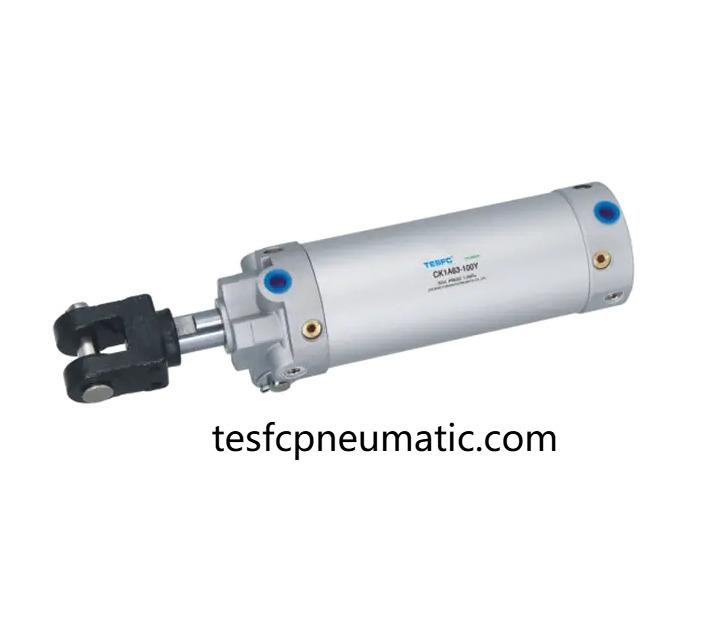
In industrial automation, reliable linear movement depends on the relationship between an actuator, its mounting structure, and the mechanism it drives. When equipment designers evaluate a Square Air Cylinder, they consider more than the ability to extend and retract; the cylinder's materials, structural form, installation requirements, and compatibility with the surrounding machine all influence its practical value. Square-profile designs can offer convenient mounting surfaces and a compact appearance, making them worth considering for machinery where organized layouts and predictable movement are important. Understanding how these characteristics relate to the intended application helps buyers make informed decisions.
Material selection plays an important role in the construction and service life of pneumatic cylinders. Aluminum alloys are commonly used for cylinder bodies because they can provide a useful balance of strength, weight, and machinability. Their surface finish may also support easier cleaning and help protect the exterior during routine use. Steel can be appropriate for components exposed to repeated mechanical contact or greater structural demands, while stainless steel may be considered when corrosion resistance is important. Seals and other internal elements require equal attention because they help maintain pressure and support consistent movement. Material compatibility should be assessed across the complete assembly, including the working environment, air quality, lubrication requirements, and exposure to moisture or contaminants. A suitable combination helps the cylinder function as part of a dependable pneumatic system.
Choosing a cylinder begins with understanding the task it must perform. Equipment manufacturers should identify the moving component, the direction of travel, the way the load is supported, and the relationship between the actuator and adjacent mechanisms. Installation space and mounting orientation also matter, especially in machinery with closely arranged components. A square-profile body may provide useful mounting options, but its suitability depends on the available fixing points and the structure of the equipment. Buyers should also review air connection positions, access for tubing, sensor compatibility, and the requirements of the control system. Rather than selecting a component based on appearance alone, they should compare its design with the actual movement, environmental conditions, and maintenance needs of the application. Clear communication with a pneumatic component supplier can help identify potential integration issues before installation.
The operating principle of a pneumatic cylinder is based on converting compressed-air energy into linear motion. Air enters the cylinder through a connection port and acts on the piston, causing the piston and connected rod or moving element to travel. Depending on the cylinder design, air may be directed to different sides of the piston to produce movement in opposite directions. Seals help separate pressure areas, while internal surfaces support controlled travel. The external body provides the structure that contains and aligns these working elements. In a complete automation system, valves regulate airflow, tubing delivers compressed air, and control devices coordinate actuator movement with other machine operations. Correct component selection and suitable system configuration are important because inconsistent air supply, poor alignment, or inappropriate control settings can affect movement quality and operating stability.
The experience of installing and maintaining a cylinder influences how effectively it supports everyday production. Accessible ports can make pneumatic connections easier to arrange, while practical mounting features help technicians secure the actuator within a machine frame. During commissioning, operators need to confirm that the moving parts travel freely and that connected mechanisms remain properly aligned. Maintenance teams should be able to inspect fasteners, air lines, seals, and external surfaces without unnecessary dismantling. Clean compressed air and compliance with manufacturer guidance can help reduce avoidable wear. Where sensors are used to detect position, their placement should allow reliable interaction with the machine's control sequence. Service procedures should also address stored pneumatic energy and unexpected movement, ensuring that inspection and repair take place under appropriate safety conditions.
Design and appearance contribute to how a cylinder fits into modern machinery. A square-profile body can create a visually orderly arrangement, particularly when several actuators are installed along a common frame or integrated into a compact production station. Flat exterior surfaces may offer convenient areas for mounting or positioning components, depending on the model's construction. The location of ports, fasteners, and supporting features affects how neatly the actuator connects with neighboring equipment. A well-considered layout can also preserve access to inspection points and reduce interference with cables, guards, and moving assemblies. However, compact appearance should not take priority over functional requirements. Designers need to leave adequate space for movement, tubing, adjustment, and maintenance while ensuring that the cylinder remains compatible with the machine's mechanical structure.
Zhejiang Feishengya Pneumatic Components Co., Ltd. provides pneumatic components for industrial motion and automation applications. When considering a cylinder for new equipment or an existing production system, buyers can discuss mounting arrangements, movement requirements, working conditions, and control-system compatibility with the company. These details help clarify how a selected component may fit into the broader mechanical and pneumatic design, while also identifying practical considerations for installation and routine servicing. More information about the company's pneumatic products and available solutions can be found at https://www.tesfcpneumatic.com/.

 English
 Arabic
 French
 Spanish
 Portuguese
 Deutsch
 Turkish
 Dutch
 Italiano
 Russian
 Romaian
 Portuguese (Brazil)
