
Does Hair Transplant Help Treat Baldness?
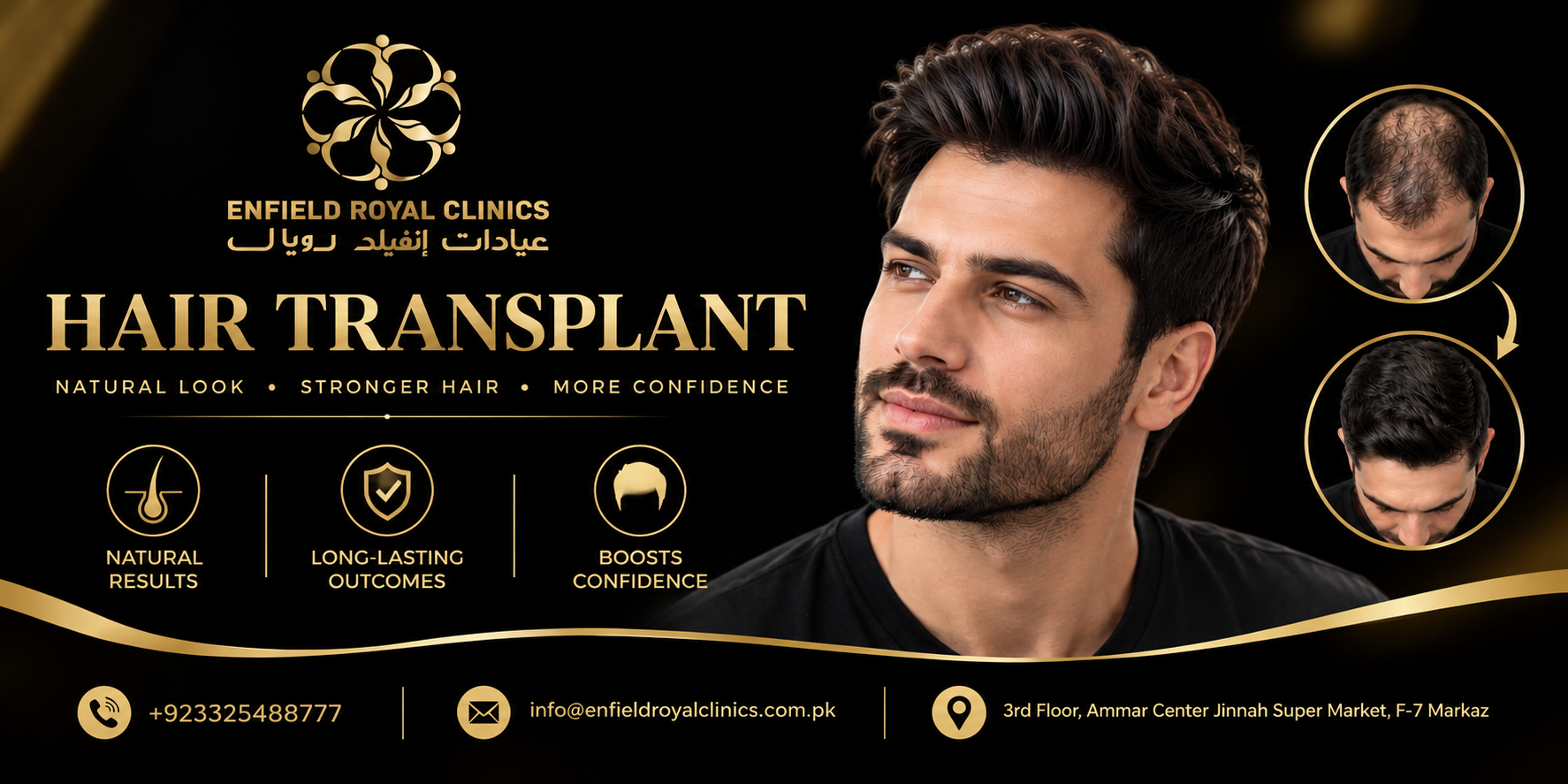
Baldness can affect people of different ages and may influence their appearance, confidence, and everyday life. For individuals experiencing a receding hairline, thinning hair, or significant hair loss, finding an effective solution can feel challenging. While medications and other treatments may help manage certain types of hair loss, a hair transplant offers another option for people who want to restore hair coverage in specific areas.
A hair transplant is a surgical procedure that moves healthy hair follicles from one part of the scalp to areas affected by baldness. When performed on suitable candidates, it can create natural-looking hair growth and provide long-lasting improvement. However, the results depend on factors such as the cause of baldness, the availability of donor hair, the progression of hair loss, and the treatment approach.
People considering a hair transplant in Islamabad should understand how the procedure works, which types of baldness it may address, and what results they can realistically expect. Learning about these details can help them make informed decisions about their hair restoration journey.
1. How Does a Hair Transplant Help Treat Baldness?
A hair transplant helps treat baldness by relocating healthy hair follicles from a donor area, usually the back or sides of the scalp, to regions where hair has become thin or disappeared. These donor follicles are often more resistant to the hormonal effects associated with common pattern baldness.
During the procedure, the follicles are carefully collected and placed into tiny sites in the recipient area. The placement angle, direction, and distribution of the grafts are important because they influence how natural the new hair looks.
The procedure does not create new hair follicles or stop every cause of hair loss. Instead, it redistributes existing follicles to improve coverage where it is needed most.
For example, a person with a receding hairline may benefit from restoring the front of the scalp, while someone with thinning at the crown may require a different treatment plan. The amount of coverage achievable depends on the number of available donor follicles and the size of the bald area.
A hair transplant can offer long-lasting results for suitable candidates, but it cannot guarantee the same density as naturally thick hair. A professional assessment helps determine what improvement is realistic.
2. Which Types of Baldness Can Benefit From Hair Transplantation?
Hair transplantation is most commonly associated with androgenetic alopecia, also known as male-pattern or female-pattern hair loss. This condition often develops gradually and may cause a receding hairline, thinning at the crown, or reduced density across the scalp.
Several patterns of hair loss may be considered for transplantation.
-
Receding hairline: Transplantation can help restore hair along the front of the scalp when sufficient donor hair is available.
-
Crown baldness: Selected patients may benefit from adding hair to a thinning crown, although this area can require careful planning because of its size and natural growth pattern.
-
Thinning scalp: Patients with reduced density may be candidates in some circumstances, provided the procedure can be performed without unnecessarily damaging existing hair.
-
Certain scars: Hair transplantation may improve hair coverage over selected scars caused by injuries or previous procedures, depending on the condition of the scar tissue.
-
Hair loss after some medical or surgical events: Certain stable areas of hair loss may be considered after the underlying cause has been evaluated.
Not every form of baldness is suitable for surgery. Conditions such as active alopecia areata, some inflammatory scalp disorders, or unexplained sudden shedding may require medical evaluation and treatment before transplantation is considered.
People experiencing patchy or rapidly progressing hair loss should not assume that a transplant is the right solution. Identifying the cause is an important first step.
3. Who Is a Suitable Candidate for Hair Transplant Treatment?
A successful treatment plan begins with determining whether the patient is an appropriate candidate. The presence of baldness alone does not establish suitability.
One of the most important considerations is donor hair availability. Patients with a healthy, sufficiently dense donor area may have more options for restoring coverage. Those with limited donor hair may need a more conservative plan or may not be suitable for the procedure.
Other factors include:
Stability of hair loss: Patients with a more predictable pattern of hair loss may be easier to plan for. Younger individuals with rapidly progressing baldness may need to consider how future hair loss could affect their appearance.
Scalp condition: Healthy scalp tissue supports treatment planning and healing. Active infections or certain inflammatory conditions may need to be managed first.
General health: Medical conditions, medication use, smoking, and healing concerns can influence surgical suitability and recovery.
Expectations: Patients should understand that transplantation aims to improve coverage rather than guarantee a completely full head of hair. The available donor supply limits how much hair can be moved.
Before choosing a hair transplant in Islamabad, patients should undergo a detailed consultation that includes an examination of the scalp, discussion of their hair loss history, and assessment of their goals. This helps establish whether transplantation or another approach is more appropriate.
4. What Hair Transplant Techniques Are Available?
Two widely used techniques are Follicular Unit Extraction (FUE) and Follicular Unit Transplantation (FUT). Both involve moving hair follicles, but they differ in how those follicles are collected.
Follicular Unit Extraction (FUE) involves removing individual follicular units from the donor area using small instruments. It generally leaves multiple tiny scars rather than one linear scar. The donor area may be easier to wear with shorter hairstyles after healing, although visible scarring can still occur.
Follicular Unit Transplantation (FUT) involves removing a narrow strip of scalp from the donor area. The strip is divided into individual grafts for transplantation, and the donor site is closed, usually leaving a linear scar.
Neither method is automatically best for every patient. The appropriate option depends on donor hair characteristics, scalp condition, desired hairstyle, the number of grafts needed, and the patient's medical circumstances.
During the consultation, patients should ask why a particular technique is recommended and what its limitations may be. They should also clarify who will perform the key surgical steps and how the donor area will be protected.
5. What Results Can Patients Expect After a Hair Transplant?
Hair restoration takes time, and the final result does not appear immediately after surgery. Understanding the growth cycle helps patients maintain realistic expectations.
In the first days after treatment, the scalp may show redness, swelling, tenderness, or small scabs. These effects usually improve as healing progresses, although recovery varies from person to person.
Transplanted hair often sheds during the first few weeks. This temporary shedding is a common part of the process and does not necessarily indicate that the procedure has failed. The follicles can remain in the scalp and produce new hair later.
A general timeline includes:
-
First few weeks: The scalp heals, and temporary shedding may occur.
-
Three to four months: Early new growth may begin to appear in many patients.
-
Around six months: Changes in coverage may become more noticeable.
-
Nine to twelve months or longer: Results continue to mature, depending on the patient and treatment area.
The final appearance depends on donor hair quality, graft survival, the size of the bald area, hair texture, and ongoing natural hair loss. Some patients may need additional treatment to improve coverage, but further surgery depends on donor availability and an individual assessment.
Patients should follow aftercare instructions carefully, avoid disturbing the grafts, and attend recommended follow-up appointments. Worsening pain, spreading redness, fever, or discharge should be assessed promptly by a healthcare professional.
6. Benefits and Limitations of Hair Transplant for Baldness
For suitable patients, hair transplantation can improve hair coverage and create a hairline that complements facial features. Because the procedure uses the patient's own follicles, the transplanted hair can often blend naturally with the surrounding hair when placement is carefully planned.
Other potential benefits include:
-
Long-lasting growth from successfully transplanted follicles.
-
Improved coverage in selected bald areas.
-
The ability to cut, wash, and style the transplanted hair after healing.
-
A treatment option for certain patterns of permanent hair loss.
However, the procedure also has limitations. It is surgery, so possible complications include bleeding, infection, scarring, temporary changes in scalp sensation, poor graft growth, and an unnatural appearance. Results vary, and no procedure can guarantee a particular density.
Another important consideration is that hair transplantation does not stop the underlying process of pattern hair loss. Natural hair surrounding the transplanted follicles may continue thinning over time. A qualified professional may recommend medical treatments to help manage ongoing hair loss when appropriate.
Patients should consider the potential benefits alongside the recovery commitment, risks, and long-term planning involved. Choosing treatment based on a realistic assessment is more helpful than relying on promises of guaranteed results.
7. Is Hair Transplant the Right Solution for Baldness?
A hair transplant may be an effective option for people whose baldness is caused by a suitable form of hair loss and who have enough healthy donor follicles. It is particularly useful when a patient wants to improve coverage in areas where hair has permanently thinned or disappeared.
However, it is not the only option. Depending on the cause and severity of hair loss, treatments such as prescribed medication or other non-surgical approaches may help slow shedding or support existing hair. Some patients may benefit from trying appropriate medical treatment before considering surgery.
Patients exploring hair transplant treatment in Islamabad should discuss their hair loss pattern, available donor hair, medical history, desired outcome, and future hair loss risks during a professional assessment.
The most suitable plan is one that considers both current baldness and the possibility of future thinning. Careful planning can help preserve donor hair and support a balanced, natural-looking result over time.
Frequently Asked Questions
1. Can a hair transplant completely cure baldness?
A hair transplant can restore hair growth in selected bald areas, but it does not cure every cause of hair loss or prevent natural hair from thinning in other areas. Results depend on the patient's condition and donor hair supply.
2. Is a hair transplant suitable for advanced baldness?
Some people with advanced baldness may be suitable if enough healthy donor hair is available. However, extensive bald areas may not achieve full density because the number of available follicles is limited.
3. How long do hair transplant results last?
Successfully transplanted follicles can produce hair for many years. However, surrounding natural hair may continue to thin, so patients may need ongoing management and follow-up.
4. Does a hair transplant produce natural-looking hair?
It can produce natural-looking results when the hairline, graft placement, and direction of growth are carefully planned. The final appearance also depends on hair characteristics, donor supply, healing, and the skill of the surgical team.
In conclusion, hair transplantation can help treat certain forms of baldness by moving healthy follicles into areas with reduced or absent hair growth. Patients considering a hair transplant in Islamabad should first understand the cause of their baldness, assess their suitability, and learn about the procedure's benefits, risks, and recovery timeline. With appropriate evaluation and realistic expectations, suitable candidates may achieve meaningful improvements in hair coverage.

 English
 Arabic
 French
 Portuguese
 Deutsch
 Turkish
 Dutch
 Italiano
 Russian
 Romaian
 Portuguese (Brazil)
 Greek
