
Shrimp Market and the Rising Popularity of Breaded Shrimp
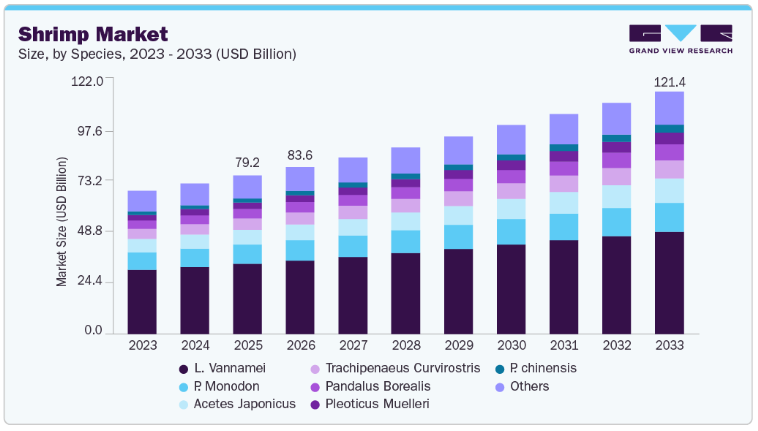
The global seafood industry is experiencing a shift as consumers increasingly seek protein-rich foods, convenient meal options, and sustainably sourced products. The Shrimp Market was valued at USD 79.2 billion in 2025 and is projected to grow from USD 83.6 billion in 2026 to USD 121.4 billion by 2033, registering a CAGR of 5.5% from 2026 to 2033. Growing demand for frozen seafood, expanding aquaculture production, and rising interest in healthier diets are supporting this expansion.
Shrimp's versatility across home cooking, restaurants, and processed food products makes it an important part of the global seafood trade. Improvements in cold-chain logistics, farming technologies, and retail distribution are further helping suppliers serve consumers across international markets.
Market at a Glance
2025 Market Size: USD 79.2 Billion
2026 Market Size: USD 83.6 Billion
2033 Projected Market Size: USD 121.4 Billion
CAGR (2026–2033): 5.5%
Leading Species: L. vannamei
Largest Source Segment: Aquaculture
Largest Regional Market: Asia Pacific
Want to Understand What’s Driving Market Growth? Ask Prism AI for research-backed insights into market size, evolving opportunities
What Is Driving Demand for Shrimp?
Changing dietary preferences are supporting shrimp consumption as consumers look for high-protein, low-fat seafood options. Shrimp also supplies essential nutrients, including omega-3 fatty acids, making it attractive to people seeking variety in their diets. Its adaptability to different cuisines, from Asian dishes to Latin American specialties and premium restaurant meals, is extending its appeal across consumer groups.
Convenience is another important influence. Frozen, pre-cleaned, marinated, and ready-to-cook shrimp products help consumers prepare meals with less effort. Busy lifestyles, urbanization, and the growth of dual-income households are supporting demand for seafood that is easy to store and prepare. Meanwhile, expanding tourism and hospitality industries are contributing to consumption through restaurants, hotels, and catering services.
Sustainability is also influencing purchasing decisions. Consumers and businesses are paying greater attention to traceability, responsible sourcing, and farming practices, encouraging producers to strengthen their environmental and supply-chain standards.
Why Does Aquaculture Lead Shrimp Production?
Aquaculture accounted for 60.1% of market revenue in 2025, reflecting its importance in maintaining a reliable supply of shrimp. Farmed production enables year-round availability and helps meet demand from retailers, foodservice operators, and international buyers. It can also reduce dependence on wild stocks, although sustainable outcomes depend on responsible farm management and environmental controls.
Technological improvements in breeding, disease management, and farming efficiency are supporting aquaculture development. Producers are increasingly focused on improving survival rates, maintaining quality, and increasing output while managing production costs.
Wild shrimp remains an important part of the industry, with demand supported by its distinctive taste, texture, and premium positioning in specialty seafood markets. The wild segment is projected to grow at a CAGR of 4.5% from 2026 to 2033, reflecting continued interest in wild-caught products and established fishing traditions.
Which Shrimp Species Are Shaping Market Growth?
The L. vannamei segment held the largest species share, accounting for 44.3% of revenue in 2025. Its rapid growth, high survival rates, adaptability to different farming conditions, and comparatively low production costs make it attractive for commercial aquaculture. Improvements in selective breeding and disease resistance are further supporting productivity.
According to the supplied source, approximately 80% of cultured shrimp production comes from L. vannamei, highlighting its significance in the global supply chain. Production in countries such as India, Vietnam, and Ecuador contributes to its commercial importance.
Meanwhile, P. chinensis is projected to record the fastest species-level growth, with a CAGR of 8.4% from 2026 to 2033. Its commercial value, tender texture, and popularity in East Asian cuisines are encouraging producers to invest in breeding, disease control, and coastal farming initiatives.
Download a free sample report or claim your copy of this full market intelligence report
Why Does Asia Pacific Dominate the Shrimp Market?
Asia Pacific accounted for 52.0% of global revenue in 2025, making it the largest regional market. Strong culinary traditions, rising disposable incomes, expanding middle-class populations, and established aquaculture industries support the region's position. China, India, Japan, and Southeast Asian countries contribute through domestic consumption, production, and international trade.
North America represented 22.6% of global revenue in 2025. Demand for protein-rich foods, ethnic cuisines, frozen products, and responsibly sourced seafood supports the regional market. The U.S. accounted for 84.2% of North America's shrimp market revenue, with restaurants, foodservice operators, and retail products contributing to demand.
Europe is projected to grow at a CAGR of 5.3% from 2026 to 2033, supported by demand for high-quality seafood, sustainable sourcing, and established retail distribution. Spain is an important market because of its seafood consumption, tourism industry, and role in seafood imports.
The Middle East and Africa region is projected to register the fastest regional growth, with a CAGR of 6.2% from 2026 to 2033. Rising seafood consumption, urbanization, aquaculture investment, and hospitality-sector expansion are supporting opportunities across the region.
Which Companies Are Influencing the Competitive Landscape?
Competition in the Shrimp Market is shaped by supply reliability, product quality, farming efficiency, sustainability practices, and the ability to meet different customer requirements. Companies are seeking to strengthen their positions by developing product portfolios, improving production operations, and responding to consumer preferences for convenient and responsibly sourced seafood.
Key companies identified in the supplied market information include Thai Union Group PCL, Clearwater Seafoods, and Avanti Feeds Limited. Their presence reflects the importance of seafood supply chains and aquaculture-related businesses within the broader industry.
What Lies Ahead for the Shrimp Market?
The market's growth will depend on its ability to balance rising demand with reliable production, efficient distribution, and responsible sourcing. Aquaculture is expected to remain central to supply, while convenient frozen formats, breaded products, and direct-to-consumer distribution create additional growth opportunities.
As consumers continue to prioritize protein-rich foods and easier meal preparation, shrimp is positioned to maintain a strong place in global seafood consumption. Advances in farming practices, cold-chain infrastructure, and product innovation will remain important to the industry's development through 2033.

 English
 French
 Spanish
 Portuguese
 Deutsch
 Turkish
 Dutch
 Italiano
 Russian
 Romaian
 Portuguese (Brazil)
 Greek
