
Vietnam-EFTA FTA 2026: Trade Opportunities, Tariff Benefits, and Import-Export Potential by Product
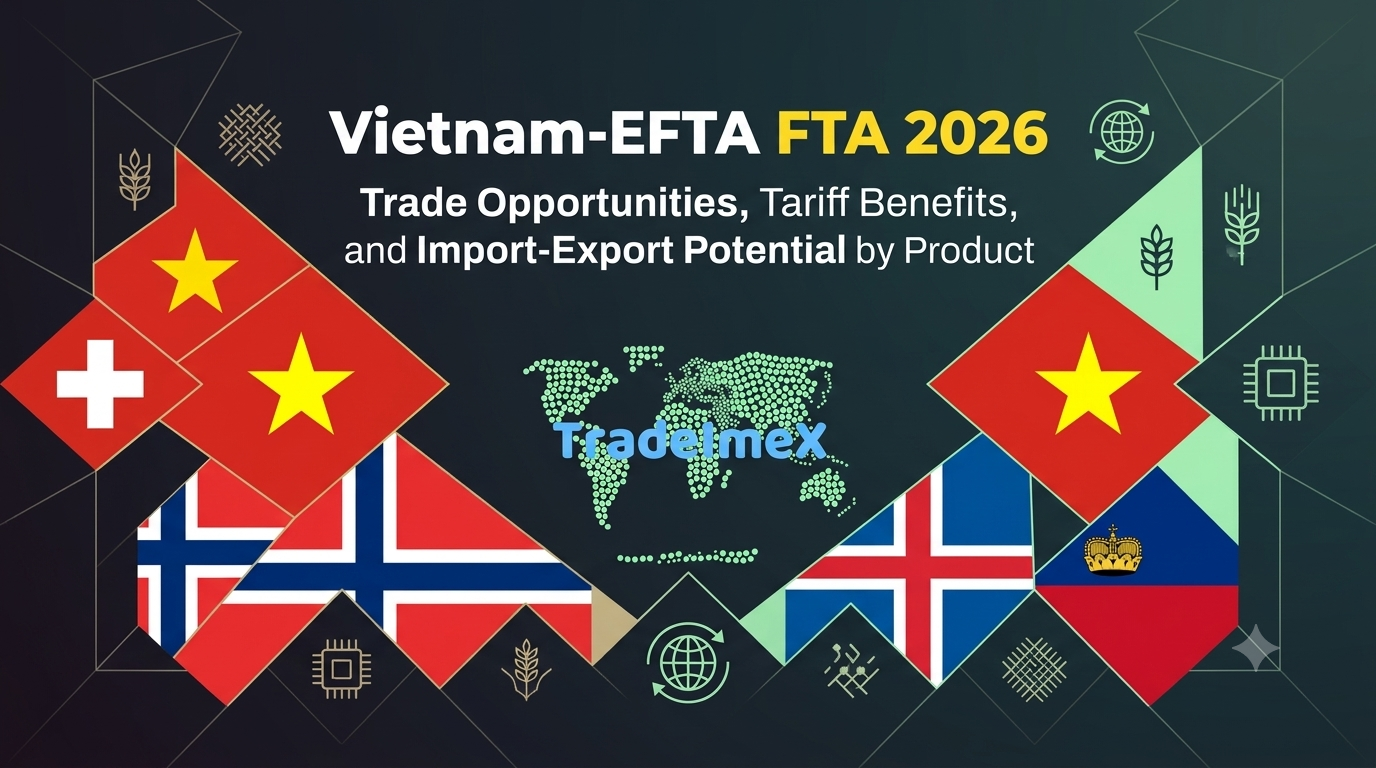
The Vietnam-EFTA FTA 2026 is an important milestone in Vietnam’s trade relations with Switzerland, Norway, Iceland, and Liechtenstein. Signed on October 18, 2026, the agreement aims to improve market access, reduce trade barriers, and encourage investment. Its entry into force is still pending, meaning businesses must wait for implementation before assuming preferential tariffs are available.
In 2025, Vietnam-EFTA-FTA merchandise trade reached approximately $5.5 billion. Vietnam exported around $4.12 billion in goods to EFTA countries and imported approximately $1.28 billion, recording a trade surplus of about $2.81 billion. The Vietnam EFTA trade deal could create opportunities across seafood, footwear, garments, electronics, machinery, pharmaceuticals, and specialized industrial products.
Vietnam-EFTA FTA Trade Data 2026
The Vietnam trade deal 2026 connects Vietnam with four members of the European Free Trade Association (EFTA). Negotiations began in 2012, resumed in September 2025, and concluded in July 2026 before the agreement was signed in Hanoi on October 18, 2026. Its scope includes goods, services, investment, intellectual property, rules of origin, government procurement, technical barriers to trade, and sustainable development. Businesses can explore the Vietnam-EFTA trade data 2026 report for an overview of the agreement and the existing trade relationship.
Bilateral merchandise trade increased from approximately $2.2 billion in 2015 to $5.5 billion in 2025. EFTA is expected to liberalize more than 90% of tariff lines, covering 99.5% of Vietnam’s exports to the bloc. Vietnam has committed to eliminating tariffs on more than 86% of tariff lines, representing 99.9% of imports from EFTA, either immediately or over three to 15 years. These commitments could improve competitiveness, but actual benefits depend on implementation, product-specific tariff schedules, and rules of origin. Reviewing Vietnam trade data and Vietnam customs data can help businesses understand existing trade flows and assess potential opportunities.
Top 10 Exports of Vietnam to EFTA
- Seafood and Fish Products
Vietnam’s seafood industry supplies shrimp, fish, and processed seafood to international markets. Improved tariff access for eligible products could help exporters compete for buyers across EFTA countries. However, food safety, traceability, product quality, and origin documentation remain important.
- Footwear
Footwear is an established part of Vietnam’s manufacturing export sector, serving international brands, wholesalers, and distributors. Preferential tariffs, once applicable, could improve pricing opportunities for qualifying products. Manufacturers should assess buyer demand, production costs, delivery reliability, product specifications, and origin requirements to determine which footwear categories offer the strongest commercial potential.
- Textiles and Garments
Vietnam’s textile and garment industry may benefit from improved access to EFTA markets. Clothing manufacturers could explore partnerships with European retailers, importers, and specialist distributors. The commercial impact will depend on product-specific tariff commitments, sourcing arrangements, rules of origin, and compliance with applicable product standards.
- Computers and Electronic Products
Computers, electronic products, and components are important parts of Vietnam’s manufacturing export base. The agreement could create additional opportunities for eligible products connected to international electronics supply chains.
- Machinery and Transport Equipment
Machinery, equipment, and transport-related products represent another potential export category. Vietnamese manufacturers can examine whether qualifying products meet EFTA market requirements and whether preferential access improves their competitive position.
Top 10 Imports of Vietnam from EFTA
- Electrical Machinery and Equipment
Electrical machinery and equipment can support industrial production, infrastructure, and manufacturing operations. Vietnamese importers may investigate specialized components and equipment from EFTA suppliers, comparing technical performance, maintenance requirements, delivery times, and total landed costs.
- Mechanical Machinery
Specialized mechanical machinery can help Vietnamese manufacturers modernize production lines, improve productivity, and expand technical capabilities. Importers should assess equipment suitability, installation requirements, spare-parts availability, and supplier support before making purchasing decisions.
- Pharmaceutical Products
Pharmaceutical products are relevant to Vietnam’s healthcare and medicine supply chains. EFTA suppliers may offer opportunities involving medicines and specialized healthcare products. Importers must verify product registration, licensing, quality standards, and applicable regulatory requirements before arranging shipments.
- Chemicals
Specialty and industrial chemicals are used across manufacturing and other commercial activities. Vietnamese buyers can evaluate potential EFTA suppliers based on product specifications, consistency, safety documentation, regulatory compliance, and delivery arrangements. Tariff eligibility must be confirmed for each product classification.
- Fish and Seafood
Fish and Seafood also appear among the import categories identified in the report. These products may serve food processing and related supply chains. Businesses should investigate product types, processing requirements, market demand, storage conditions, and import regulations to assess commercial viability.
Conclusion
The Vietnam-EFTA FTA 2026 builds on bilateral merchandise trade of approximately $5.5 billion in 2025, including Vietnam’s exports of $4.12 billion and imports of $1.28 billion. Trade grew from around $2.2 billion in 2015 to $5.5 billion in 2025, demonstrating the expansion of the commercial relationship.
Seafood, footwear, garments, electronics, and machinery are key Vietnamese export categories to monitor. Electrical equipment, mechanical machinery, pharmaceuticals, chemicals, and seafood are among the identified import categories. The agreement’s tariff commitments could create new opportunities, but implementation status, rules of origin, and product-specific requirements must be verified before businesses calculate savings or finalize contracts. Detailed Vietnam customs data and product-level trade analysis can help exporters and importers identify suitable markets, evaluate competition, and make better-informed decisions.
FAQs (Frequently Asked Questions)
Which time EFTA market most suitable for a Vietnamese exporter entering Europe for the first time?
The answer depends on the product, buyer demand, distribution channels, logistics, and regulatory requirements. Businesses should compare all four markets rather than assume that one destination suits every product.
How can Vietnamese manufacturers prepare for the agreement before it enters into force?
They can review product classification, origin criteria, certification requirements, potential buyers, and existing export costs so they are prepared when the relevant provisions become operational.
Can Vietnamese businesses use the agreement to attract EFTA investment?
The agreement’s investment provisions may support partnerships in manufacturing, technology, healthcare, clean energy, and other sectors. Actual investment decisions will depend on commercial conditions and applicable regulations.
How should an importer calculate potential tariff savings under the agreement?
Importers should compare the applicable current tariff with the product-specific preferential rate, once effective, while accounting for origin eligibility, customs valuation, and other import expenses.
How can exporters determine whether demand in an EFTA country is growing?
They can examine several years of product-level import values, supplier shares, market trends, and country-specific demand before selecting target buyers and distribution partners.
For the latest update on Vietnam-EFTA trade 2026 or to search live data by country or HS Code, you can contact info@tradeimex.in & get customized trade data for business.
Also read about:
Vietnam Robusta Coffee Bean Exports 2025
Vietnam Plywood Export Data 2025

 English
 Arabic
 French
 Spanish
 Portuguese
 Deutsch
 Turkish
 Dutch
 Italiano
 Russian
 Romaian
 Portuguese (Brazil)
