
How to Keep Your Cricket Equipment in Good Condition Throughout the Season
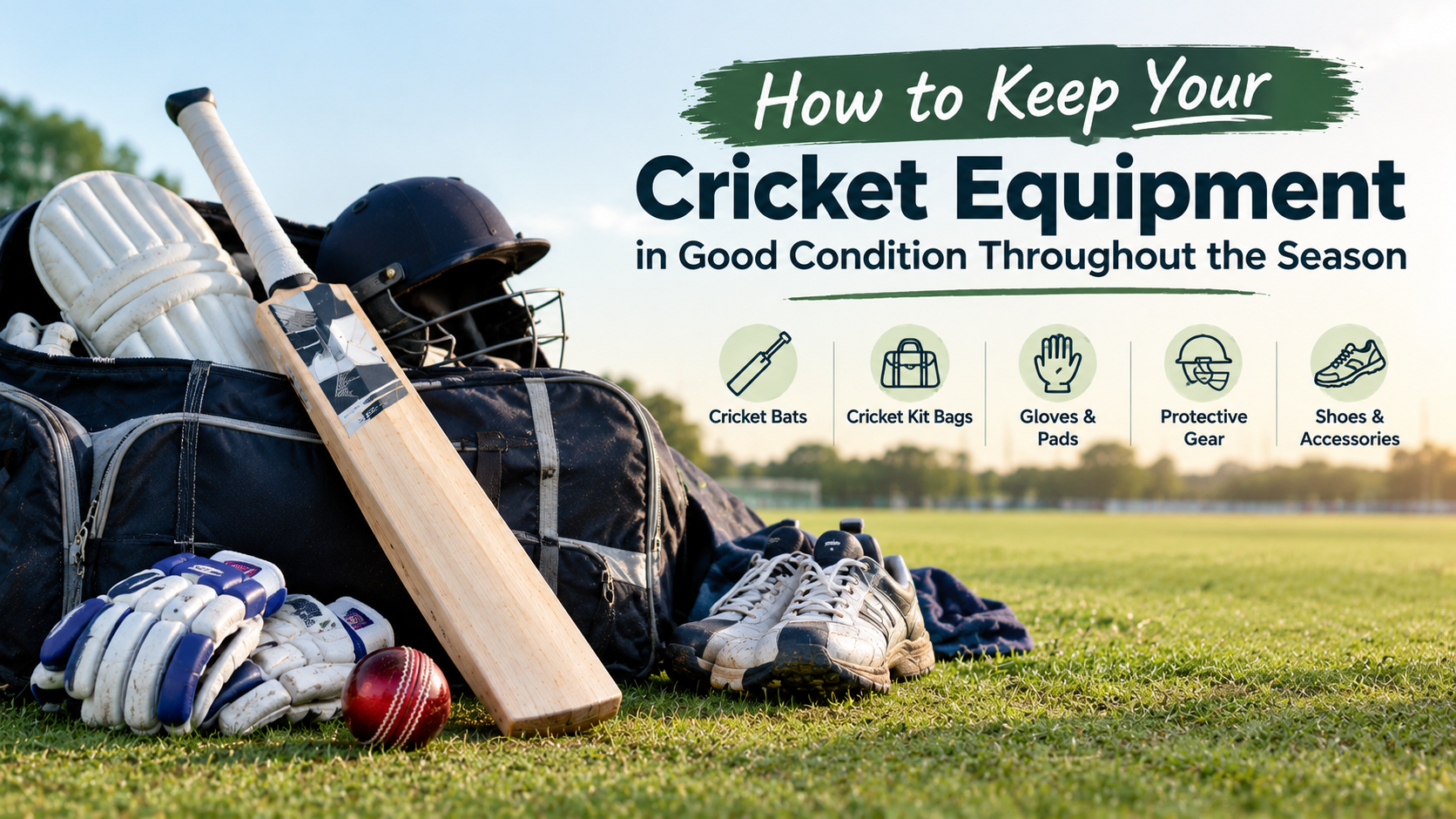
Taking care of cricket equipment helps players maintain its performance and avoid unnecessary damage during the season. Regular cleaning, proper storage, and timely repairs can make a difference to how long your gear remains usable. Cricket bats need protection from moisture and rough handling, while pads, gloves, shoes, and cricket kit bags require regular inspection and cleaning.
Good equipment care does not need to be complicated. A few simple habits after every practice session or match can help players keep their gear ready for the next game.
Why Is Cricket Equipment Maintenance Important?
Cricket equipment is exposed to different conditions throughout the season. Dust, sweat, moisture, repeated impacts, and rough transport can gradually affect its condition.
Neglecting maintenance may lead to damaged handles, worn grips, unpleasant odours, or equipment that becomes uncomfortable to use. Regular checks help identify small problems before they become more serious.
Proper care is useful for beginners, club players, and experienced cricketers alike. It also helps players understand when equipment needs cleaning, repair, or replacement.
How to Maintain Cricket Bats
Cricket bats require particular attention because they are made from wood and experience repeated impacts during play. Their condition depends on the quality of the wood, playing conditions, preparation, and how they are stored.
1. Keep the Bat Dry
After playing in damp conditions, wipe the bat with a clean, dry cloth and allow it to air-dry naturally if needed. Avoid leaving it in direct sunlight, near a heater, or inside a damp kit bag for long periods.
Excessive moisture and sudden changes in temperature can affect the wood. Never store a wet bat in a closed bag.
2. Check the Blade and Handle
Inspect the blade, edges, toe, and handle regularly. Small surface marks can occur during normal play, but deeper cracks, loose handles, or significant damage should not be ignored.
If you notice a structural problem, consult a bat repair professional before using the bat again. Continuing to play with a damaged bat may make the problem worse.
3. Look After the Grip
A worn or loose grip can affect comfort and control. Check it before matches and replace it when it becomes slippery, damaged, or loose.
Also, follow the manufacturer's instructions for knocking-in and other preparation. Not every bat requires the same treatment, so avoid applying oil or carrying out repairs without checking what the particular bat needs.
How to Keep Cricket Kit Bags Clean and Organised
Cricket kit bags carry several items, including bats, gloves, pads, shoes, clothing, and accessories. Because used equipment can contain sweat, dirt, and moisture, the bag needs regular attention too.
1. Empty the Bag After Matches
Remove used clothing, towels, shoes, and protective equipment after each session. Leaving damp items inside can cause unpleasant smells and encourage mould growth.
Allow the contents to dry before packing them away.
2. Clean the Bag Regularly
Remove loose dirt and wipe the inside and outside according to the care instructions. Check the compartments, zips, straps, and stitching for signs of wear.
Avoid soaking the entire bag unless its manufacturer confirms that it is washable. Allow it to dry completely before using it again.
3. Organise Equipment by Compartment
Use separate compartments for shoes, clothing, and protective gear whenever possible. Keep smaller items such as grips, tape, and accessories together so they are easier to find.
Well-organised cricket kit bags also make it easier to check whether anything is missing before leaving for practice or a match.
How to Care for Pads, Gloves, and Other Protective Gear
Protective equipment absorbs sweat and repeated impact during cricket. Cleaning and inspection help keep it comfortable and ready for use.
-
Batting gloves: Air them out after use and check the palms, fingers, and straps for wear.
-
Batting pads: Remove dirt and allow the inner padding to dry naturally.
-
Wicket-keeping gloves: Clean them according to the manufacturer's instructions and inspect the palms and webbing.
-
Helmet: Check the shell, grille, straps, and internal padding for damage.
-
Cricket shoes: Remove mud and dirt, dry them naturally, and inspect the soles for wear.
Replace equipment when it no longer provides suitable protection. Cleaning cannot restore protective gear that has been structurally damaged.
What Is the Best Way to Store Cricket Equipment?
Store your equipment in a cool, dry, and well-ventilated place. Avoid damp cupboards, leaking storage areas, and places exposed to extreme heat.
Keep cricket bats away from unnecessary pressure and avoid stacking heavy items on top of them. Make sure gloves, pads, and clothing are dry before putting them away.
A little preparation before the next match also helps. Check your bat grip, protective gear, shoes, and accessories so that you can identify missing or damaged items in advance.
Common Cricket Equipment Care Mistakes to Avoid
Some simple mistakes can shorten the useful life of cricket gear.
-
Leaving wet equipment inside a closed bag.
-
Storing a cricket bat in direct sunlight or near a heat source.
-
Ignoring loose grips, damaged handles, or visible cracks.
-
Using harsh cleaning products on materials that require special care.
-
Keeping dirty shoes and damp clothing alongside clean equipment.
-
Continuing to use damaged protective gear during matches.
Avoiding these habits helps keep your equipment in better condition throughout the season.
Make Equipment Care Part of Your Cricket Routine
Maintaining cricket equipment is easier when it becomes part of your regular routine. Dry your gear after playing, check for damage, clean your bag, and store everything properly before the next session.
Whether you play occasionally or compete throughout the season, looking after your cricket bats, protective gear, and cricket kit bags helps keep your equipment organised, comfortable, and ready for the game.
Frequently Asked Questions
How often should cricket equipment be cleaned?
Remove dirt and moisture after every practice session or match. Give the equipment a more thorough inspection and cleaning whenever it becomes visibly dirty or develops an unpleasant smell.
How should a cricket bat be stored after use?
Wipe off surface moisture, inspect the bat for damage, and store it in a dry place away from direct sunlight and extreme temperatures. Follow the manufacturer's instructions for any additional care.
How can I prevent cricket kit bags from smelling?
Remove sweaty clothing and damp equipment after each session. Clean the bag according to its care instructions and allow every compartment to dry completely before packing it again.
When should cricket equipment be replaced?
Replace equipment when it becomes unsafe, no longer fits properly, or cannot provide the required protection. A damaged helmet, worn protective padding, or structurally compromised bat should be assessed before further use.

 English
 Arabic
 French
 Portuguese
 Deutsch
 Turkish
 Dutch
 Italiano
 Russian
 Romaian
 Portuguese (Brazil)
 Greek
