
How are cleanroom materials selected for Laminar Airflow System Manufacturers?
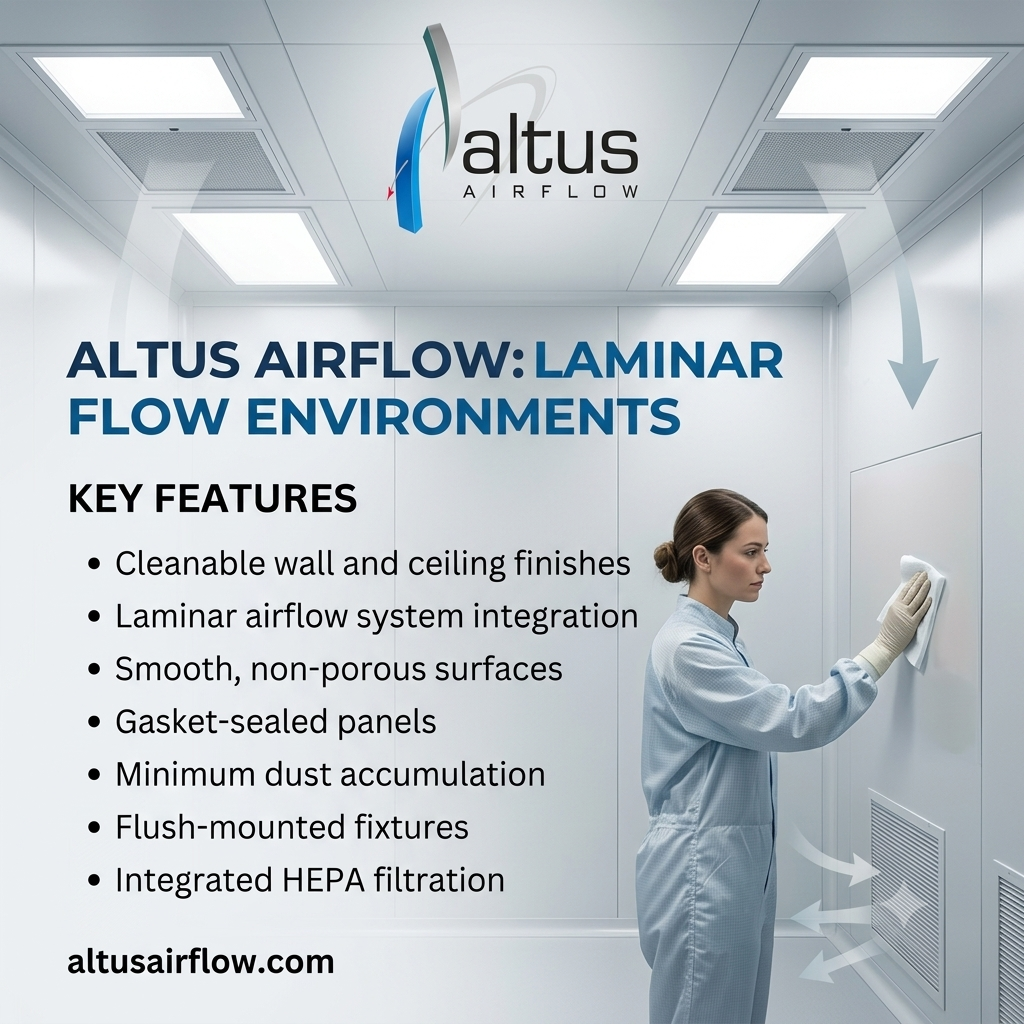
INTRODUCTION
Selecting appropriate construction materials is an important part of designing effective contamination-controlled environments. Laminar Airflow System Manufacturers consider factors such as surface cleanliness, particle shedding, chemical emissions, durability, cleaning compatibility, and maintenance requirements when recommending materials for cleanrooms and controlled work areas. The right material selection helps support stable environmental conditions, reduces contamination risks, and makes routine cleaning easier. Materials must also be compatible with the intended process, the airflow system, and the facility’s operating requirements.
Cleanroom material selection is not limited to wall panels or flooring. It includes ceilings, doors, windows, sealants, work surfaces, filter housings, ducts, gaskets, and other components that may affect cleanliness or airflow. Pharmaceutical facilities, healthcare environments, laboratories, and electronics manufacturing areas may have different requirements. Consequently, manufacturers should work with facility owners, cleanroom designers, HVAC engineers, and quality teams to establish project-specific specifications before materials are purchased or installed.
1. Understanding the Purpose of the Cleanroom
The first step in selecting materials is identifying the activities that will take place inside the controlled environment. A material suitable for a general laboratory may not be suitable for a pharmaceutical cleanroom or a precision electronics facility.
The design team should establish:
-
The required level of airborne particle cleanliness
-
The type of product or process being protected
-
The risk of chemical or biological contamination
-
The cleaning and disinfection procedures
-
Temperature and humidity conditions
-
Exposure to chemicals, moisture, or heat
-
The frequency of maintenance and equipment replacement
For example, a pharmaceutical production area may require surfaces that tolerate frequent cleaning and disinfectant exposure. An electronics cleanroom may place greater emphasis on particle generation and electrostatic control. A healthcare environment may require materials that withstand repeated cleaning while remaining intact.
ISO 14644-4:2022 provides guidance on cleanroom design, construction, start-up, and verification. It emphasizes establishing requirements at the beginning of the project and considering performance and maintenance throughout the facility’s lifecycle. <Cite refs={["turn883605search0","turn883605search1"]} />
2. Evaluating Particle Shedding and Surface Cleanliness
Cleanroom materials should minimize the release of particles during normal operation, cleaning, and maintenance. Crumbling coatings, deteriorating sealants, exposed insulation, damaged panels, and rough surfaces can introduce unwanted particles into a controlled area.
When evaluating materials, manufacturers should examine:
-
Surface smoothness and integrity
-
Resistance to abrasion
-
Potential for flaking or shedding
-
Joint and seam design
-
Compatibility with cleaning methods
-
Resistance to moisture-related deterioration
-
Ease of inspection and repair
Non-shedding finishes and well-sealed joints help limit areas where dust can accumulate. However, a smooth appearance alone does not establish cleanroom suitability. Material performance should be supported by technical specifications and, where necessary, testing relevant to the intended application.
Manufacturers should also consider how materials behave over time. A surface that performs well at installation may deteriorate if exposed to incompatible cleaning chemicals or excessive mechanical wear.
3. Selecting Suitable Wall Panel Materials
Wall systems form a major part of the cleanroom envelope. They should provide a durable, cleanable surface while supporting the required sealing, insulation, and service-integration arrangements.
Common options include:
-
Powder-coated metal-faced panels: Often selected for their smooth finish, durability, and ease of cleaning.
-
HPL-faced panels: High-pressure laminate surfaces may be suitable where the product specification demonstrates adequate chemical resistance, cleanability, and durability.
-
PUF or other insulated sandwich panels: These can provide thermal insulation when properly designed and installed with suitable facings and sealed joints.
-
Stainless steel cladding: May be considered for areas requiring particular durability or resistance to specific cleaning chemicals.
-
Specialist cleanroom wall systems: These may provide integrated joints, flush details, and service-access arrangements.
The choice depends on the cleanroom classification, process conditions, fire-performance requirements, budget, and maintenance plan. The insulation core, facing material, adhesives, and edge details should be assessed as a complete assembly rather than selected independently.
Before approval, manufacturers should review panel specifications, joint details, cleaning compatibility, and any required fire or structural documentation.
4. Choosing Ceiling Materials and Filter Integration Components
Ceilings must support the required cleanliness while accommodating lighting, air distribution, and other building services. Poorly sealed ceiling joints or unsuitable materials can allow dust accumulation and complicate maintenance.
A suitable ceiling system should provide:
-
Smooth and cleanable surfaces
-
Secure, well-sealed joints
-
Compatibility with required airflow components
-
Suitable support for installed equipment
-
Access for inspection and maintenance
-
Compatibility with lighting and monitoring systems
Where HEPA filters are installed at the ceiling, the filter housing, seals, and surrounding construction must be coordinated carefully. Air leakage around a filter can compromise system performance even if the filter itself meets its specified rating.
Manufacturers should ensure that filter housings and adjacent panels can be installed, inspected, and tested according to the approved design. Any ceiling access arrangements should minimize contamination risks during servicing.
5. Selecting Flooring for Cleanrooms
Flooring must withstand routine movement, equipment loads, cleaning chemicals, and the facility’s operating conditions. The correct choice depends on the cleanroom’s use and the degree of chemical, mechanical, and electrostatic protection required.
Common flooring options include:
-
Epoxy flooring: May provide a seamless, durable surface when correctly specified and installed.
-
Polyurethane flooring: Can offer flexibility and resistance to selected chemicals and mechanical stresses.
-
Conductive or static-dissipative flooring: May be appropriate for facilities where electrostatic discharge is a process risk.
-
Specialist sheet flooring: Can provide cleanable surfaces when seams and edges are properly installed and sealed.
Manufacturers and designers should evaluate chemical compatibility, abrasion resistance, slip resistance, joint detailing, and ease of repair. Conductive flooring should not be specified automatically for every cleanroom; it is needed when required by the process, equipment, or safety assessment.
Installation quality is equally important. Poorly cured coatings, damaged joints, trapped moisture, and uneven surfaces can create maintenance problems and affect long-term performance.
6. Assessing Doors, Windows, and Sealing Materials
Doors and windows are frequent points of contact and can influence the integrity of the cleanroom envelope. Their materials and construction should support cleanability, appropriate sealing, and the movement of people and equipment.
Considerations include:
-
Smooth, non-shedding surfaces
-
Durable door frames and hardware
-
Suitable gaskets and seals
-
Flush or easily cleanable interfaces
-
Appropriate glazing and viewing panels
-
Compatibility with pressure relationships
-
Resistance to cleaning chemicals
Sealants and gaskets should be selected for the expected temperature range, chemical exposure, and cleaning frequency. They should not crack, shrink, or release unacceptable substances under the intended conditions.
Door interlocks or self-closing mechanisms may be required by the design, process, or safety plan. These should be coordinated with the room’s airflow and access requirements rather than added without considering their effect on operations.
7. Considering Chemical Emissions and VOC Control
Some construction materials release volatile organic compounds (VOCs) or other chemicals into the surrounding air. Depending on the process, these emissions can be undesirable even when particle cleanliness is acceptable.
Materials that may require assessment include:
-
Paints and surface coatings
-
Adhesives and bonding agents
-
Sealants and caulking compounds
-
Flooring systems
-
Furniture finishes
-
Insulation facings and composite materials
Manufacturers should request relevant technical data and select materials suitable for the cleanroom’s intended use. Low-emission products may be appropriate, but claims should be supported by reliable documentation and assessed against the facility’s requirements.
For sensitive manufacturing and laboratory processes, material selection should be coordinated with the HVAC and filtration design. Construction curing, flushing, cleaning, and environmental testing may be needed before the area is put into service.
8. Checking Chemical Resistance and Cleaning Compatibility
Cleanroom materials must withstand the cleaning and disinfection products used by the facility. A coating that performs well under ordinary conditions may deteriorate after repeated exposure to strong detergents, disinfectants, solvents, or other process chemicals.
Before selecting a material, the project team should verify:
-
Compatibility with the specified cleaning agents
-
Resistance to repeated wiping and abrasion
-
Suitability for the required contact times
-
Resistance to moisture and temperature changes
-
Availability of manufacturer cleaning instructions
-
Repairability if the finish becomes damaged
The US Centers for Disease Control and Prevention recommends that healthcare surfaces and equipment be cleaned using methods and products appropriate to their intended use and manufacturer instructions. Although this guidance is specific to healthcare settings, the broader principle of verifying cleaning compatibility is useful when selecting cleanable surfaces. <Cite refs={["turn883605search7","turn883605search10"]} />
The facility should establish cleaning procedures before final material approval so that surface specifications match actual operational needs.
9. Coordinating Materials with HVAC and Laminar Airflow
Material selection should support the intended airflow pattern and the performance of the complete system. Wall geometry, ceiling components, openings, and equipment placement can affect airflow distribution and create areas of turbulence or particle accumulation.
Manufacturers should coordinate materials and construction details with the HVAC design, including:
-
Filter housing integration
-
Sealing around ducts and penetrations
-
Air supply and return locations
-
Access panels for maintenance
-
Equipment clearances
-
Surfaces near critical airflow zones
-
Monitoring and testing access
Laminar or unidirectional airflow is designed to direct air along a defined path, but the material selection alone cannot guarantee that this pattern will be achieved. The overall arrangement must be engineered and verified using appropriate testing methods.
The CDC describes laminar airflow as a one-way flow arrangement that can reduce turbulence within a designated clean zone. Its effectiveness depends on the application and system design, so the need for such a system should be determined by the facility’s specific requirements. <Cite refs={["turn883605search4"]} />
10. Reviewing Fire Safety, Structural Strength, and Durability
Cleanroom materials must meet more than cleanliness requirements. They also need to satisfy the applicable structural, fire-safety, and building requirements for the project.
The design team should verify:
-
Relevant fire-performance classifications
-
Structural support and fixing details
-
Resistance to expected impact and vibration
-
Suitability for the operating temperature
-
Compatibility with building services
-
Compliance documentation from suppliers
Panel systems should be selected as complete assemblies where fire performance depends on the facing, insulation core, joints, and fixing method. A single material certificate may not establish the performance of the installed assembly.
Manufacturers should coordinate these requirements with architects, fire-safety specialists, and the relevant approving authorities.
11. Assessing Installation Quality and Maintenance Access
Even high-quality materials can underperform if installation is poor. Gaps, damaged finishes, incomplete seals, and poorly executed service penetrations can create contamination traps and make cleaning difficult.
A sound installation plan should address:
-
Inspection of incoming materials
-
Approved installation drawings
-
Correct joint and sealant application
-
Protection of materials during construction
-
Prevention of dust and moisture contamination
-
Inspection of completed surfaces
-
Documentation of defects and corrective actions
Maintenance access should be designed into the system. Filters, lights, sensors, and service components may require periodic replacement, so their access routes should be planned without damaging cleanroom finishes.
A documented handover should include material specifications, cleaning instructions, warranty information, and maintenance recommendations.
12. Using a Structured Material Selection Checklist
Before approving cleanroom materials, Laminar Airflow System Manufacturers and facility owners should evaluate each proposed component against a consistent checklist.
-
Does the material meet the intended cleanliness requirements?
-
Is it resistant to particle shedding and surface deterioration?
-
Can it tolerate the planned cleaning chemicals?
-
Are VOC emissions and other chemical risks acceptable?
-
Does it suit the temperature, humidity, and process conditions?
-
Are fire and structural requirements documented?
-
Can joints and penetrations be sealed properly?
-
Is the material easy to inspect, repair, and maintain?
-
Are technical datasheets and supplier records available?
-
Has the material been coordinated with HVAC and filter integration?
The selection process should be documented so that material decisions can be reviewed during construction, commissioning, and future maintenance.
Conclusion
Cleanroom material selection requires a balanced assessment of cleanliness, chemical emissions, durability, cleanability, fire performance, installation quality, and long-term maintenance. Laminar Airflow System Manufacturers should coordinate wall panels, ceilings, flooring, doors, sealants, and filter integration components with the facility’s process requirements and HVAC design. A systematic approach helps reduce contamination risks and supports dependable cleanroom operation throughout the facility’s lifecycle. For organizations planning controlled environments, Altus Airflow can support the coordination of laminar airflow engineering and cleanroom solutions according to project-specific requirements.
Frequently Asked Questions
1. How do Laminar Airflow System Manufacturers select cleanroom materials?
Laminar Airflow System Manufacturers assess particle shedding, cleanability, chemical resistance, VOC emissions, durability, fire performance, and compatibility with the intended process and airflow system before recommending materials.
2. Which wall materials are commonly used in cleanrooms?
Laminar Airflow System Manufacturers may recommend powder-coated metal-faced panels, HPL-faced panels, insulated sandwich panels, or stainless steel finishes depending on the cleanroom’s requirements, cleaning procedures, and operating conditions.
3. Why is flooring important in cleanroom design?
Laminar Airflow System Manufacturers consider flooring because it must withstand cleaning chemicals, foot traffic, equipment loads, and possible electrostatic risks while providing a surface that is practical to maintain.
4. How are VOC emissions considered during material selection?
Laminar Airflow System Manufacturers review material data for paints, adhesives, sealants, flooring, and composite products to determine whether their emissions are appropriate for the facility’s intended use and contamination-control requirements.
5. Does ISO 14644 specify one material for every cleanroom?
No. Laminar Airflow System Manufacturers use relevant ISO 14644 guidance to support cleanroom design and verification, but material selection depends on the intended application, required performance, and project specifications.
Read Our Previous Blog------>What should clinics consider when selecting an IVF Lab Design contractor?

 Arabic
 French
 Spanish
 Portuguese
 Deutsch
 Turkish
 Dutch
 Italiano
 Russian
 Romaian
 Portuguese (Brazil)
 Greek
