
Medical Representative Training Course: Practical Learning for Pharma Careers?
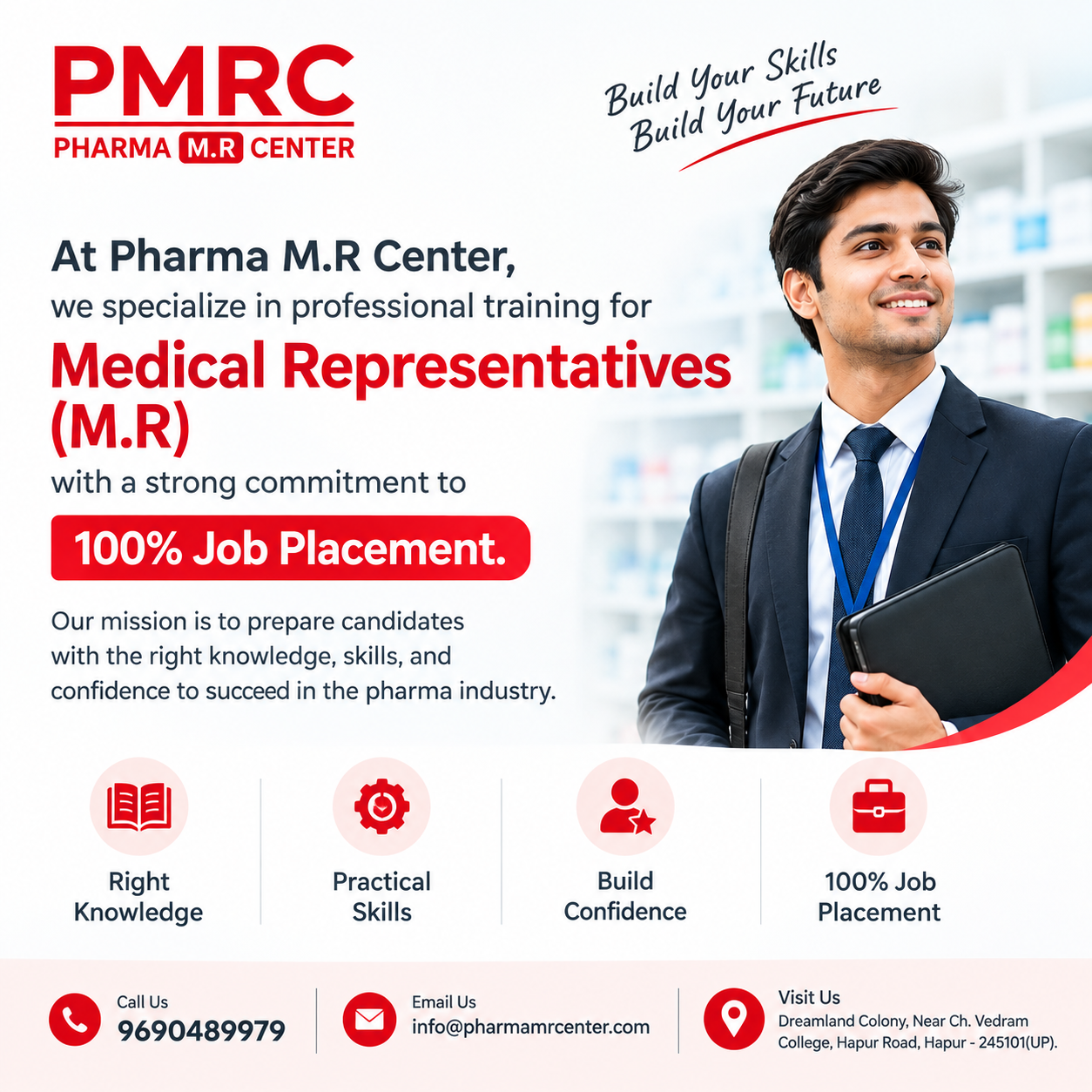
Starting a career in the pharmaceutical industry can be a big step for a fresher. You may have completed your studies and be interested in sales, communication or healthcare, but the idea of meeting doctors and explaining pharmaceutical products can feel unfamiliar. Understanding the work before applying can make the first step less stressful.
A Medical Representative (MR) works as a link between a pharmaceutical company and healthcare professionals. The role involves sharing authorised product information, maintaining professional relationships, planning field visits and completing company reporting. It requires product knowledge, communication skills and a responsible approach to work.
A medical representative training course can introduce candidates to these responsibilities through practical learning. Instead of focusing only on theory, a useful course gives students opportunities to practise conversations, prepare product presentations and understand common field situations. This preparation can be helpful when applying for a Medical Representative Job MR Job, although each employer has its own requirements and training process.
1. Understanding the MR Role Through Practical Examples
Reading about a job is useful, but it does not always show what the work feels like in real life. A practical course can help students understand how an MR's responsibilities fit together.
For example, a representative may need to prepare for a visit, introduce themselves, share approved product information, listen to questions and record the activity according to company procedures. These steps may sound simple, but doing them professionally takes practice.
During training, students can discuss common workplace situations and learn how to respond appropriately. They may practise introducing themselves, explaining the purpose of a visit or asking a trainer for clarification when they do not understand a product detail.
This kind of learning helps candidates form realistic expectations. An MR job is not simply about memorising a product name or speaking confidently. It involves preparation, accuracy, respectful communication and consistent follow-through.
2. Learning Pharmaceutical Basics and Product Information
Product knowledge is a central part of pharmaceutical fieldwork. Representatives need to understand the information their company authorises them to share and communicate it accurately.
A course may introduce basic pharmaceutical terminology, dosage forms, product composition and the structure of product literature. Students can learn how to read information carefully, identify key details and avoid confusing one product's information with another's.
Practical exercises might involve reviewing a sample product information sheet and summarising its relevant details in clear language. The aim is not to train students to diagnose conditions or recommend treatment. Those decisions belong to qualified healthcare professionals.
Freshers should also understand that the products they study during a course may not be the products they handle after joining a company. Employers provide their own product training, and candidates must follow the company's approved materials and instructions.
3. Practising a Clear and Professional Product Presentation
A representative may have only a short time to communicate during a professional visit. A long, confusing explanation is unlikely to be useful. Learning to present information clearly is therefore an important part of practical preparation.
In a training session, students might practise a short presentation using authorised or educational sample material. They can work on organising their points, speaking at a suitable pace and avoiding unsupported statements.
A trainer can provide feedback on whether the explanation is understandable, whether the student has stayed within the information provided and whether the presentation sounds professional.
The exercise can also teach students to adjust their language without changing the meaning of the information. Clear communication does not mean oversimplifying important details or making claims that are not supported.
4. Building Confidence Through Role-Play
Many freshers feel nervous about their first professional conversation. They may worry about forgetting what to say, being asked an unfamiliar question or not knowing how to begin.
Role-play can provide a low-pressure way to practise. One student can act as the representative while another plays the role of a healthcare professional in a simulated situation. The exercise should remain educational and should not be mistaken for an actual medical consultation.
Students can practise:
-
Giving a polite introduction.
-
Explaining the purpose of a professional visit.
-
Presenting information briefly and accurately.
-
Listening carefully to a question.
-
Responding honestly when they do not know something.
-
Closing the conversation respectfully.
After each exercise, students can discuss what went well and what they could improve. Repeating the exercise with different scenarios can help communication feel more natural over time.
Confidence usually comes from preparation and experience, not from memorising a script. A good course should encourage students to understand what they are saying rather than repeat fixed lines.
5. Learning Professional Conduct and Ethical Communication
A pharma career requires more than persuasive speaking. Medical representatives must act professionally and communicate product information responsibly.
Practical training can introduce the importance of using approved materials, respecting the time of healthcare professionals and avoiding exaggerated or unsupported claims. Students should learn not to guess when they are unsure about a product-related question.
For example, during a practice conversation, a student may be asked about a detail that is not included in the supplied material. The appropriate response is to acknowledge the question and explain that they will check the authorised information or consult the relevant company resource.
This habit is important because professional trust depends on accuracy. A course should make ethical conduct part of its exercises, not treat it as an optional topic.
6. Preparing for Field Planning and Time Management
Fieldwork can involve travelling between locations, following a planned schedule and maintaining records of visits. Freshers who have not worked in a field-based role may need time to understand how these tasks are managed.
A practical course can introduce basic planning concepts. Students might create a sample daily schedule, organise a list of hypothetical visits or discuss how to allow time for travel and unexpected changes.
They can also learn why accurate reporting matters. Pharmaceutical companies may have their own systems and requirements, so training should explain general principles while making clear that workplace procedures vary.
Good planning does not mean every day will go exactly as expected. Representatives need to remain organised and adapt appropriately when appointments or circumstances change.
7. Developing Skills for MR Job Interviews
Practical learning can also support interview preparation. Employers may ask candidates what they understand about the MR role, why they are interested in pharma sales or how they would respond to a professional question.
Students can practise explaining their interest in the industry, describing the skills they are developing and answering questions in a clear, honest manner.
A mock interview may help candidates notice habits such as speaking too quickly, giving overly long answers or struggling to explain their motivation. Feedback gives them a chance to improve before attending an actual interview.
Still, interviews differ between companies. A training course cannot guarantee selection, and candidates should review the specific job description and employer expectations before applying.
8. What to Look for in a Practical Training Course
Not every course offers the same level of hands-on learning. Before enrolling, ask how the practical component works and what students will actually do.
A course may be more useful if it includes:
-
Exercises in communication and professional introductions.
-
Product-information reading and presentation practice.
-
Role-play based on realistic workplace situations.
-
Basic field planning and reporting examples.
-
Interview preparation with constructive feedback.
-
Clear guidance on ethical and responsible product communication.
Ask about the trainer's relevant experience, course duration, fees and syllabus. If placement support is advertised, find out exactly what it means. Does it include interview referrals, job alerts or something else? Avoid relying on vague claims of guaranteed employment or salary.
A training course should help you develop skills and understand the work. It should not promise that completing the course automatically makes you eligible for every MR position. Educational qualifications and other hiring criteria vary by employer.
9. Turning Training Into Career Preparation
The value of training depends partly on how students use it. After a session, review the material, practise presentations aloud and note the areas where you need more confidence.
When applying for a Medical Representative Job, read the vacancy carefully. Check the required qualifications, location, travel expectations and any experience criteria. Prepare examples that show your willingness to learn, communicate professionally and handle responsibilities.
If you are hired, continue learning through the company's induction and product training. Follow workplace instructions, use approved information and ask questions when something is unclear. Practical skills become stronger with feedback and real experience.
Conclusion
A medical representative training course can offer freshers a useful introduction to pharma careers by combining basic knowledge with practical exercises. Role-play, product presentation practice, field-planning examples and interview preparation can help candidates understand what an MR does and what the job may demand.
For anyone considering a Medical Representative Job MR Job, the best preparation is realistic: learn the fundamentals, practise communicating responsibly and remain ready to learn from the employer. Training can help build that foundation, while professional experience and continued learning shape the career over time.

 English
 Arabic
 French
 Spanish
 Portuguese
 Deutsch
 Turkish
 Dutch
 Russian
 Romaian
 Portuguese (Brazil)
 Greek
