
Fire Alarm Systems: Types, Benefits, Costs & Safety Guide
Introduction
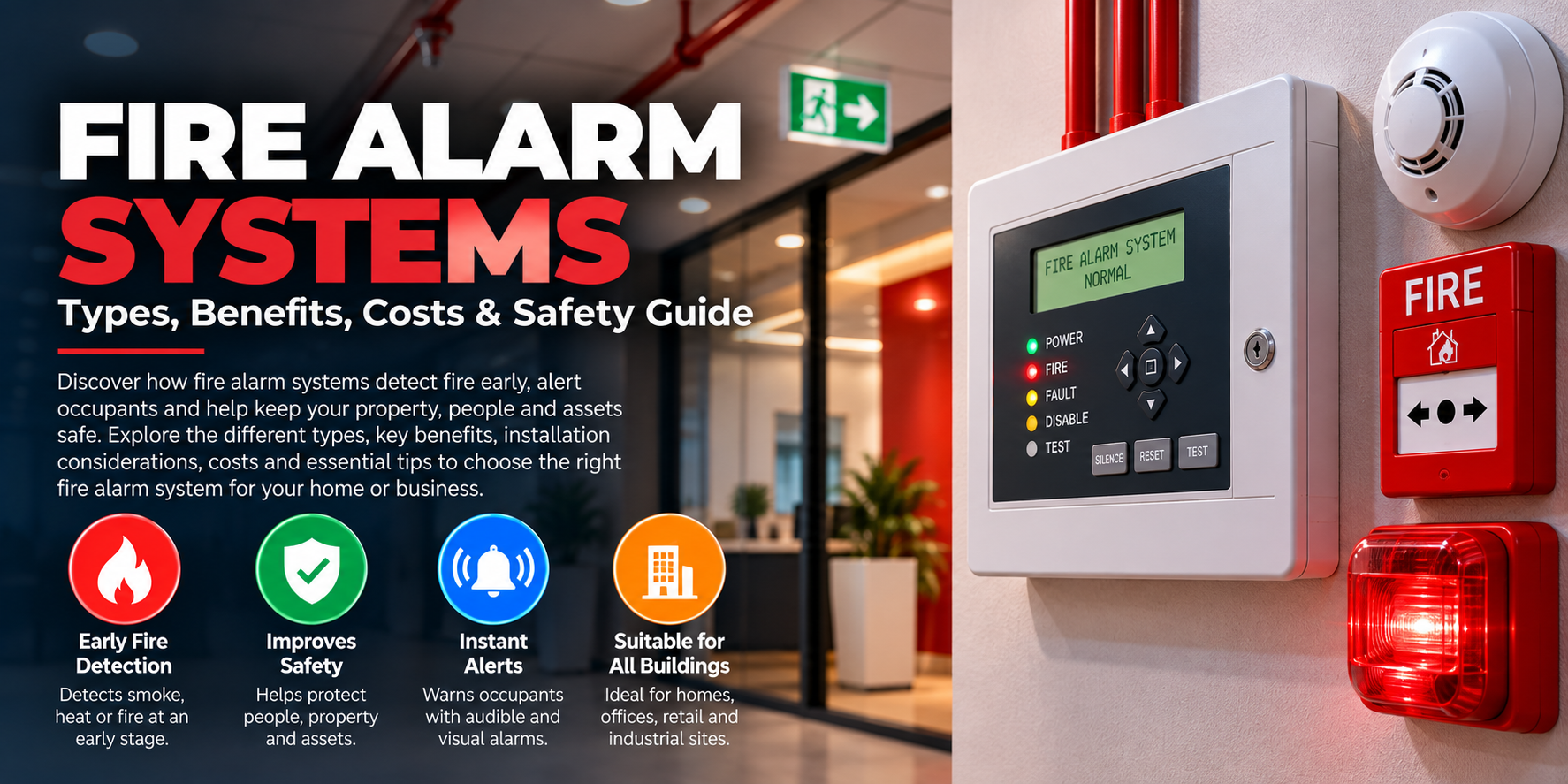
Fire alarm systems are essential safety solutions designed to detect signs of fire, alert building occupants, and support a quick emergency response. These systems use smoke detectors, heat sensors, control panels, and audible alarms to identify potential fire hazards. Whether installed in commercial buildings, offices, warehouses, or residential properties, a reliable fire alarm system helps protect lives, reduce property damage, and improve overall fire safety.
What Are Fire Alarm Systems?
Fire alarm systems are interconnected safety devices that detect possible fire conditions and notify occupants through audible or visual warnings. Their primary purpose is to provide early notification so people can evacuate before smoke, heat, and flames create dangerous conditions.
Modern fire alarm systems can include automatic smoke and heat detection, manual call points, alarm sounders, flashing beacons, and monitoring connections. Depending on the building's requirements, they may also communicate with other safety equipment, such as smoke-control systems, fire doors, and building management systems.
For businesses, installing an appropriate fire alarm system is an important part of maintaining a safe environment for employees, customers, and visitors.
How Do Fire Alarm Systems Work?
Fire alarm systems operate through a combination of detection, communication, and warning mechanisms. When a detector senses smoke or excessive heat, it sends a signal to the fire alarm control panel.
The control panel processes the signal and activates the relevant warning devices. These may include sirens, bells, flashing lights, and voice evacuation messages.
In monitored systems, an alarm signal may also reach an alarm receiving centre or another designated response service, depending on the configuration and monitoring arrangements.
Early detection can significantly improve the time available for evacuation and emergency response. However, fire alarms do not extinguish fires themselves. They are most effective when supported by suitable fire prevention measures, evacuation procedures, and other fire protection equipment.
Different Types of Fire Alarm Systems
Conventional Fire Alarm Systems
Conventional fire alarm systems are commonly used in smaller buildings with relatively simple layouts. They divide a property into detection zones, allowing the control panel to identify the general area where an alarm has been triggered.
For example, an office building might have separate zones for its reception, storage area, and working spaces.
These systems are generally straightforward to operate and can be economical for smaller installations. However, they normally do not identify the precise detector responsible for an alarm, which may make locating the source more difficult.
Addressable Fire Alarm Systems
Addressable fire alarm systems provide more detailed information by assigning a unique address to each connected device.
When a detector activates, the control panel can identify its specific location. This helps building managers and responding personnel investigate the alarm more efficiently.
Addressable systems are particularly useful in large offices, hospitals, hotels, warehouses, and other complex buildings where accurately identifying an alarm location is important.
Although these systems typically require a higher initial investment, their advanced monitoring and diagnostic capabilities can offer operational advantages.
Wireless Fire Alarm Systems
Wireless fire alarm systems use radio communication between compatible detection devices and control equipment, reducing the need for extensive signal cabling.
They are especially useful in historic buildings, occupied premises, and properties where installing additional cables would be difficult or disruptive.
Wireless systems can offer installation flexibility, but they still require appropriate design, signal reliability checks, battery maintenance, and regular testing.
Hybrid Fire Alarm Systems
Hybrid fire alarm systems combine wired and wireless components within a compatible installation.
This approach is useful when upgrading an existing building or extending fire detection coverage without replacing the entire infrastructure.
For example, a business expanding into additional office space may be able to integrate suitable wireless devices with an existing wired fire alarm network.
Essential Components of Fire Alarm Systems
Fire Alarm Control Panel
The fire alarm control panel is the central component responsible for receiving signals from detection devices and controlling the system's response.
It displays information about alarm conditions, faults, and system status. Advanced panels can also provide location information and communicate with connected safety systems.
Smoke Detectors
Smoke detectors identify smoke particles in the surrounding air and initiate an alarm signal when their detection criteria are met.
Different detector technologies are available for different environments. Proper selection and placement are essential because dust, steam, and other airborne particles may cause unwanted alarms.
Heat Detectors
Heat detectors activate when temperatures exceed a defined threshold or rise at a specified rate, depending on the detector type.
They are useful in areas where smoke detectors may be unsuitable, such as certain kitchens, workshops, and dusty environments.
However, heat detectors may respond later than smoke detectors in some fire scenarios.
Manual Call Points
Manual call points allow building occupants to raise a fire alarm when they discover a fire.
They are typically positioned along escape routes and near exits, according to the building's fire alarm design requirements.
Alarm Sounders and Visual Devices
Alarm sounders provide audible warnings, while visual alarm devices use flashing lights to alert occupants.
The selection of notification devices depends on building size, background noise, accessibility requirements, and the needs of occupants.
Benefits of Installing Fire Alarm Systems
Early Fire Detection
One of the most important benefits of a fire alarm system is its ability to identify potential fire conditions before occupants might otherwise notice them.
Early warning gives people additional time to evacuate and allows emergency procedures to begin sooner.
Protection of Employees and Visitors
Commercial buildings often contain numerous occupants who may be unfamiliar with the layout or emergency exits.
A properly designed alarm system helps communicate danger quickly and supports organised evacuation procedures.
Reduced Property Damage
Although fire alarms cannot directly prevent structural damage, prompt detection can help initiate a faster response.
This may reduce the extent of damage to buildings, equipment, stock, and other valuable assets.
Support for Fire Safety Compliance
Fire alarm systems can help businesses meet applicable fire safety obligations.
In the UK, the required fire detection and warning arrangements depend on the premises, occupancy, and findings of the fire risk assessment. Relevant standards, including BS 5839-1 for non-domestic premises, provide guidance on system design, installation, commissioning, and maintenance.
Greater Business Continuity
A serious fire can interrupt business operations, damage equipment, and disrupt supply chains.
Effective fire detection, supported by a comprehensive fire safety strategy, can reduce risk and help businesses recover more efficiently following an incident.
Fire Alarm System Installation Process
Professional installation is essential to ensure a fire alarm system operates correctly and provides appropriate coverage throughout a property.
Fire Risk Assessment and Planning
The installation process begins with evaluating the building's size, layout, occupancy, fire hazards, and evacuation arrangements.
A fire risk assessment helps determine the appropriate fire alarm system category, detector locations, warning devices, and monitoring requirements.
Equipment Selection and Installation
Once the requirements are established, suitable detectors, control panels, manual call points, and alarm notification devices are selected.
Qualified installers position the equipment according to the approved system design and applicable safety standards.
Testing and Commissioning
After installation, the system undergoes testing to confirm that detectors, control panels, alarms, and other connected components function correctly.
Commissioning also includes checking system configuration, documenting the installation, and providing instructions to the responsible building personnel.
How Much Do Fire Alarm Systems Cost?
The cost of fire alarm systems varies depending on the size of the property, the type of system, the number of detection devices, and installation complexity.
A small commercial office with a conventional alarm system may require a relatively modest investment compared with a large warehouse or multi-storey building using an addressable system.
Wireless systems may reduce cabling and installation disruption, although the equipment itself can be more expensive.
Businesses should also consider ongoing expenses such as scheduled maintenance, replacement components, battery servicing, and optional alarm monitoring.
Selecting a system based solely on its initial purchase price can lead to higher long-term expenses if it does not meet the property's operational or safety requirements.
Fire Alarm System Maintenance and Testing
Regular maintenance helps ensure that fire alarm systems remain operational and capable of providing reliable warnings.
In UK non-domestic premises, weekly user testing is commonly recommended under BS 5839-1, with routine inspection and servicing by a competent person generally carried out at intervals not exceeding six months.
Maintenance activities include examining detectors, checking control panel indications, testing alarm devices, inspecting backup power supplies, and investigating system faults.
Businesses should maintain an accurate fire alarm logbook documenting tests, maintenance activities, faults, and corrective actions.
Proper maintenance also reduces the likelihood of unwanted alarms that can interrupt operations and undermine confidence in the system.
How to Choose the Right Fire Alarm System
Choosing the right fire alarm system requires understanding the building's specific safety requirements.
Smaller commercial properties may benefit from conventional systems where simple zone-based detection is sufficient. Larger or more complicated premises often require addressable systems for improved device identification and fault monitoring.
Building managers should consider occupancy levels, escape routes, environmental conditions, accessibility needs, and potential future expansion.
Compatibility with existing safety infrastructure is another important factor. Fire doors, access control equipment, smoke-control systems, and other building technologies may need to operate together during an emergency.
A competent fire alarm designer or installer can determine the appropriate solution using the fire risk assessment and applicable standards.
Frequently Asked Questions About Fire Alarm Systems
What Is the Main Purpose of a Fire Alarm System?
The main purpose of a fire alarm system is to detect potential fire conditions and warn occupants so they can evacuate safely. It also supports emergency response procedures and helps reduce the risks associated with delayed fire detection.
What Is the Difference Between Conventional and Addressable Fire Alarm Systems?
Conventional fire alarm systems identify the general zone where an alarm originates, while addressable systems identify individual devices. Addressable systems are generally more suitable for larger buildings requiring detailed monitoring.
How Often Should Fire Alarm Systems Be Tested?
Testing requirements depend on the building and applicable regulations. In UK commercial premises, weekly user testing and periodic professional servicing are commonly recommended under BS 5839-1.
Can Fire Alarm Systems Be Connected to Security Systems?
Yes. Compatible fire alarm systems can integrate with access control, building management, and other safety systems. Such integrations must be carefully designed so that security functions do not interfere with fire safety requirements.
Are Wireless Fire Alarm Systems Reliable?
Properly designed, installed, and maintained wireless fire alarm systems can provide reliable detection. Their performance depends on suitable radio communication, battery condition, environmental factors, and compliance with relevant standards.
How Long Does a Fire Alarm System Last?
The lifespan of a fire alarm system depends on equipment quality, operating conditions, manufacturer recommendations, and maintenance. Individual components may require replacement before the complete system reaches the end of its useful life.
Conclusion
Fire alarm systems play an essential role in protecting people, property, and business operations from fire-related risks. From conventional and addressable systems to wireless and hybrid solutions, each technology offers different advantages depending on building requirements.
Investing in professional installation, appropriate detection equipment, regular testing, and planned maintenance helps ensure dependable performance.
A properly designed and maintained fire alarm system is a fundamental part of an effective fire safety strategy, supporting early detection, safer evacuation, and improved protection for commercial and residential properties.

 English
 Arabic
 Spanish
 Portuguese
 Deutsch
 Turkish
 Dutch
Dutch
 Italiano
 Russian
 Romaian
 Portuguese (Brazil)
 Greek
Greek
