
Anti-Slip Mats for Service Bays: Reducing Slips in Wet Houston Weather
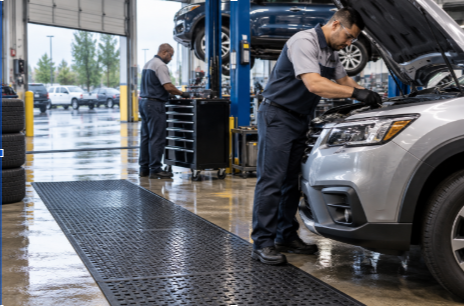
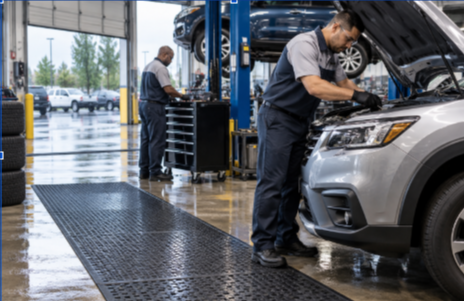
A Houston rainstorm can turn an ordinary workday at an automotive repair shop into a challenge. Customers track water through the entrance, technicians move between vehicles, and moisture can spread across floors where oil, dirt, and cleaning products may already be present.
Service bay floor mats help manage moisture in automotive work areas by providing suitable traction, capturing water, and supporting a regular floor-cleaning routine. The right mat for a service bay should be designed for wet conditions, compatible with the work environment, and maintained so it continues to perform as intended. Automotive businesses looking for automotive uniforms Houston TX can also consider workwear programs that help technicians maintain a consistent, professional appearance throughout their shifts.
Why Do Houston Auto Shops Need Better Slip Prevention?
Automotive service bays face several sources of moisture throughout the year. Rainwater can enter through customer doors and vehicle entrances, while routine washing, spills, and equipment maintenance may introduce additional liquids.
Houston's humid climate and rainy periods make it especially useful for shop managers to review how water moves through their facilities. A wet entrance, a damp walkway between lifts, or a slippery area near a workbench can interrupt operations and expose employees to preventable hazards.
Consider a shop with several technicians working on different vehicles. One employee may be carrying tools while another walks toward a vehicle lift. If water and grime have spread across a shared walkway, both workers may face an increased risk of slipping.
A practical prevention plan should include more than placing a mat wherever the floor looks wet. Managers need to identify where moisture enters, where employees walk, and which areas require mats designed for specific conditions.
The goal is to make slip prevention part of the shop's daily routine rather than waiting until someone reports a problem.
How Do Service Bay Floor Mats Help Reduce Slip Risks?
Service bay floor mats can help control moisture and provide a more suitable walking surface when the product is designed for the location. However, not every mat is appropriate for an automotive repair environment.
A mat intended for a reception area may not be suitable for a bay exposed to water, oils, or automotive fluids. Shop managers should select products according to the actual conditions in each work zone.
Wet-area mats are particularly relevant where liquids are regularly present. UniFirst offers Comfort Plus wet-area mats designed for wet work environments, including automotive repair bays. Their moisture-flow-through construction helps manage liquids, while the textured underside supports drainage and helps resist slipping.
Other mat types serve different purposes:
-
Wet-area mats: Designed for locations where moisture is a regular concern.
-
Scraper mats: Help remove dirt and moisture from footwear at entrances.
-
Walk-off mats: Capture additional dirt and moisture as people enter a building.
-
Anti-fatigue mats: Cushion the feet and legs of employees who stand for extended periods.
Choosing the correct product matters because a mat that collects water without managing it properly can become another maintenance concern. Placement, cleaning, inspection, and the condition of the underlying floor all affect how well a mat supports workplace safety.
Where Should Auto Shops Place Anti-Slip Shop Mats?
Effective mat placement starts with observing how employees and customers move through the facility. Instead of covering every floor indiscriminately, identify locations where moisture accumulates or foot traffic creates recurring concerns.
1. Customer and employee entrances
Place suitable scraper mats outside entrances where practical, followed by absorbent walk-off mats inside. This arrangement helps capture water and dirt before they spread into the shop.
During rainy weather, inspect these areas more frequently. Replace or service mats when they become saturated, excessively dirty, damaged, or unable to lie flat.
2. Active service bays
Wet-area mats may be appropriate in designated locations where technicians regularly encounter moisture. Before placing them, check the manufacturer's guidance for compatibility with the expected liquids, floor conditions, and work activities.
Keep mats away from vehicle paths, lift contact points, and other areas where they could interfere with equipment or create a trip hazard. Never allow a mat to obstruct emergency access or required walkways.
3. Workbenches and inspection areas
Technicians often move between tool storage, parts counters, and vehicles. Review these routes for recurring moisture, especially near cleaning stations or locations where wet components are handled.
Use mats only where they fit the task and do not interfere with moving equipment, carts, or safe footing.
4. Walkways between workstations
Shared walkways deserve particular attention because multiple employees may use them while carrying tools or parts. Keep these routes clear and address water accumulation promptly.
Mats should complement housekeeping, not replace it. If a walkway repeatedly becomes wet, investigate the source and correct it where possible.
What Should You Look for When Choosing Wet-Area Mats?
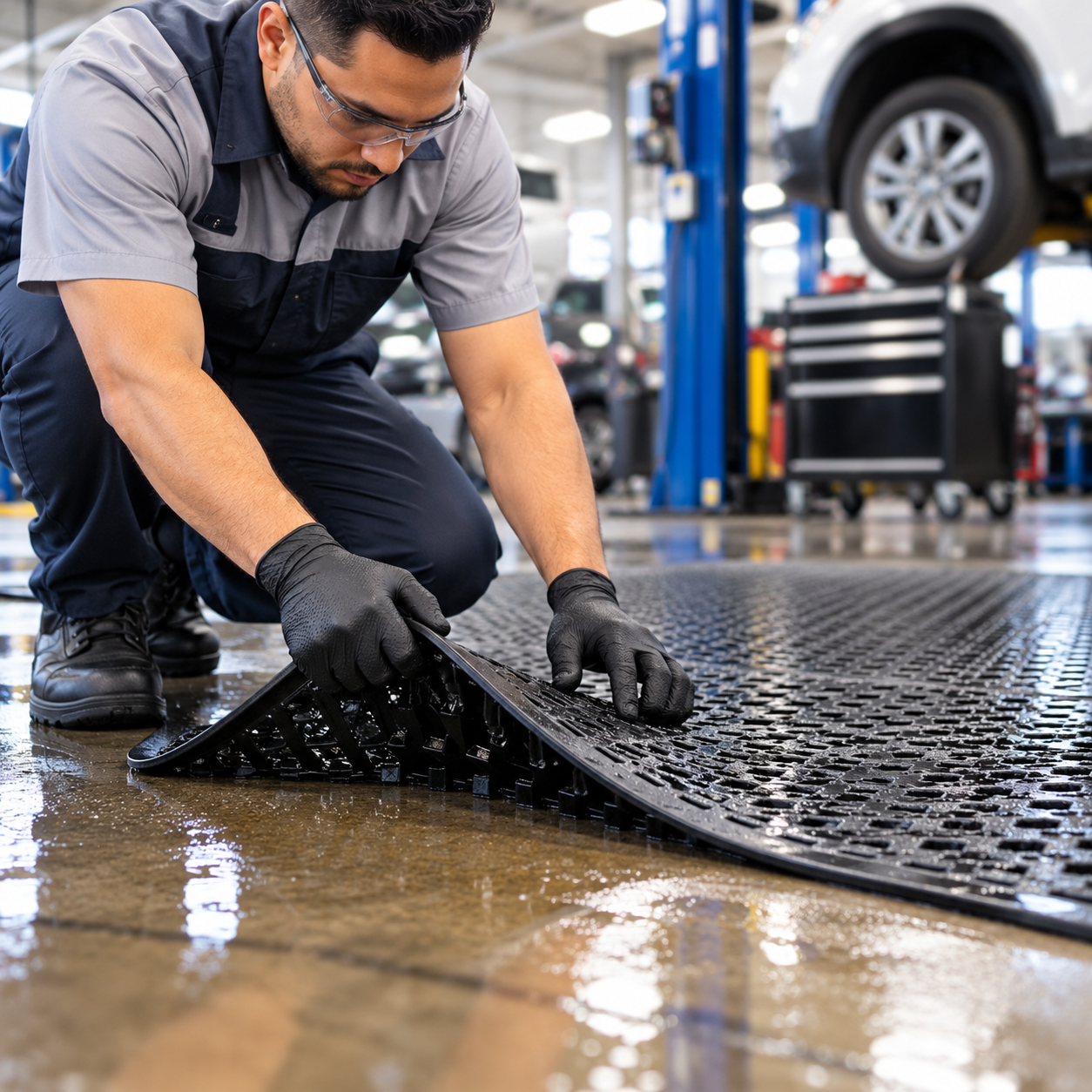
The right mat depends on the liquids present, the floor surface, traffic patterns, and the work being performed. A product that works well in a dry inspection area may not be suitable beside a wash station.
Use this checklist when comparing options:
|
Selection factor |
What to check |
|
Intended use |
Confirm the mat is designed for wet work areas or the specific application. |
|
Liquid compatibility |
Check manufacturer guidance for water, oil, solvents, and other expected fluids. |
|
Drainage |
Look for a design that manages moisture appropriately for the location. |
|
Backing and edges |
Check stability, slip resistance, and edges that could create trip hazards. |
|
Cleaning requirements |
Confirm how the mat should be cleaned, dried, and inspected. |
|
Equipment access |
Make sure the mat does not interfere with lifts, vehicles, carts, or walkways. |
|
Wear and damage |
Establish when a mat should be removed, repaired, or replaced. |
A useful question for managers is whether the mat addresses the actual hazard. For example, a wet-area mat may help manage water near a cleaning station, but it will not correct an oil leak or make an incompatible chemical spill safe to walk through.
If a spill occurs, follow the shop's established cleanup procedure and the applicable product safety instructions. Keep people away from the affected area until it is safe to reopen.
How Can Shops Improve Wet Weather Slip Prevention?
Mats work best when they are part of a broader housekeeping and inspection routine. Even a suitable product can become less effective if it is damaged, poorly positioned, or neglected.
Houston shop managers can use the following steps to prepare for rainy days.
At the start of the shift:
-
Inspect entrances, service bays, and shared walkways for standing water.
-
Check that mats lie flat and have no curled edges, tears, or movement.
-
Confirm that floor drains and designated drainage areas are functioning as intended.
-
Make sure spill-cleanup supplies are available and employees know the reporting procedure.
During the shift:
-
Address tracked-in water and spills promptly.
-
Recheck high-traffic areas after heavy rain or vehicle movements.
-
Remove damaged or saturated mats according to the facility's procedures.
-
Keep tools, hoses, parts, and cords out of walking routes.
At the end of the shift:
-
Clean floors and mats according to manufacturer instructions.
-
Investigate recurring wet spots instead of repeatedly treating the same symptom.
-
Record maintenance issues that need attention.
-
Arrange service or replacement for mats that no longer perform as expected.
Managers should also train employees to recognize hazards and report them without delay. Safety expectations should be clear for everyone, including new technicians, temporary workers, and service advisors who enter the shop floor.
For additional guidance on how mat placement, maintenance, and comfort fit into workplace safety, read UniFirst's safety benefits of commercial floor mats.
How Does a Managed Floor Mat Service Support Automotive Operations?
Managing mats in-house can require purchasing suitable products, tracking their condition, cleaning them, and replacing worn items. For a busy repair shop, these responsibilities compete with vehicle scheduling, customer service, and technician support.
A managed floor mat service can help simplify this work. UniFirst describes a program that includes scheduled pickup of soiled mats, delivery and placement of clean mats, professional laundering and maintenance, and replacement of worn or damaged products as needed.
For a Houston automotive business, this approach can make mat upkeep more predictable. A service arrangement can also help managers review whether the mats in different areas match the facility's needs.
When evaluating a program, ask practical questions:
-
Which mat types are appropriate for our service bays and entrances?
-
How frequently will mats be serviced?
-
How are damaged, worn, or unsuitable mats handled?
-
Can the service schedule accommodate our operating hours and traffic patterns?
-
What responsibilities remain with our employees between service visits?
The answers can help you determine whether managed service fits your shop's workflow. No mat program eliminates every slip risk, so continue to inspect floors, address spills, and maintain safe walking routes.
FAQs About Service Bay Floor Mats
What are the best service bay floor mats for wet conditions?
The best option depends on the liquids present and how the area is used. Wet-area mats designed for automotive repair environments may be appropriate where moisture is common. Check product compatibility, drainage, backing, edges, and cleaning instructions before selecting a mat.
Do anti-slip shop mats prevent all slips and falls?
No. Mats can help manage moisture and support traction, but they cannot eliminate every hazard. Standing water, oil, damaged flooring, poorly placed mats, and unsafe work practices can still create risks. Combine appropriate mats with prompt spill cleanup, inspections, employee training, and good housekeeping.
How often should automotive floor mats be cleaned?
Cleaning frequency depends on traffic, moisture, contamination, and manufacturer instructions. Inspect mats throughout the day, particularly during wet weather, and arrange cleaning whenever their condition requires it. A managed service program can provide scheduled laundering, but employees should still report problems between visits.
Are wet-area mats suitable for oil and automotive chemicals?
Not automatically. Compatibility varies by product and by the liquid involved. Review the manufacturer's specifications before using a mat in areas exposed to oil, solvents, coolants, or other automotive fluids. Address spills using the facility's established safety procedures rather than relying on a mat to contain them.
Can floor mats replace regular shop floor cleaning?
No. Mats are one part of a wider housekeeping plan. Employees must still remove spills, keep walkways clear, maintain drainage, and inspect flooring. A properly selected and maintained mat program can support these efforts, but it should not replace routine cleaning or hazard correction.
Next Step: Build a Safer Service Bay in Houston
Wet weather does not have to make floor maintenance a constant source of disruption for your automotive team. Start by identifying where water enters, where technicians walk, and which work areas need mats designed for their conditions. Combine appropriate mat placement with regular inspections, timely spill cleanup, and a maintenance schedule that fits your operations. UniFirst can help you explore floor mat services and workwear solutions for your facility, including options for local automotive businesses.
Ready to discuss your team's workwear needs? Contact us for a free quote.

 English
 Arabic
 Spanish
 Portuguese
 Deutsch
 Turkish
 Dutch
Dutch
 Italiano
 Russian
 Romaian
 Portuguese (Brazil)
 Greek
Greek
