
CAN Bus Troubleshooting: Common Problems and Effective Solutions
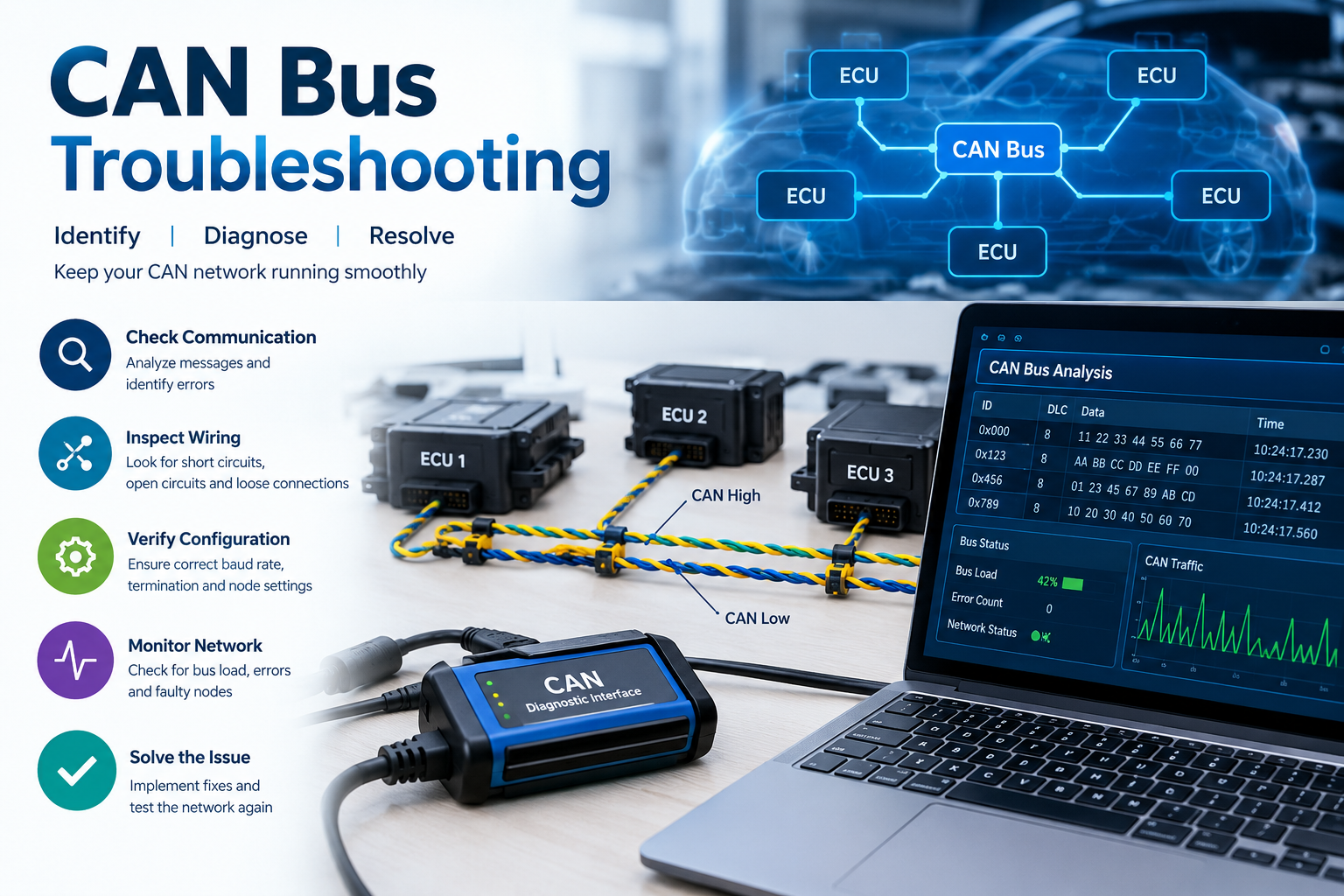
Modern automotive systems, industrial machinery, and embedded applications depend on reliable communication between electronic control units. The Controller Area Network (CAN) protocol allows multiple electronic devices to exchange information efficiently over a shared communication network. However, wiring faults, configuration errors, electrical interference, and hardware problems can sometimes interrupt communication.
CAN Bus Troubleshooting helps engineers investigate these issues, identify their underlying causes, and restore reliable communication between connected devices. Understanding the troubleshooting process is essential for maintaining the performance of electronic control systems.
What Is CAN Bus Troubleshooting?
CAN Bus Troubleshooting is the systematic process of identifying and resolving problems that affect communication within a Controller Area Network.
A CAN network allows electronic control units (ECUs) to exchange messages without requiring a separate direct connection between every device. This architecture is widely used in automotive electronics, mobile machinery, industrial automation, and embedded systems.
When a network develops a fault, engineers need to determine whether the problem originates from wiring, electrical signals, communication settings, software, or a connected device.
A structured troubleshooting process helps narrow down potential causes and prevents unnecessary component replacement.
Common CAN Bus Problems
Several technical issues can affect CAN communication. Understanding their possible causes helps engineers plan an effective investigation.
1. Wiring and Connector Problems
Damaged cables, loose connectors, corrosion, and incorrect wiring can interfere with communication between electronic devices.
The first step is to inspect relevant wiring and connectors according to the equipment manufacturer's documentation. Engineers may also perform appropriate continuity checks when the system is safely isolated.
Physical damage should be addressed before moving on to more complex diagnostic procedures.
2. Incorrect Termination
CAN networks commonly use termination resistors to reduce signal reflections on the communication line.
Incorrect termination, missing resistors, or unsuitable network wiring can affect signal quality and cause communication errors.
Engineers should verify the network's termination arrangement against its design specifications. Resistance measurements must be performed with the system powered down and isolated as required by the manufacturer's procedures.
3. Communication Configuration Errors
Electronic devices must use compatible communication settings to exchange information correctly.
Depending on the application, configuration problems may involve an incorrect bit rate, mismatched network parameters, or an unexpected message configuration.
Reviewing controller settings and technical documentation can help determine whether the devices are configured correctly.
4. Electrical Interference
Electrical noise can affect communication signals, particularly in environments containing motors, power electronics, and other sources of electromagnetic interference.
Engineers may investigate cable routing, grounding arrangements, shielding, and signal waveforms to identify potential interference problems.
The appropriate corrective action depends on the network design and the source of the disturbance.
5. Faulty Electronic Components
A malfunctioning CAN transceiver, control unit, or connected device can disrupt network communication.
Diagnostic tools can help engineers examine network activity and determine whether a particular device is contributing to the problem.
Component replacement should be based on diagnostic evidence rather than assumptions.
Essential Tools for CAN Bus Troubleshooting
Selecting the right diagnostic tools can make fault investigation more effective.
CAN Interface and Analyzer: These tools allow engineers to monitor network traffic, inspect messages, and investigate communication errors.
Oscilloscope: An oscilloscope helps examine CAN signal waveforms and identify electrical problems that may affect communication.
Digital Multimeter: A multimeter can be used for suitable voltage, resistance, and continuity checks.
Diagnostic Software: Specialized applications can help engineers interpret messages, review network activity, and identify unexpected communication behavior.
The required tools depend on the system architecture, available technical documentation, and the nature of the fault.
Step-by-Step CAN Bus Troubleshooting Process
A systematic approach helps engineers investigate communication issues efficiently.
Step 1: Identify the Symptoms
Record the symptoms, relevant error codes, affected functions, and conditions under which the problem occurs.
This information helps narrow down the possible causes.
Step 2: Inspect the Physical Network
Check the relevant connectors, wiring, cable condition, and other accessible components according to the manufacturer's instructions.
Look for visible damage, loose connections, or signs of incorrect installation.
Step 3: Check Electrical Conditions
Use appropriate instruments to examine the network's electrical characteristics.
Compare the measurements with the equipment documentation and network specifications.
Step 4: Analyze CAN Communication
Use a suitable CAN analyzer or diagnostic interface to inspect messages, communication timing, and available error information.
Compare observed activity with the expected network behavior.
Step 5: Investigate Configuration and Software
Review relevant controller configurations, communication settings, and software behavior.
Confirm that the network devices are expected to communicate using compatible parameters.
Step 6: Verify the Solution
After correcting the identified problem, test the system under appropriate operating conditions.
Confirm that communication has returned to the expected state and that the original symptoms no longer occur.
Why Systematic Troubleshooting Matters
An organized troubleshooting process can reduce guesswork and help engineers focus on the most likely causes of a fault.
It also supports better documentation, repeatable testing, and more informed maintenance decisions.
For complex systems, engineers may need to combine electrical measurements, software analysis, network monitoring, and knowledge of the overall system architecture.
Following documented procedures is especially important when working with vehicle electronics or industrial equipment.
Conclusion
CAN Bus Troubleshooting is an important engineering activity for identifying and resolving communication issues in electronic control systems.
By inspecting physical connections, checking electrical conditions, analyzing network messages, and verifying configuration settings, engineers can investigate faults systematically and improve communication reliability.
A structured troubleshooting approach supports efficient diagnostics and helps maintain the dependable operation of automotive, industrial, and embedded systems.

 English
 Arabic
 French
 Spanish
 Portuguese
 Deutsch
 Turkish
 Dutch
Dutch
 Italiano
 Russian
 Portuguese (Brazil)
 Greek
Greek
