
Industrial Automation Market Competitive Landscape and Emerging Technology Partnerships
Unlocking Sustainable Industrial Excellence: Examining the Core Factors Fueling Continuous Expansion and Scalability Across the Global Manufacturing Automation Ecosystem
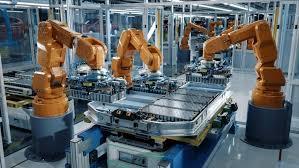
The relentless expansion of the global industrial automation ecosystem stands as a testament to humanity's enduring drive to optimize labor, conserve resources, and elevate manufacturing precision to extraordinary levels. At the heart of this sustained market expansion is a fundamental shift in how industrial organizations perceive value, transitioning from short-term cost-cutting measures to holistic, long-term investments in smart factory infrastructure. This evolution encompasses a wide array of advanced technologies, including high-speed industrial robots, precision motion control systems, sophisticated human-machine interfaces, and enterprise-grade sensor networks that collectively form the nervous system of modern production. By capturing and analyzing millions of operational data points every second, these automated networks enable plant managers to transition from reactive maintenance models to proactive, predictive strategies that virtually eliminate unplanned equipment downtime. Furthermore, the ability to simulate entire factory floors in virtual reality environments—known as digital twinning—allows engineers to test, refine, and optimize production workflows before a single physical machine is ever installed. Industry observers and strategic investors evaluating these expansive opportunities frequently examine insights detailed within the Industrial Automation Market growth to gauge the pace of sector adoption and emerging economic opportunities.
Sustaining this remarkable momentum, however, requires overcoming several notable challenges, including high initial implementation costs, complex system integration requirements, and a persistent shortage of specialized technical talent capable of managing advanced automation architectures. Many small and medium-sized manufacturing enterprises often hesitate to embark on their automation journeys due to perceived financial barriers and the daunting complexity of upgrading legacy equipment. To address these hurdles, technology providers are increasingly offering modular, scalable, and subscription-based automation solutions that lower the barrier to entry and allow businesses to automate incrementally at their own pace. Additionally, government initiatives, tax incentives, and industry-academia partnerships are playing a crucial role in bridging the skills gap by training the next generation of automation engineers and technicians. As artificial intelligence and machine learning algorithms become deeply embedded within industrial machinery, systems are gaining the unprecedented ability to optimize their own performance, autonomously adjust to material variations, and predict maintenance needs with pinpoint accuracy. Consequently, the ongoing evolution of industrial automation is not merely transforming factory floors; it is fundamentally reshaping global trade, supply chain resilience, and the economic foundation of modern industrial society.
Frequently Asked Questions
What is a digital twin and how is it used in industrial automation? A digital twin is a virtual replica of a physical factory floor or production line used by engineers to simulate, test, and optimize workflows before physical installation, reducing trial-and-error costs.
How are technology providers helping small and medium-sized enterprises adopt automation? Providers are offering modular, scalable, and flexible automation solutions along with subscription-based models that lower initial financial barriers and allow businesses to upgrade incrementally.
➤➤➤Explore MRFR’s Related Ongoing Coverage In Semiconductor Industry:
Brazil Educational Robots Market
Mexico Educational Robots Market
China Electric Vehicle Ev Insurance Market
Uk Electric Vehicle Insurance Market
Us Enhanced Vision Systems Market
Germany Fingerprint Scanner Market
South Korea Fingerprint Scanner Market

 English
 Arabic
 Spanish
 Portuguese
 Deutsch
 Turkish
 Dutch
Dutch
 Italiano
 Russian
 Romaian
 Portuguese (Brazil)
 Greek
Greek
