
SCADA Market Trends Revolutionizing Real-Time Data Acquisition and Process Visibility
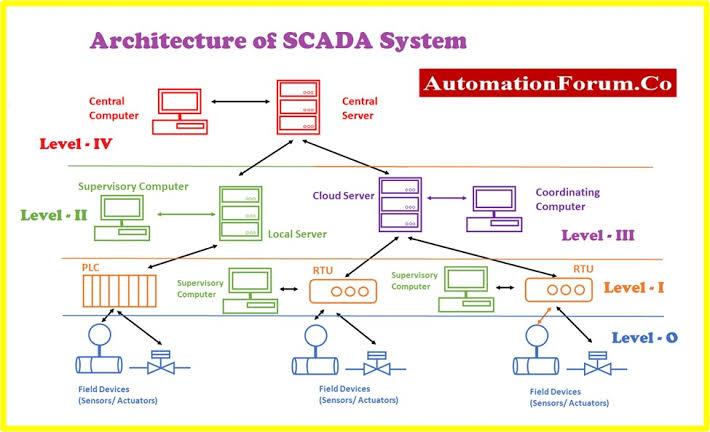
The contemporary industrial automation ecosystem is undergoing a profound transformation driven by rapid technological advancements, digital integration, and an escalating demand for centralized monitoring and operational efficiency. Across sectors such as manufacturing, oil and gas, water management, power generation, and telecommunications, organizations are increasingly recognizing the imperative of deploying robust data acquisition and control frameworks. These sophisticated systems serve as the digital backbone for modern infrastructure, enabling operators to oversee sprawling, geographically dispersed assets from unified control rooms in real time. The integration of advanced human-machine interfaces, programmable logic controllers, and telemetry units allows for seamless data collection, fault detection, and automated corrective actions, significantly reducing operational downtime and mitigating human error. Furthermore, as industries embrace the paradigms of Industry 4.0 and the Industrial Internet of Things, supervisory control and telemetry architectures are evolving from isolated, proprietary networks into interconnected, cloud-enabled ecosystems. This convergence enhances situational awareness, optimizes resource allocation, and fosters data-driven decision-making at every operational tier. Consequently, stakeholders are constantly seeking deep-dive evaluations to understand macroeconomic drivers, regulatory compliances, and competitive landscapes that shape investment decisions. For a comprehensive overview of industry shifts, stakeholders often consult professional resources such as the Scada Market analysis to gauge strategic positioning and upcoming opportunities.
In addition to foundational connectivity and real-time visualization, modern industrial networks face heightened imperatives regarding cybersecurity, scalability, and system interoperability. As critical infrastructure becomes increasingly digitized, the attack surface for malicious cyber threats expands exponentially, prompting organizations to prioritize secure communication protocols, encrypted data transmission, and multi-layered defense mechanisms. Simultaneously, the proliferation of edge computing enables local data processing, which minimizes latency and ensures uninterrupted operations even during intermittent network connectivity. These technical enhancements are complemented by flexible deployment models, ranging from traditional on-premise architectures to hybrid and cloud-hosted environments, catering to diverse organizational budgets and operational requirements. Industry leaders are also focusing on sustainable practices, leveraging automated energy management systems to minimize carbon footprints and adhere to stringent global environmental regulations. As market dynamics continue to fluctuate in response to geopolitical shifts and supply chain evolutions, maintaining a competitive edge requires continuous innovation and strategic foresight. Engaging in collaborative discussions allows industry participants to share best practices, address common pain points, and explore collaborative ventures that drive long-term value creation and operational resilience across diverse industrial verticals.
Frequently Asked Questions
What are the primary drivers accelerating the adoption of advanced control and monitoring systems? The primary drivers include the rapid expansion of Industry 4.0 initiatives, the need for real-time remote monitoring of critical infrastructure, stringent regulatory compliance regarding safety and environmental standards, and the overarching goal of minimizing operational downtime through predictive maintenance.
How does edge computing impact contemporary industrial automation architectures? Edge computing significantly enhances industrial networks by enabling local data processing at the device level, which drastically reduces latency, decreases bandwidth consumption, and ensures continuous operational autonomy even when central cloud or network connections experience disruptions.

 Arabic
 French
 Spanish
 Portuguese
 Deutsch
 Turkish
 Dutch
Dutch
 Italiano
 Russian
 Romaian
 Portuguese (Brazil)
 Greek
Greek
