
How Carbon Steel Strip Supports Reliable Industrial Component Manufacturing
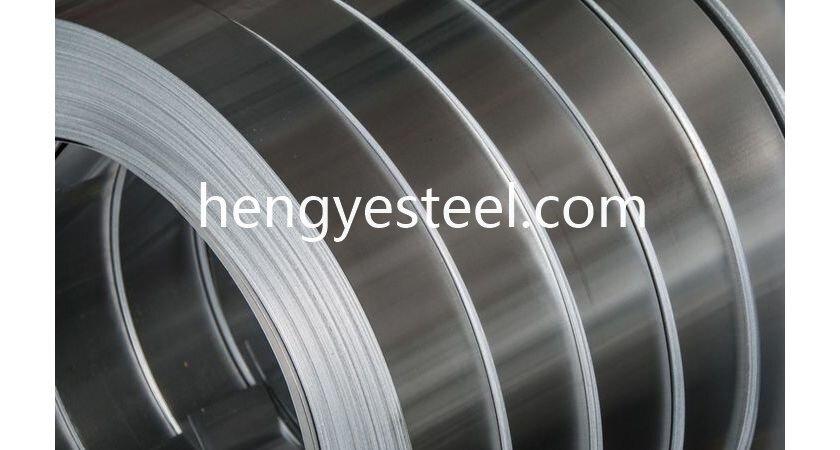
Industrial components often begin as flat metal stock that must be transformed into shapes suited to a specific mechanical or structural purpose. The material selected at this early stage can influence forming behavior, production efficiency, and the appearance of the finished part. Carbon Steel Strip is used across manufacturing sectors because its composition and processing condition can be adapted to different production requirements. Understanding the relationship between raw material properties, fabrication methods, and final application helps engineers and purchasing teams make more informed decisions.
Carbon steel derives its principal characteristics from the relationship between iron and carbon, while other elements and processing conditions can further influence its behavior. Different grades respond differently to bending, cutting, pressing, and heat treatment. Materials intended for intricate formed parts may require suitable ductility, whereas components designed for demanding mechanical duties may need a different balance of hardness and strength. Manufacturers should therefore evaluate the finished component first, then identify the material characteristics necessary to produce it consistently.
The condition of the strip is just as important as its basic composition. Rolling, annealing, and other treatment processes influence the material's internal structure and mechanical response. Cold rolling can improve surface uniformity and dimensional consistency, while annealing may help restore formability after deformation. Heat treatment can produce other combinations of hardness and flexibility for applications that require specific functional behavior. Understanding the production history of a material helps buyers assess whether it is suitable for their intended processing route.
Selecting an appropriate steel strip begins with the component's working environment and manufacturing sequence. Buyers should identify whether the material will undergo stamping, slitting, bending, punching, or additional thermal processing. They should also consider how the finished part will interact with other components and whether surface finishing will be required. Clear communication about application requirements helps suppliers recommend suitable grades and processing conditions. Reviewing material documentation, inspection practices, and consistency between deliveries can further support purchasing decisions.
Supply considerations extend beyond the initial material choice. Manufacturers need to understand how coils or strips will be packaged, stored, transported, and introduced into production equipment. Poor handling can damage edges or surfaces before fabrication begins, creating avoidable problems later. Clear identification and traceability also help purchasing and production teams connect incoming materials with the appropriate manufacturing orders. For businesses managing multiple components or product families, these organizational details contribute to more predictable workflows and easier quality investigations.
The technical value of steel strip becomes clearer during fabrication. In stamping operations, the material must respond appropriately to the shape and pressure imposed by the tooling. During bending, its ductility and condition influence how readily it forms without cracking. Slitting quality affects edge condition, while the alignment of the production line can influence the consistency of the finished strip. Engineers must consider the relationship between material characteristics, tooling geometry, lubrication, and operating conditions rather than expecting the raw material alone to determine the outcome.
Quality control connects these individual processes. Inspection may involve checking surface appearance, flatness, edge condition, and consistency in material behavior. When irregularities are detected early, manufacturers have a better opportunity to investigate their causes before large quantities of components are affected. Communication between material suppliers and downstream processors is particularly valuable when a production issue appears repeatedly. By sharing observations about forming results and finished-part performance, both parties can improve material selection and processing decisions for subsequent orders.
The experience of working with steel strip is often reflected in how smoothly it moves through production equipment. Consistent material behavior can help operators maintain established forming routines and reduce frequent adjustments. Predictable edges and surfaces can also simplify handling during feeding, cutting, and assembly. For purchasing teams, this means that material quality should be evaluated in relation to the entire production process, including the labor, inspection, and handling required after delivery. A material that fits the actual manufacturing workflow can be more useful than one chosen solely from a general product description.
Surface appearance has a practical role in the final component as well. A clean, consistent surface can provide a suitable foundation for painting, plating, coating, or other finishing methods, depending on the application's requirements. Before finishing, manufacturers may need to remove oils, residues, or contaminants that could interfere with adhesion. Edge quality and surface condition can also affect how parts fit together or appear after assembly. Since carbon steel can be susceptible to corrosion in unsuitable environments, protective treatments and appropriate storage practices should be considered whenever moisture exposure is a concern.
Design requirements influence how the strip is ultimately converted into a finished product. Components used in tools, mechanical assemblies, industrial fittings, and other manufactured goods may require different combinations of shape retention, surface appearance, and processing compatibility. Designers can support manufacturability by considering bend locations, forming sequences, edge conditions, and finishing requirements early in product development. When design and material decisions are coordinated, manufacturers can reduce unnecessary complexity and establish a more consistent route from raw stock to completed components.
Dongyang Hengye Steel Strip Co., Ltd. specializes in precision cold-rolled and heat-treated steel strip products for a range of industrial applications. Its manufacturing experience and product development capabilities are relevant to businesses evaluating material options for forming, tooling, machinery, and related components. Buyers can discuss their application requirements, preferred material condition, surface expectations, and processing needs with the company. Further information about its steel strip products and services is available at https://www.hengyesteel.com/.

 English
 Arabic
 French
 Spanish
 Portuguese
 Deutsch
 Turkish
 Italiano
 Russian
 Romaian
 Portuguese (Brazil)
 Greek
Greek
