
How to Assess Laminar Flow Hood Performance Before Laboratory Installation?
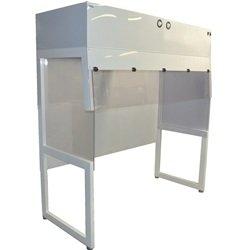
Installing a laminar flow hood without assessing its performance can lead to inconsistent airflow, contamination risks, and operational problems. Before introducing this equipment into your laboratory, you should evaluate its filtration efficiency, airflow uniformity, workspace design, and compatibility with your research requirements. A structured assessment helps you select equipment that supports reliable results and maintains the cleanliness your applications demand.
Define Your Laboratory's Cleanliness Requirements
Begin by identifying the materials, samples, and procedures you intend to handle. Pharmaceutical preparation, electronics assembly, microbiological sample handling, and precision manufacturing may require different levels of environmental control.
Determine the cleanliness classification, contamination limits, and airflow characteristics required for your application. If your process requires a specific cleanroom classification, establish the relevant acceptance criteria before evaluating equipment.
You should also distinguish between product protection and personnel protection. A conventional laminar flow hood or clean bench is generally designed to protect the work area from airborne contamination. It does not automatically provide protection against hazardous chemicals, infectious materials, or harmful aerosols. Those applications may require a suitable fume hood or certified biological safety cabinet.
Evaluate Airflow Velocity and Uniformity
Airflow performance is one of the most important factors when assessing a laminar flow hood before installation. The system should deliver filtered air at the velocity specified by the manufacturer and provide an appropriately uniform flow across the working area.
Ask for documented airflow velocity measurements taken at multiple points across the filter face. A calibrated anemometer can help identify variations that a single central reading might overlook.
During your assessment, verify:
· Airflow velocity: Confirm that measurements meet the manufacturer's specifications and your application requirements.
· Airflow uniformity: Check for weak-flow areas, excessive local velocities, and inconsistent distribution.
· Airflow direction: Verify that air moves in the intended direction across the work zone.
· Flow stability: Determine whether the blower maintains consistent performance under normal operating conditions.
Avoid selecting a hood based solely on its advertised airflow rating. Actual performance depends on the filter, blower, cabinet design, installation environment, and surrounding air currents.
Verify HEPA Filter Integrity
High-efficiency particulate air (HEPA) filtration is essential for many clean bench applications. However, the presence of a HEPA filter does not automatically establish that the complete system performs correctly.
Before installation, review the filter specifications, efficiency rating, documentation, and compatibility with the hood. Where required, arrange an in-place filter integrity test to identify leaks through the filter media, frame, or seals.
A qualified technician can conduct an appropriate aerosol challenge test using a recognized procedure. This assessment helps verify that air does not bypass the filtration system through unintended leakage paths.
You should also ask about filter replacement intervals, maintenance requirements, and the availability of replacement components. These details help you estimate long-term operating costs and maintain consistent performance.
Check Particle Control and Cleanliness Performance
Airflow measurements alone cannot confirm that a laminar flow hood maintains the required cleanliness level. If your process has defined particle limits, request particle-count testing using a suitable calibrated particle counter.
Testing should follow the applicable method and cleanliness classification requirements. Depending on your application, measurements may be needed in the clean work zone and under specified operating conditions.
Review the results against your acceptance criteria rather than relying on general cleanliness claims. If your laboratory operates under a quality management system or regulated manufacturing requirements, determine which validation records and test reports must be retained.
For additional guidance, review laboratory airflow validation methods for laminar flow hoods and clean benches.
Assess Workspace Design and Installation Compatibility
A hood may perform well during factory testing but experience different conditions after placement in your laboratory. Before purchasing, evaluate the installation area, available utilities, work surface dimensions, and surrounding airflow.
Check the following factors:
· Available space: Confirm that the hood fits comfortably without obstructing walkways or nearby equipment.
· Environmental conditions: Identify drafts from doors, windows, air-conditioning outlets, and other ventilation systems.
· Workspace dimensions: Ensure that the working area accommodates your equipment, samples, and routine procedures.
· Electrical requirements: Verify the correct power supply, outlet configuration, and electrical specifications.
· Service access: Allow sufficient room for filter replacement, cleaning, inspection, and repairs.
You should also consider operator posture, lighting, noise, and vibration if the hood will be used for extended research sessions.
Review Performance Documentation Before Approval
Request technical documentation before authorizing installation. A complete review helps you compare equipment objectively and establish clear acceptance criteria.
Your assessment should include:
· Manufacturer airflow specifications and available test reports.
· HEPA filter documentation and integrity test requirements.
· Particle-count or cleanliness test results, where applicable.
· Electrical specifications, installation instructions, and maintenance schedules.
· Warranty details, replacement filter availability, and service support.
Establish measurable pass/fail criteria before testing. Acceptance limits should reflect the equipment design, manufacturer's requirements, and applicable standards rather than a universal airflow value.
After installation, arrange appropriate on-site performance verification under the intended operating conditions. Record the results before releasing the hood for routine laboratory use.
Choose a Laminar Flow Hood That Matches Your Application
Once you understand your performance requirements, compare equipment based on its configuration, filtration system, usable workspace, and maintenance needs. A horizontal or vertical airflow design may suit different processes, so evaluate how each configuration affects your samples and workflow.
Explore the laminar flow hood selection available from CleaTech LLC to review equipment options for controlled laboratory work.
As you compare models, prioritize documented performance, application suitability, and ongoing serviceability instead of choosing solely by initial purchase price.
Make an Informed Installation Decision
Assessing a laminar flow hood before laboratory installation helps you identify performance limitations, reduce avoidable installation problems, and establish appropriate cleanliness controls. By reviewing airflow uniformity, filter integrity, particle control, workspace compatibility, and technical documentation, you can make a more informed equipment decision.
CleaTech LLC offers laboratory and cleanroom equipment solutions for a range of controlled-environment applications. To discuss your laboratory requirements and explore suitable equipment configurations, Contact us today.
Frequently Asked Questions
1. How do you assess laminar flow hood performance before installation?
Review manufacturer specifications, airflow velocity and uniformity data, HEPA filter documentation, particle-control requirements, and installation conditions. Arrange appropriate testing by qualified personnel when required.
2. What is the most important performance test for a laminar flow hood?
There is no single test that confirms every aspect of performance. Airflow measurements, HEPA filter integrity testing, and particle-count testing provide complementary evidence. The required tests depend on the application and acceptance criteria.
3. How can you check airflow uniformity in a laminar flow hood?
Use a calibrated anemometer to measure air velocity at multiple predefined points across the filter face. Compare the results with the manufacturer's specifications and investigate significant variations.
4. Does a HEPA filter guarantee a contamination-free work area?
No. Performance also depends on filter integrity, airflow direction, cabinet design, installation conditions, operator practices, and surrounding environmental influences. Appropriate testing is necessary to evaluate the complete system.
5. Should you test a laminar flow hood again after installation?
Yes. Appropriate on-site verification confirms that the hood performs as intended in its final location. Testing requirements depend on the application, applicable standards, and laboratory quality procedures.
6. What should you consider when selecting a laminar flow hood?
Evaluate the required cleanliness level, airflow configuration, working dimensions, filter performance, installation space, electrical requirements, maintenance needs, and available technical support. Confirm that the selected model is suitable for your specific process.
Original Source: https://laboratoryquipment.blogspot.com/2026/10/how-to-assess-laminar-flow-hood.html

 English
 Arabic
 French
 Spanish
 Deutsch
 Turkish
 Dutch
Dutch
 Italiano
 Russian
 Romaian
 Portuguese (Brazil)
 Greek
Greek
