
Crown Hair Transplant in Dubai Graft Guide
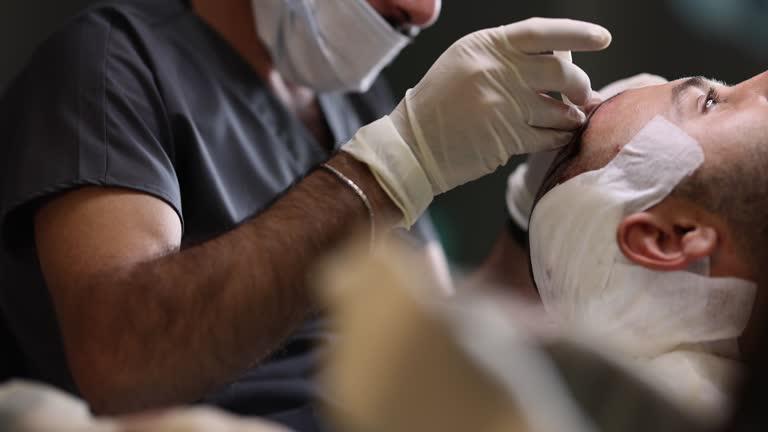
A Crown Hair Transplant in Dubai may require a few hundred grafts for a small area of thinning or substantially more for a larger region with significant hair loss. There is no single graft number that suits everyone, because the estimate depends on the crown's size, the hair that remains, donor availability, and the coverage that can realistically be achieved.
Understanding graft planning helps patients evaluate recommendations more confidently. The aim is not simply to transplant as many follicles as possible, but to use the available donor hair carefully while creating a balanced appearance.
What Determines the Number of Crown Hair Transplant Grafts?
A graft is a naturally occurring follicular unit that can contain one or several hairs. Graft count and hair count are therefore different measurements. Two patients receiving the same number of grafts may achieve different visual coverage because their follicular units and hair characteristics differ.
The Size of the Thinning Area
The first consideration is the area requiring treatment. A small patch near the centre of the crown may need fewer grafts than a broad region extending toward the mid-scalp.
The boundaries should be assessed alongside the surrounding hair. Treating only the most visible spot may not create balanced coverage if the adjacent areas are also thinning.
Existing Hair and Desired Density
Some crowns still contain many fine, miniaturised hairs, while others have extensive areas with little visible growth. Existing hair can contribute to coverage, but its long-term stability also needs to be considered.
A realistic target may focus on reducing scalp visibility rather than recreating the density of a naturally thick crown. The achievable result depends on the combination of transplanted follicles, native hair, hair calibre, and scalp-to-hair contrast.
Donor Hair Availability
Follicles are usually harvested from suitable areas at the back or sides of the scalp. The donor region must be examined to determine its density, hair characteristics, and ability to provide grafts without creating excessive thinning.
Donor hair is finite. A plan should preserve options for the future, particularly when a patient may continue to lose hair in other areas.
Indicative Graft Ranges and Their Limitations
The following figures are broad illustrations, not a personalised recommendation. Actual graft requirements can fall outside these ranges depending on the clinical findings and treatment goals.
| Crown presentation | Illustrative graft range | Important consideration |
|---|---|---|
| Small area of limited thinning | Around 500–1,000 | Existing hair may contribute to coverage |
| Moderate crown thinning | Around 1,000–1,800 | Area size and remaining density influence the estimate |
| Larger or more advanced crown loss | Around 1,800–2,500 or more | Donor capacity and future hair loss may limit the plan |
These ranges should not be used to select a procedure or compare clinics on graft count alone. The surgeon must assess the scalp directly and explain what the proposed number is intended to achieve.
Why the Crown May Need a Different Graft Strategy
The crown's curved surface and changing hair-growth directions make graft distribution especially important. Follicles must be placed to blend with the patient's natural pattern rather than arranged in uniform rows.
The visual result is also affected by hair calibre and texture. Coarser or wavier hair may create more overlap, while finer hair may leave more scalp visible at a similar graft count.
For further details about the procedure, visit the Crown Hair Transplant in Dubai service page.
Coverage Versus Density
Coverage describes how much of the scalp appears concealed, while density refers to the number of hairs within a given area. These concepts are related but not identical.
A carefully planned distribution may improve the appearance of a crown without attempting to recreate the original density of every square centimetre. The appropriate balance depends on the donor supply and the patient's expectations.
Planning for Future Hair Loss
Pattern hair loss can progress after surgery. Native hair surrounding the transplanted area may become thinner, potentially changing the overall appearance over time.
A good estimate considers the wider scalp, not only the current crown. Depending on the patient's circumstances, the clinician may recommend medical management, a conservative surgical plan, or reassessment before proceeding.
Common Questions About Graft Numbers
“Will a higher graft count guarantee a fuller crown?”
No. Graft count is only one factor. Hair calibre, follicular-unit composition, distribution, and the size of the recipient area all influence visual coverage.
“Can all the available donor hair be used for the crown?”
That is not always advisable. Donor resources may be needed for future hair loss, so the treatment plan should balance current priorities with long-term needs.
“Can the exact graft count be determined from photographs?”
Photographs can help with an initial discussion, but they may not show donor density, hair calibre, or scalp conditions accurately enough for a final plan. An in-person assessment is generally needed.
How Graft Planning Usually Works
- Scalp examination: Assess the crown's size, the extent of thinning, and the surrounding hair.
- Donor evaluation: Examine follicular density and the characteristics of the potential donor area.
- Coverage discussion: Agree on realistic goals based on the available follicles.
- Graft estimation: Develop a proposed range and explain how grafts may be distributed.
- Long-term review: Consider the likelihood of further hair loss and the importance of preserving donor supply.
Make Graft Decisions Based on Your Hair, Not a Number
The right graft estimate is the one that reflects the patient's scalp, donor capacity, and long-term restoration goals. A high number does not automatically mean a better result, and a smaller session may be more appropriate for some individuals.
At Tajmeels Clinic, a personalised consultation can help assess crown thinning, discuss potential graft requirements, and establish realistic expectations before deciding on treatment.

 English
 Arabic
 French
 Spanish
 Portuguese
 Turkish
 Dutch
Dutch
 Italiano
 Russian
 Romaian
 Portuguese (Brazil)
 Greek
Greek
