
Glow Rods and Telescoping Poles: Essential Tools for Easier Cable Installation
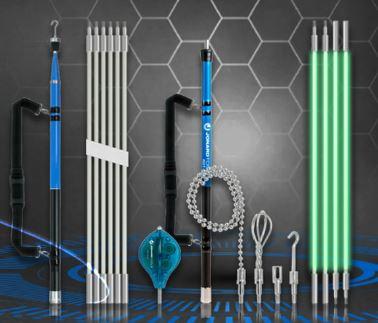
Installing cables through walls, ceilings, crawl spaces, and other confined areas can challenge even experienced technicians. Limited visibility, hidden obstacles, and restricted access can make cable routing time consuming. The right tools help professionals guide cables efficiently while reducing unnecessary effort and the risk of damaging building surfaces.
Glow rods and telescoping poles offer practical solutions for cable fishing, retrieving wires, and reaching difficult installation areas. CATV technicians, broadband installers, telecom professionals, and security system installers can use these tools to simplify routine installation and maintenance tasks.
This guide explains how glow rods and telescoping poles work, how to choose the best glow rods for your needs, and how to use them effectively during low voltage installations.
What Are Glow Rods?
Glow rods are flexible cable fishing tools that help technicians guide wires through concealed or hard to reach spaces. Manufacturers commonly make them from fiberglass or other suitable materials that balance flexibility and stiffness.
Technicians connect individual rod sections to achieve the required working length. They can then push the assembled rod through an accessible opening, guide it along the intended route, and attach a cable or retrieval accessory to move the wire into position.
Many glow rods feature luminescent materials that make the rod easier to locate in dimly lit spaces. This feature can help technicians track the rod's position when working above suspended ceilings, behind walls, or inside crawl spaces. However, luminescence does not replace adequate work lighting.
Common Applications of Glow Rods
Glow rods support several low voltage installation tasks:
-
Routing network and Ethernet cables through accessible wall cavities.
-
Guiding coaxial cables during CATV installations.
-
Fishing security camera and alarm system wiring.
-
Moving cables through accessible ceiling spaces and crawl spaces.
-
Retrieving or repositioning wires in confined areas.
-
Supporting home automation and structured cabling projects.
For technicians who regularly handle concealed cable routes, a suitable glow rod kit can reduce the need for repeated attempts and make wire placement more manageable.
How to Use Glow Rods for Electrical Cable Fishing
Using glow rods effectively requires planning, proper attachment, and controlled movement. Follow these steps to improve your cable installation process.
Step 1: Inspect the cable route. Identify the entry and exit points before inserting the rod. Check for obstacles and determine whether the route provides enough clearance for the rod and cable.
Step 2: Select the correct rod sections. Choose a suitable combination of sections based on the required reach and the space available. Connect the sections securely according to the manufacturer's instructions.
Step 3: Attach the appropriate accessory. Use a compatible hook, eyelet, ball chain, or other attachment designed for the task. Make sure the accessory connects securely before moving the rod.
Step 4: Guide the rod carefully. Feed the rod through the opening using controlled movements. Avoid excessive bending or forcing it against obstructions. If the rod stops moving, withdraw it slightly and reassess the route.
Step 5: Connect and guide the cable. Secure the cable to the appropriate attachment using a suitable method. Keep the connection compact enough to pass through the available space without snagging.
Step 6: Pull the cable gently. Retrieve the rod while monitoring cable movement. Avoid excessive pulling tension, sharp bends, and sudden jerks that could damage the cable or its termination.
Step 7: Inspect the completed installation. Check the cable for visible damage and perform the appropriate testing before placing the system into service.
These steps can help CATV, telecom, broadband, and CCTV installers work more consistently across different installation environments.
What Are Telescoping Poles?
A telescopic pole consists of nested sections that extend to provide additional reach and collapse for compact storage. Depending on the design, the sections may lock together through a mechanism that helps maintain the selected working length.
Unlike glow rods, which typically bend and flex to navigate cable pathways, telescoping poles generally provide a more rigid extension. This makes them useful when technicians need to reach into drop ceilings, retrieve accessible cables, or position compatible inspection equipment.
Jonard Tools offers telescoping poles in different lengths for tasks such as cable installation and retrieval. Some models also accommodate compatible accessories that help technicians push, pull, or grasp objects in hard to reach areas.
When Should You Use a Telescoping Pole?
Consider a telescoping pole when you need to:
-
Retrieve a cable from above a suspended ceiling.
-
Position an inspection camera in an elevated or confined area.
-
Reach a wire that has fallen beyond normal arm's reach.
-
Guide or reposition accessible cables using a compatible attachment.
-
Extend your working reach without carrying a full length rigid tool.
Choose a pole with sufficient reach and suitable rigidity for the intended task. Check accessory compatibility and the manufacturer's operating limits before use.
Glow Rods vs. Telescoping Poles: Which Is Better?
Both tools help technicians access difficult locations, but each serves a different purpose.
Glow rods work best when technicians need to navigate accessible cavities or guide cables along a pathway that requires some flexibility. Their sectional design also allows users to adjust the working length by adding or removing sections.
Telescoping poles work best when technicians need a more rigid extension to reach an elevated or distant point. Their adjustable length and compact storage design make them useful for retrieval and inspection tasks.
For example, a broadband installer fishing a cable behind an accessible wall may prefer a glow rod. A CCTV technician retrieving a cable from above a drop ceiling may find a telescoping pole with a compatible hook more convenient.
The best choice depends on the route, available access, required reach, cable type, and attachment needed. Some technicians benefit from keeping both tools in their installation kit.
How to Choose the Best Glow Rods
When comparing glow rods, evaluate the features that affect performance and usability.
Length and flexibility: Select a kit that reaches the intended location while providing enough control to navigate the pathway. Longer assemblies may require more careful handling.
Rod strength: Look for a design that balances flexibility with sufficient stiffness for pushing. Avoid applying excessive force, particularly around tight bends.
Luminescence: Glow in the dark rods can help improve visibility in dim spaces. Remember that they do not provide the same illumination as a dedicated work light.
Accessories: Compatible hooks, chains, and other attachment heads can make a kit more versatile. Check which accessories the manufacturer includes and which require separate purchase.
Durability and storage: Choose rods and connectors designed for repeated use. A protective case can help prevent damage and keep sections organized between jobs.
Application requirements: Match the rod to the cable type, working environment, and installation method rather than selecting a product based on length alone.
The phrase “glow fishing rods” may also appear in searches for wire fishing equipment. In low voltage installation, it generally refers to glow rods used to fish or guide electrical and communication cables, rather than rods used for recreational fishing.
Safety Tips for Using Glow Rods and Telescoping Poles
Proper tool selection and safe working practices help protect both technicians and installed equipment.
-
Inspect rods, connectors, locking mechanisms, and accessories before each use.
-
Confirm that the work area is safe and identify potential electrical hazards before inserting a tool into a concealed space.
-
Never assume a fiberglass glow rod provides complete protection from electrical hazards.
-
Check the material and electrical rating of a telescoping pole before using it near electrical equipment. Some poles, including aluminum models, conduct electricity.
-
Keep appropriate clearance from overhead power lines and follow applicable safety requirements.
-
Avoid exceeding the manufacturer's recommended pulling force, bending limits, or working load.
-
Secure accessories properly and keep hands clear of pinch points when extending or collapsing poles.
-
Use suitable eye protection and work lighting when conditions require them.
If you cannot confirm that a concealed area is safe, stop and assess the hazard before continuing.
Conclusion
Glow rods and telescoping poles help installation professionals overcome common cable routing and retrieval challenges. Glow rods provide flexible guidance through accessible concealed spaces, while telescoping poles offer adjustable reach for retrieving cables and positioning compatible tools.
When choosing equipment, consider working length, flexibility, rigidity, accessories, storage, and the demands of your installation environment. Combine the right tool with careful cable handling and appropriate safety procedures to improve efficiency and protect cable integrity.
Explore the Jonard Tools Glow Rods and Telescoping Poles collection to compare available tools and find options suited to your cable installation and retrieval needs.


 English
 Arabic
 French
 Portuguese
 Deutsch
 Turkish
 Dutch
Dutch
 Italiano
 Russian
 Romaian
 Portuguese (Brazil)
 Greek
Greek
