
Ship Manufacturing Companies in UAE: Trends Shaping Modern Vessel Construction
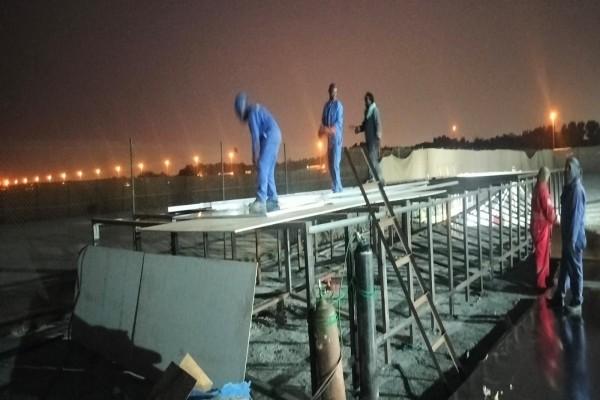
The maritime industry plays an important role in the economic development of the United Arab Emirates. International trade, cargo transportation, offshore operations, and port activities continue to create demand for reliable and technologically advanced vessels. Today, ship building companies in UAE are adapting to modern engineering methods, advanced materials, and innovative technologies to improve vessel quality, safety, and operational efficiency.
The UAE's strategic location between Asia, Europe, and Africa makes it an important centre for maritime trade. According to UN Trade and Development's 2024 maritime profile, the country's container port throughput reached approximately 21.14 million twenty-foot equivalent units (TEUs). This figure highlights the scale of maritime logistics and the importance of maintaining reliable vessels and supporting infrastructure.
1. Growing Demand for Modern Vessel Construction
The demand for modern vessels is increasing due to international trade, offshore energy projects, coastal transportation, and expanding port infrastructure. Commercial operators require different types of vessels, including cargo ships, tugboats, barges, patrol boats, workboats, and offshore support vessels.
Each vessel has specific design requirements. Cargo vessels need suitable carrying capacity, while tugboats require powerful propulsion systems and excellent manoeuvrability. Offshore support vessels must provide stability, reliable equipment, and sufficient working space for demanding marine operations.
Modern ship manufacturing companies in UAE are focusing on building vessels that combine structural strength, operational reliability, and cost-effective performance. Instead of considering only the initial construction price, vessel owners increasingly evaluate fuel consumption, maintenance expenses, equipment reliability, and expected service life.
2. Digital Technology in Modern Shipbuilding
Digital technology has become an important part of contemporary vessel construction. Computer-aided design (CAD), three-dimensional modelling, and digital simulation help engineers develop detailed vessel designs before physical production begins.
These tools allow designers to examine hull shapes, structural arrangements, machinery spaces, and equipment placement. Identifying potential problems during the design stage can reduce material waste, prevent expensive modifications, and improve construction planning.
Digital project management also supports better communication between engineers, fabricators, welders, and quality-control teams. Construction progress can be monitored more effectively, while digital records help maintain consistency throughout the manufacturing process.
As these technologies become more accessible, they are expected to support greater accuracy, improved productivity, and more efficient vessel development.
3. Advanced Materials and Lightweight Vessel Design
Material selection directly affects a vessel's strength, weight, durability, and performance. Steel remains widely used for large commercial vessels because of its structural strength and suitability for heavy-duty applications. Aluminium is also popular for smaller vessels, patrol boats, workboats, and specialised marine craft.
Aluminium has a lower density than steel, which can help reduce vessel weight when the design is appropriately engineered. A lighter vessel may require less energy under certain operating conditions, although actual fuel savings depend on hull design, propulsion, speed, and loading.
Modern fabrication techniques and improved welding procedures also contribute to reliable construction. Engineers must consider corrosion resistance, structural loads, operating conditions, and maintenance requirements when selecting materials.
The main objective is to achieve the right balance between strength, safety, weight, and long-term performance rather than choosing a material based on a single advantage.
4. Sustainability and Fuel Efficiency
Environmental responsibility is becoming increasingly important in the maritime industry. Vessel owners are looking for practical ways to reduce fuel consumption, control operating costs, and minimise emissions.
Modern ship designs can incorporate improved hull shapes, efficient propellers, advanced engines, and energy-management systems. Specialised hull coatings may also reduce friction and marine growth, helping vessels maintain better performance.
Hybrid propulsion and alternative fuels are additional areas of development. Battery-assisted propulsion may be suitable for certain harbour craft and short-distance operations, while other vessel types may require different solutions based on their size and working conditions.
The International Maritime Organization has established an ambition to achieve net-zero greenhouse gas emissions from international shipping by or around 2050. This long-term objective encourages the maritime sector to explore cleaner energy options and improve operational efficiency.
Sustainable vessel construction also involves responsible material use, reduced production waste, appropriate maintenance planning, and equipment designed for a longer service life.
5. Automation and Smart Vessel Systems
Automation is changing how modern vessels are monitored and operated. Integrated navigation equipment, engine-monitoring systems, digital alarms, and automated controls can help crews understand vessel conditions more effectively.
Sensors may monitor engine temperature, vibration, fuel consumption, and other important operating parameters. When monitoring systems identify unusual readings, operators can investigate potential problems before they result in equipment failure.
Predictive maintenance is another developing approach. By analysing equipment performance, operators can make better decisions about inspections and servicing instead of relying entirely on fixed maintenance schedules.
Although automation can improve operational awareness, trained personnel remain essential. Effective training, reliable equipment, and clear operating procedures are necessary to achieve the full benefits of these technologies.
6. Safety and Quality Control
Safety is one of the most important considerations in vessel construction. Ships operate under changing environmental conditions and must withstand waves, structural loads, machinery vibration, and repeated use.
Quality-control procedures help ensure that vessels meet their design specifications and applicable regulatory requirements. These procedures may include material inspections, dimensional checks, weld testing, machinery inspections, and electrical-system verification.
Depending on the vessel type, additional requirements may cover stability, fire protection, lifesaving equipment, navigation systems, and emergency arrangements.
Sea trials are also an essential stage of many construction projects. During these trials, engineers and operators evaluate propulsion, steering, navigation equipment, and overall performance. Any identified problems should be addressed before the vessel enters normal service.
Maintaining accurate inspection reports and construction records supports future maintenance, repairs, and regulatory assessments.
7. Custom Vessel Design for Different Applications
Different maritime activities require different vessel configurations. A harbour tugboat, cargo vessel, patrol boat, and offshore support vessel cannot all use the same design because their operating requirements vary considerably.
Custom vessel design allows owners to select appropriate dimensions, deck layouts, propulsion systems, cargo-handling equipment, and specialised facilities. These decisions depend on the vessel's purpose, operating area, expected workload, and budget.
For example, a harbour workboat may prioritise manoeuvrability and low-speed control, while an offshore support vessel may require additional deck space, stability, and specialised equipment.
Careful planning during the design stage helps ensure that the finished vessel meets operational needs without unnecessary complexity or expense.
8. Importance of Marine Support and Maintenance
Vessel construction is only one part of maintaining a reliable maritime operation. Regular inspections, maintenance, repairs, and equipment upgrades are essential for keeping vessels safe and operational.
Professional marine services in UAE can support vessel owners through activities such as ship repair, retrofitting, painting, machinery maintenance, commissioning, and other technical requirements. The specific services required depend on vessel condition, operating schedules, and applicable safety standards.
Preventive maintenance helps identify corrosion, structural deterioration, machinery wear, and electrical faults before they become more serious. Proper maintenance records also help operators plan inspections, manage replacement parts, and reduce unexpected downtime.
Retrofitting can provide additional benefits by allowing suitable older vessels to receive upgraded navigation equipment, modern monitoring systems, or more efficient machinery. However, any modification should be assessed carefully to ensure compatibility, safety, and compliance.
VU Marine operates in the UAE maritime sector, where shipbuilding and related marine capabilities are important for supporting commercial and industrial vessel requirements.
9. Future Trends in the UAE Shipbuilding Industry
The future of vessel construction will be shaped by digital engineering, environmental standards, specialised vessel requirements, and improvements in production methods. Shipbuilders will increasingly need to balance construction costs with long-term efficiency and operational reliability.
For customers evaluating top shipbuilding companies, important considerations include engineering capabilities, construction quality, project management, material selection, technical expertise, and after-sales support. A clear understanding of the intended vessel application is equally important when comparing construction proposals.
The UAE's established maritime infrastructure and strategic location provide opportunities for continued development. Demand for commercial vessels, workboats, tugboats, barges, and offshore support craft will continue to make dependable marine engineering capabilities valuable.
Investment in workforce training, modern equipment, digital design, and quality management can help the industry respond to evolving customer expectations. At the same time, practical innovation must remain focused on safety, durability, and measurable operational benefits.
Conclusion
Modern vessel construction is evolving through advanced materials, digital design, automation, sustainable engineering, and stronger quality-control practices. These developments are helping the maritime industry improve vessel performance while addressing changing operational and environmental requirements.
The UAE's role in international maritime trade creates an important environment for continued investment in shipbuilding and marine engineering. Every vessel benefits from careful design, suitable materials, reliable equipment, and regular maintenance.
VU Marine and the wider maritime sector operate in an environment where technical expertise and practical innovation are increasingly important. By focusing on construction quality, operational efficiency, and long-term reliability, the industry can continue to meet the changing needs of commercial and industrial marine operations.

 English
 Arabic
 French
 Portuguese
 Deutsch
 Turkish
 Dutch
Dutch
 Italiano
 Russian
 Romaian
 Portuguese (Brazil)
 Greek
Greek
