
Advanced Automation for Hemodialysis Consumable Production
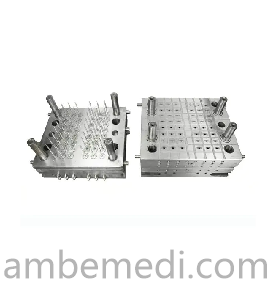
Hemodialysis circuit consumables require carefully coordinated manufacturing processes because their components must work together reliably during clinical use. Tubing, connectors, fluid pathways, and other specialized parts can involve different material properties and assembly requirements. A Fully Automated Production Line for Hemodialysis Circuit Consumables integrates material feeding, component positioning, assembly, inspection, and process monitoring into a coordinated workflow, helping manufacturers establish consistent production procedures and improve control over repetitive operations.
Material characteristics are an important starting point when developing automation for dialysis-related products. Medical tubing may need to remain flexible while maintaining suitable dimensions, whereas molded connectors and other rigid components require accurate positioning during assembly. Differences in elasticity, surface friction, wall thickness, and dimensional tolerance can influence feeding methods and mechanical handling. Equipment designers must therefore select appropriate guides, fixtures, gripping mechanisms, and transfer systems according to the physical characteristics of each component.
Component feeding is one of the first challenges in automated production. Small connectors and fittings must reach assembly stations in a suitable orientation, while tubing needs to move through the process without excessive stretching, twisting, or compression. Automated feeders, positioning units, sensors, and controlled transport mechanisms can help organize these movements. A stable feeding process also reduces interruptions caused by inconsistent manual placement and makes it easier to coordinate successive production stages.
Assembly operations require accurate alignment and repeatable mechanical movement. Depending on the product design, manufacturing may involve fitting tubing to connectors, positioning molded parts, securing joints, or integrating several components into a finished circuit. Fixtures can hold components in defined positions, while controlled actuators perform the required movements. Appropriate force management is particularly important when handling flexible materials because excessive pressure can deform components or affect their connection geometry.
Process synchronization connects these operations into a unified manufacturing sequence. Programmable controllers can coordinate material delivery, positioning, assembly, transfer, and inspection. Sensors can verify component presence, confirm positioning, and identify incomplete operations. When a station does not meet the required process condition, the control system can respond according to its configured logic. This coordination helps reduce avoidable errors and provides operators with clearer information about production status.
Quality inspection is another essential element of medical consumable manufacturing. Vision systems can examine component presence, orientation, surface appearance, and assembly position. Depending on the product design, additional inspection methods may be needed to evaluate dimensions, connection integrity, or other relevant characteristics. Inspection criteria should be established according to product specifications and the manufacturer's quality management procedures rather than relying on a single general-purpose inspection method.
Traceability and production data can further strengthen process management. Automated equipment may record production events, inspection outcomes, equipment status, and relevant batch information. These records can help quality teams investigate deviations and identify where a process requires adjustment. When data collection is planned from the beginning, manufacturers can create a clearer connection between production activities, inspection results, and subsequent quality reviews.
Equipment design should also consider cleanliness, maintenance, and operator safety. Contact surfaces and material pathways need to suit the manufacturing environment, while equipment layouts should support appropriate cleaning and inspection procedures. Moving mechanisms require suitable protective structures, and maintenance personnel need access to sensors, fixtures, and wear components. These considerations help make the production system practical for daily operation rather than focusing exclusively on automation speed.
Manufacturing flexibility is increasingly valuable as medical product designs and production requirements evolve. Modular workstations, adaptable tooling, and configurable control functions can help manufacturers accommodate changes to component designs or assembly sequences. Careful planning also allows engineers to consider future inspection needs, data integration, and maintenance requirements without unnecessarily complicating the initial equipment architecture.
Ultimately, successful medical automation depends on the coordinated design of material handling, mechanical assembly, process controls, inspection, and production records. A Fully Automated Production Line for Hemodialysis Circuit Consumables can provide a structured manufacturing framework when its design reflects the actual product requirements and quality objectives. AMBE TRADE supports automation-oriented manufacturing solutions for specialized medical products, with further information available at https://www.ambemedi.com/product/.

 English
 Arabic
 French
 Spanish
 Portuguese
 Deutsch
 Turkish
 Italiano
 Russian
 Romaian
 Portuguese (Brazil)
 Greek
