
Efficient Electromagnetic Control for Automated Water Systems
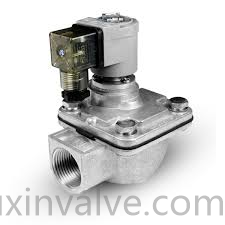
Electronic water-control equipment increasingly requires compact components that can switch between defined operating states while working efficiently with an automated controller. A Bi Stable Solenoid Valve uses an electromagnetic and mechanical structure designed to maintain two stable positions, making the relationship between magnetic force, positioning components, and sealing surfaces especially important. Zhejiang Fuxin Electrical Technology Co., Ltd. develops solenoid valve solutions by integrating electromagnetic design, material engineering, precision machining, and controlled assembly.
The operating principle depends on the interaction of magnetic and mechanical elements. A coil generates a magnetic field when energized, producing force that moves an armature or another internal mechanism. The valve structure is designed so that the mechanism can remain in one of two defined states according to its specific configuration. This requires careful coordination between magnetic components, positioning elements, springs or permanent magnetic elements, and the sealing assembly.
Magnetic circuit design has a direct influence on actuation behavior. The core and armature need suitable magnetic properties and stable dimensions, while the geometry of the magnetic path determines how effectively electromagnetic force is generated. The air gap between components is particularly significant because dimensional changes can affect the available force. Precision machining and controlled assembly help maintain the intended relationship between these components.
Material selection should also consider the operating environment. Magnetic metal components require appropriate magnetic characteristics and dimensional stability, while valve bodies need suitable mechanical strength and resistance to the conditions associated with water applications. Surface treatment may be used where additional corrosion protection is required. Consistent material quality provides a stable foundation for subsequent machining and assembly operations.
Coil manufacturing represents another critical production stage. Copper wire must be wound with controlled tension and positioning, and insulation needs to separate conductive turns effectively. The bobbin supports the winding and maintains its position within the actuator. Electrical testing can verify continuity and resistance, while process controls can reduce variation in coil geometry between production batches.
Mechanical alignment is equally important. The armature must move smoothly along its guide while maintaining appropriate positioning relative to the magnetic core. Excessive friction can interfere with movement, while overly large clearance may reduce mechanical stability. Guide surfaces, component dimensions, and assembly tolerances therefore need to be considered together rather than independently.
The hydraulic section introduces additional engineering requirements. Water passages, valve seats, diaphragms, and sealing elements must be coordinated with the actuator movement. The internal passage geometry affects how fluid enters and exits the valve, while the sealing structure determines whether the passage can be effectively closed. A well-integrated design considers electromagnetic, mechanical, and hydraulic behavior as one system.
Sealing material selection is particularly important for water-control applications. Diaphragms, O-rings, gaskets, and other elastomeric elements may experience repeated compression and release during operation. Their flexibility, compression recovery, temperature resistance, and compatibility with the intended water environment can influence sealing consistency. Correct installation is also necessary because even a suitable material can perform poorly if improperly positioned.
Electronic control compatibility should be evaluated during system integration. Automated faucets, sanitary fixtures, appliances, and water dispensers may use controllers that send electrical signals to change the valve state. The electrical interface and actuator characteristics need to correspond with the control logic. This coordination allows the valve to function as an integrated part of the wider electronic and hydraulic system.
Quality assurance can be applied throughout production. Incoming materials can be inspected for conformity, machining processes can be checked for critical dimensions, and coil assemblies can undergo electrical testing. Assembly inspection can verify the positioning of magnetic and sealing components. Finished valves may then receive leakage, actuation, and functional tests to assess the complete assembly.
For manufacturers selecting a Bi Stable Solenoid Valve, evaluating magnetic circuit design, material compatibility, mechanical positioning, sealing performance, hydraulic geometry, and production consistency together can support better system integration. Zhejiang Fuxin Electrical Technology Co., Ltd. applies these engineering principles to its solenoid valve manufacturing for sanitary and water-control applications, with related product information available at https://www.fuxinvalve.com/product/sanitary-ware-solenoid-valves/.

 English
 Arabic
 French
 Spanish
 Portuguese
 Deutsch
 Turkish
 Dutch
Dutch
 Russian
 Romaian
 Portuguese (Brazil)
 Greek
Greek
