
Industrial Ball Valve Manufacturing for Pipeline Systems
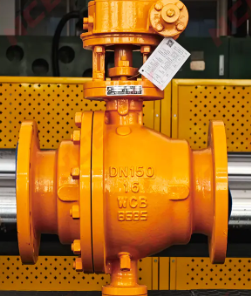
Industrial pipeline systems rely on dependable flow control equipment to isolate process media, support maintenance operations, and manage fluid movement under changing service conditions. A Ball Valve Factory must therefore coordinate material selection, precision machining, component assembly, sealing technology, and inspection throughout the production process. The manufacturing approach should begin with the intended application because pressure, temperature, media characteristics, installation environment, and operating frequency can all influence the appropriate valve configuration.
Material selection provides the foundation for valve construction. Carbon steel, stainless steel, alloy steel, and other engineering materials may be considered according to the required mechanical and environmental performance. Carbon steel can be suitable for many general pipeline applications, while stainless and alloy materials may be selected when additional corrosion resistance or temperature capability is required. The body material should be evaluated together with internal components and sealing materials to ensure compatibility with the process environment.
Casting and forging are commonly used to create valve bodies and other structural components, depending on the valve configuration. Manufacturing methods influence the final geometry, material characteristics, and machining requirements. After the primary forming process, critical surfaces need accurate machining to create suitable interfaces for the ball, seats, stem, connections, and other components. Dimensional consistency is essential because small variations can influence assembly accuracy and sealing performance.
The ball and seat assembly represents one of the most important functional areas. The ball needs an appropriately finished surface so that it can interact consistently with the seats during opening and closing. Seat materials should be selected according to pressure, temperature, fluid characteristics, and expected operating cycles. Proper installation is equally important because the performance of the sealing system depends on accurate positioning and controlled contact between the relevant components.
Stem manufacturing also requires attention to dimensional accuracy and surface quality. The stem transfers operating movement from a manual handle or actuator to the ball, so its connection with the internal mechanism should be properly controlled. Depending on the valve application, manufacturers may integrate pneumatic, electric, hydraulic, or manual operating arrangements. The complete operating system should be evaluated to ensure appropriate movement and mechanical compatibility.
Quality control extends across multiple manufacturing stages. Incoming material inspection can verify relevant material information, while machining inspection confirms critical dimensions. Assembly checks can identify incorrect component positioning before the valve enters final testing. Pressure testing and leakage testing provide additional information about body integrity and closure performance. Functional testing can verify that the completed valve opens and closes as intended.
Production traceability can further support industrial quality management. Recording material information, machining processes, assembly details, inspection results, and testing records provides useful documentation throughout the equipment lifecycle. This information can help users identify valve configurations during future maintenance and facilitate communication between manufacturers, contractors, and plant operators.
Application requirements vary significantly between industries. Oil and gas pipelines may prioritize robust construction and reliable isolation, while chemical processing systems may place greater emphasis on material compatibility and sealing selection. Power plants, water treatment facilities, district energy systems, and general industrial pipelines can introduce different combinations of pressure, temperature, fluid characteristics, and installation limitations.
Maintenance considerations should also be incorporated into the manufacturing process. Valve accessibility, stem arrangement, actuator configuration, connection design, and component availability can all influence future service requirements. For buried or restricted installations, suitable stem extensions or operating arrangements may be necessary. For automated systems, actuator integration and control compatibility should be reviewed before installation.
A consistent production process allows manufacturers to maintain quality across different valve sizes and configurations. Engineering coordination between design, material preparation, machining, assembly, testing, and inspection helps reduce variation and supports more predictable equipment performance. Buyers should therefore evaluate manufacturing capabilities alongside technical support, quality procedures, and application experience.
For industrial procurement projects, Ball Valve Factory selection should focus on the complete manufacturing system rather than a single production stage. Material control, precision machining, sealing technology, testing, traceability, and application-specific engineering all contribute to the final valve solution. Industrial ball valve configurations and related flow control products can be reviewed at https://www.ncevalve.com/product/ when evaluating equipment for pipeline and process applications.

 English
 Arabic
 Spanish
 Portuguese
 Deutsch
 Turkish
 Dutch
Dutch
 Italiano
 Russian
 Romaian
 Portuguese (Brazil)
 Greek
Greek
