
Silver Items That May Be Worth More Than You Think
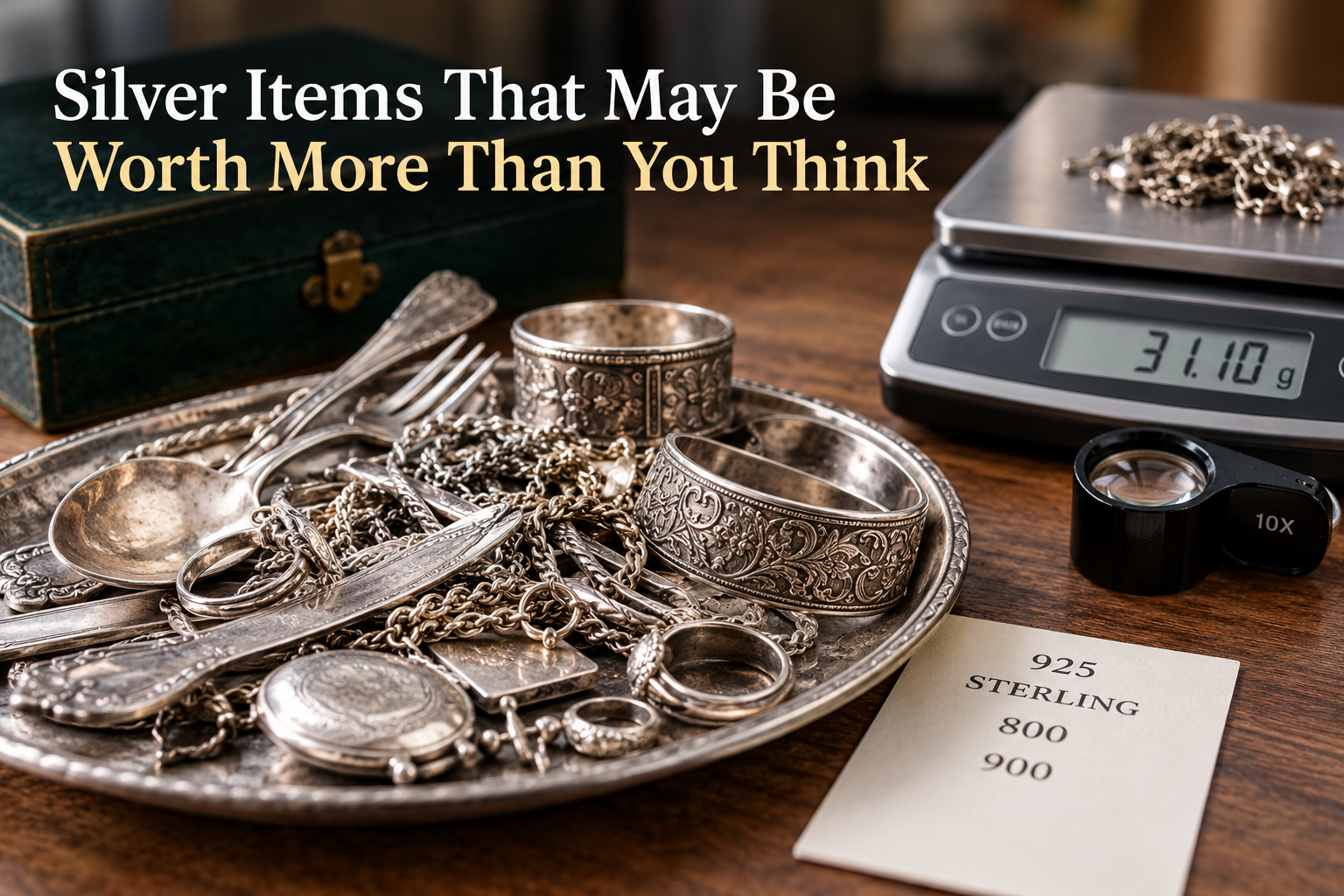
A broken bracelet, bent spoon, or single earring can look nearly worthless in a drawer. Yet silver content may give these items a second life through resale, refining, or pawnbroking. The value depends less on appearance than on metal purity, usable weight, and the current silver market.
Why Damaged Silver Can Still Have Value
Silver jewelry is rarely made from pure silver because the metal is soft. Sterling silver, one of the most common standards, contains 92.5% silver and is often marked “925.” Fine silver is typically 99.9% pure, while older or imported pieces may use different fineness standards.
That distinction matters when selling scrap silver. A dealer usually values the recoverable precious metal rather than the original retail price. Stones, clasps, non-silver fittings, dirt, and other materials may reduce the payable weight.
For example, a 100-gram sterling item does not contain 100 grams of pure silver. Its theoretical silver content is 92.5 grams before refining losses, testing costs, and the buyer’s margin are considered.
Hallmarks Are Useful, but Testing Settles the Question
Look for marks such as 925, sterling, 800, 900, or other recognized fineness numbers. Hallmarks can offer a useful starting point, especially on jewelry, cutlery, trays, and decorative objects. They do not always prove composition, however, because items can be worn, altered, plated, or incorrectly stamped.
Professional buyers may use acid testing, electronic testers, X-ray fluorescence equipment, or a combination of methods. The chosen method depends on the item and the business. Testing helps separate solid silver from silver-plated goods, which usually contain only a thin precious-metal layer.
Anyone comparing gold buyers and precious-metal dealers should ask how testing is performed and whether the item will remain visible during the process. Clear weighing and testing procedures make an offer easier to evaluate.
The Spot Price Is Only the Starting Point
Silver trades on international markets, and its spot price changes as market conditions shift. That price represents a market reference for pure metal, not a guaranteed consumer payout.
The amount offered for scrap silver is normally lower because a buyer must account for refining, handling, operating costs, and resale risk.
Weight also needs careful attention. Precious metals are commonly quoted in troy ounces, while household scales often display standard ounces or grams. One troy ounce equals about 31.1 grams, so mixing measurement systems can produce misleading estimates.
Before visiting a dealer, separate obvious silver items from plated pieces and weigh them in grams if possible. Then note any purity stamps. This preparation gives you a rough basis for comparing offers without pretending to know the final assay result.
Pawn, Sell, or Preserve the Piece?
Pawnbroking serves a different purpose from an outright precious-metal sale. A pawn loan lets the owner use an item as collateral and reclaim it after repaying the loan under the agreed terms. Selling transfers ownership immediately and may suit damaged, unwanted, or unmatched pieces better.
Not every silver object belongs in the melt pile. Antique flatware, designer jewelry, signed pieces, collectible coins, and historically interesting objects may carry value beyond their metal content. Removing stones or melting an unusual piece too quickly can destroy that additional value.
If an item seems old, branded, rare, or unusually well made, consider an appraisal before accepting a melt-based offer. Photos, maker’s marks, receipts, and original boxes can also help establish provenance.
Getting a Fairer Offer
Bring identification if local rules require it, and ask for the weight, purity assessment, and price basis in plain terms. Comparing more than one established buyer can reveal meaningful differences in deductions and margins.
Reputable gold buyers near the end of your comparison process should be willing to explain their calculations without pressure. For scrap silver, the strongest decision usually comes from knowing what you own, checking the live market reference, and separating metal value from collectible value.
A few minutes of preparation can prevent a sentimental heirloom from being treated like ordinary scrap. It can also help genuinely unwanted silver reach the most appropriate resale or recycling channel.

 English
 Arabic
 French
 Spanish
 Portuguese
 Deutsch
 Turkish
 Dutch
Dutch
 Italiano
 Russian
 Romaian
 Portuguese (Brazil)
