
Could Regional Cooperation Redefine Ammunition Readiness Across the Baltic States?
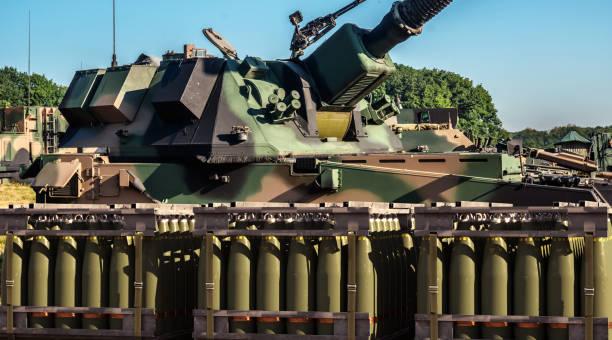
The Baltic States are placing greater emphasis on coordinated defence planning, supply security, procurement resilience, and compatibility with allied systems. These priorities are making ammunition availability an increasingly important part of regional defence planning. According to a Vyansa Intelligence report, the Baltic States 155mm artillery shells market was valued at USD 20 Million in 2025 and is projected to reach USD 40 Million by 2032, registering a CAGR of 10.41% during 2026-2032.
Procurement Is Becoming More Strategic
Ammunition procurement is increasingly connected with longer-term planning rather than being treated simply as a series of individual purchasing decisions. For Estonia, Latvia, and Lithuania, coordinated planning can help create a more consistent approach to requirements, supply arrangements, and replenishment.
In this report, the broader industry analysis points toward procurement structures that place greater importance on predictable supply and long-term readiness. This creates an environment where defence agencies need to consider not only immediate requirements but also how procurement decisions fit into wider regional planning.
The Baltic States 155mm artillery shells market analysis therefore needs to be viewed through the combined lens of procurement planning, industrial availability, interoperability, and supply-chain resilience.
Interoperability Remains Central to Regional Planning
The Baltic States operate within a wider NATO defence environment, making interoperability an important consideration when assessing ammunition requirements. Compatibility between allied systems can support cooperation and simplify the integration of capabilities across participating countries.
NATO itself identifies multinational cooperation as a way to strengthen interoperability and improve the efficiency of capability development. Its current initiatives include multinational ammunition projects, including work related to 155mm ammunition and the interchangeability of indirect-fire munitions.
For the Baltic region, this reinforces the importance of common standards and compatible procurement requirements. According to this industry report, alignment with broader allied requirements can influence purchasing decisions as countries seek ammunition that fits into a wider defence ecosystem.
Supply Security Could Become a Stronger Procurement Priority
A major consideration for the Baltic States 155mm artillery shells industry report is the need to maintain dependable access to ammunition. Procurement decisions are influenced not only by demand but also by the availability and reliability of industrial supply.
A concentrated manufacturing base can create challenges when several countries require ammunition at the same time. Procurement agencies therefore have an incentive to establish relationships that provide greater visibility into production schedules, delivery commitments, and future availability.
The latest market analysis also highlights why regional supply-chain development can have significance beyond individual procurement contracts. Building stronger connections between manufacturers, defence agencies, logistics providers, and supporting industrial suppliers can contribute to a more resilient procurement environment.
Regional Cooperation Can Support Long-Term Capability Planning
Cooperation between the Baltic States can provide another mechanism for strengthening procurement resilience. Joint planning, coordinated requirements, and compatible technical expectations can make it easier for countries to participate in broader European procurement initiatives.
NATO's multinational capability model demonstrates how countries can pool requirements and resources while improving interoperability. Its ammunition-related initiatives include multinational procurement frameworks and projects focused on interchangeability and certification.
For the Baltic region, this creates an important strategic consideration. Rather than treating Estonia, Latvia, and Lithuania as completely separate procurement environments, regional cooperation can create opportunities for more coordinated planning and stronger engagement with European industrial capacity.
Industrial Capacity Is Becoming More Relevant
The Baltic States 155mm artillery shells market research also reflects the growing importance of industrial capability. Defence readiness depends not only on procurement budgets but on whether suitable ammunition can be produced, tested, delivered, and replenished reliably.
Local and regional industrial development can therefore become an important component of long-term planning. Greater proximity between production capacity and end users can potentially support supply visibility and reduce dependence on distant production networks.
This does not eliminate the importance of international suppliers. Instead, it creates a more diversified industrial environment in which regional production can complement broader European supply arrangements.
Standardisation Can Influence Future Procurement Decisions
Standardisation is another area likely to remain important. When ammunition specifications, testing procedures, and certification approaches are better aligned, procurement across allied countries can become more straightforward.
NATO's current work on testing, evaluation, and certification of indirect-fire munitions specifically addresses interoperability and the harmonisation of national approaches.
For industry participants, this means that technical compatibility and compliance can be just as important as production capacity. According to this industry analysis, suppliers capable of supporting common requirements can become better positioned within multinational procurement structures.
What Could Define the Next Phase?
Several factors are likely to shape the future direction of the Baltic States 155mm artillery shells industry:
- Greater emphasis on long-term procurement planning
- Stronger regional coordination between Estonia, Latvia, and Lithuania
- Continued focus on NATO interoperability
- Greater attention to supply security and manufacturing resilience
- Increasing relevance of regional and European industrial capacity
- Greater alignment of technical and certification requirements
The detailed market insights indicate that the industry should be viewed as part of a broader defence-industrial ecosystem rather than as an isolated ammunition category. Procurement decisions increasingly connect national readiness with regional cooperation, industrial resilience, and allied compatibility.
A More Integrated Procurement Environment
The Baltic States 155mm artillery shells market analysis points toward an environment where readiness, industrial capability, and cooperation are becoming closely connected. Procurement agencies are likely to place increasing importance on dependable supply, compatible systems, long-term planning, and relationships with capable industrial partners.
For companies operating across the defence supply chain, this creates a need to understand procurement requirements beyond individual orders. The market research report perspective is therefore increasingly connected to industrial capacity, regional cooperation, standardisation, and supply resilience.
As European defence procurement becomes more collaborative, the Baltic States can remain an important regional example of how smaller national defence systems can coordinate requirements within a wider allied framework.

 English
 Arabic
 French
 Spanish
 Portuguese
 Deutsch
 Turkish
 Dutch
Dutch
 Italiano
 Russian
 Romaian
 Greek
Greek
