
How Much Does It Cost to Start a Shoe Laundry Business?
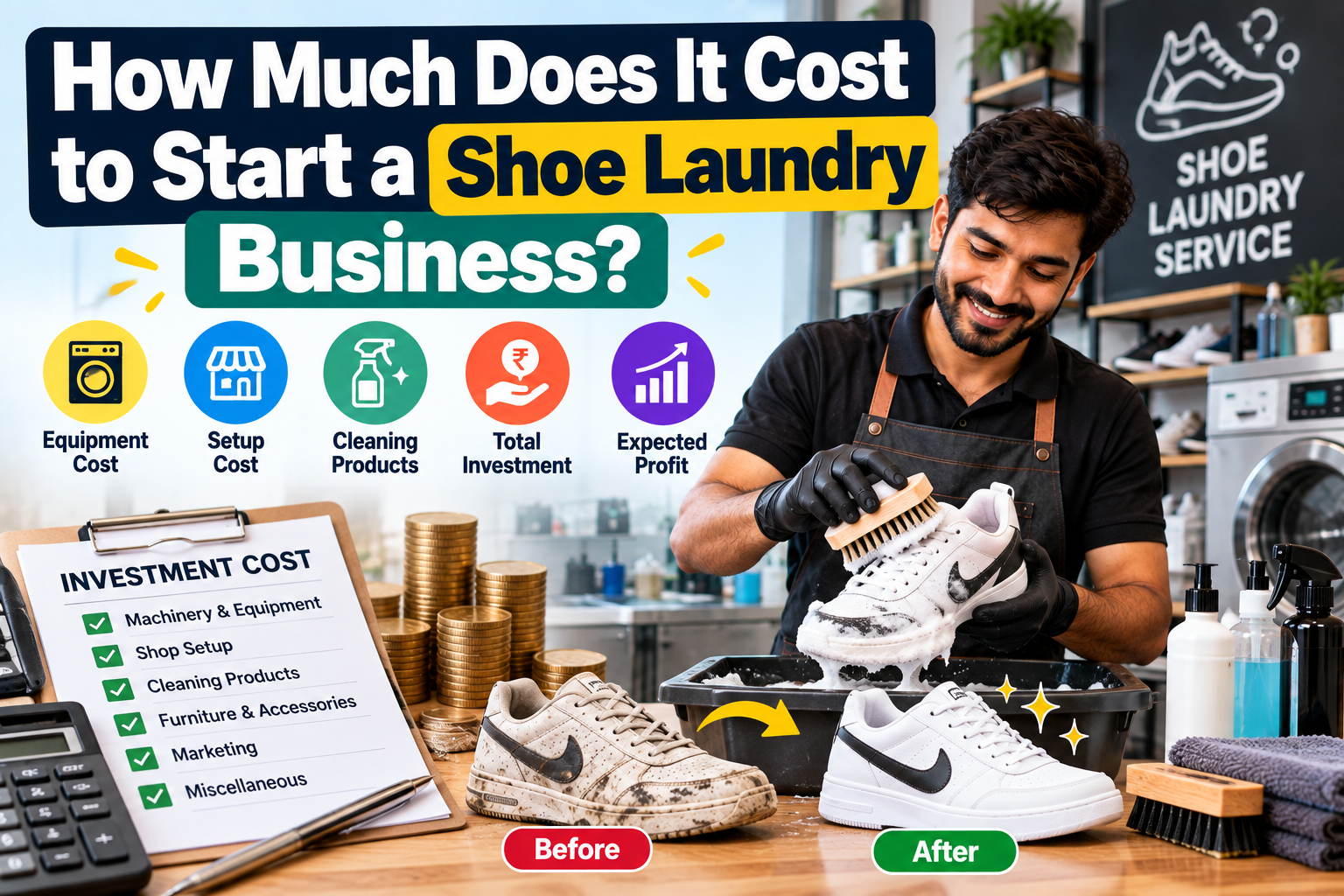
The demand for professional footwear care is growing as people become more conscious about maintaining expensive sneakers, sports shoes, formal footwear, and everyday pairs. This has created an opportunity for entrepreneurs who want to enter the specialized cleaning and maintenance segment. However, one of the first questions new entrepreneurs ask is: how much money is required to get started? The answer depends on factors such as location, equipment, business size, services offered, shop rent, and marketing.
Understanding the different expenses involved can help you create a realistic budget and avoid unnecessary spending. Whether you are planning a small neighborhood operation or a professionally equipped center, careful financial planning is essential.
What Is a Shoe Laundry Business?
A shoe laundry business provides professional cleaning and care services for different types of footwear. Depending on the setup, services can include deep cleaning, stain removal, deodorizing, drying, polishing, whitening, color restoration, and minor repairs.
Unlike ordinary home cleaning, professional footwear care requires appropriate cleaning products, specialized equipment, trained staff, and suitable drying methods. Customers may bring sneakers, canvas shoes, leather footwear, sports shoes, boots, school shoes, and other products that require specialized treatment.
The business can operate through a physical store, collection-and-delivery model, or a combination of both. The chosen model directly affects the initial investment.
Estimated Startup Cost
The investment required can vary significantly. A small-scale setup may require approximately ₹2 lakh to ₹5 lakh, while a more professionally equipped center can require ₹5 lakh to ₹10 lakh or more.
A basic cost structure may include:
-
Shop deposit and advance rent
-
Interior setup
-
Cleaning equipment
-
Drying equipment
-
Cleaning chemicals and consumables
-
Furniture and storage
-
Packaging materials
-
Staff recruitment and training
-
Branding and signage
-
Marketing
-
Registration and licenses
-
Delivery arrangements
-
Working capital
These figures are indicative rather than fixed. Local rent, equipment quality, business scale, and service range can substantially change the final investment.
Equipment and Machinery Costs
Equipment is one of the most important parts of the initial investment. The exact machinery required depends on the services you intend to provide.
A basic setup may include:
-
Shoe cleaning machines
-
Brushes and specialized cleaning tools
-
Steam cleaning equipment
-
Vacuum cleaners
-
Air blowers
-
Drying systems
-
Washing equipment where appropriate
-
Shelving and storage racks
-
Work tables
-
Water treatment or filtration equipment
-
Packaging tools
A small operation can begin with essential tools and gradually upgrade equipment as customer demand increases. Entrepreneurs should focus on equipment that improves cleaning consistency, protects different materials, and increases daily processing capacity.
Buying extremely cheap equipment may reduce initial costs but can result in higher maintenance expenses or inconsistent service quality. Therefore, equipment should be evaluated based on durability, capacity, after-sales support, and suitability for different footwear materials.
Shop Rent and Interior Expenses
The location of your outlet can have a major effect on startup costs. A small unit in a residential or commercial neighborhood may be more affordable than a premium high-street location.
For a new entrepreneur, a compact workspace may be sufficient if most orders are collected and delivered. A customer-facing store, however, may require additional spending on interiors, display areas, reception space, lighting, signage, and storage.
The interior does not necessarily need to be expensive. A clean, organized, and professional environment can create customer confidence without requiring excessive investment.
Cleaning Supplies and Consumables
Cleaning chemicals and consumables represent recurring expenses rather than one-time investments. Depending on the footwear being treated, you may need different products for fabric, suede, leather, canvas, rubber, mesh, and synthetic materials.
Other consumables can include:
-
Cleaning brushes
-
Microfiber cloths
-
Stain removers
-
Disinfectants
-
Deodorizers
-
Protective sprays
-
Packaging bags
-
Labels
-
Gloves
-
Drying materials
Using appropriate products is important because aggressive chemicals can damage certain footwear materials. Staff should understand product instructions and follow suitable cleaning procedures.
Staff and Training Costs
Labor expenses depend on the size of your operation. A small outlet may initially operate with one or two trained employees, while a larger center may require separate workers for cleaning, quality checking, packaging, customer service, and delivery.
Training is particularly important because different shoes require different cleaning techniques. Employees should learn how to identify materials, test cleaning products, remove stains safely, operate machinery, and handle delicate footwear.
Investing in training can reduce avoidable damage and improve customer satisfaction over time.
Marketing and Branding Budget
A new footwear-care outlet needs visibility to attract its first customers. Marketing costs can include signage, social media promotion, local advertising, online listings, introductory offers, and printed promotional material.
Digital marketing can be particularly useful because customers often search online for nearby cleaning services. A professional website, optimized business profile, customer reviews, and social media presence can help establish credibility.
Partnerships can also create valuable leads. Local shoe stores, gyms, sports clubs, hostels, offices, hotels, and residential communities may become potential sources of recurring customers.
Working Capital Requirements
One expense that new entrepreneurs sometimes overlook is working capital. Even after the outlet opens, you may need money to cover rent, salaries, electricity, supplies, transportation, maintenance, and marketing before the business generates consistent revenue.
Keeping at least three to six months of operating expenses as a reserve can provide greater financial stability. The exact amount depends on the size and location of the operation.
Working capital also gives you flexibility to handle seasonal changes or unexpected equipment repairs without disrupting operations.
Ways to Reduce Initial Investment
Starting small can be an effective approach. Instead of investing in every possible machine and service immediately, entrepreneurs can begin with high-demand cleaning services and expand later.
Other ways to control costs include:
-
Choose a practical location: A smaller workspace with good accessibility may be more economical than a premium storefront.
-
Start with essential equipment: Purchase machinery according to expected order volume.
-
Use digital marketing: Social media and local online listings can provide cost-effective visibility.
-
Offer pickup and delivery: This can expand your service area without requiring a large retail outlet.
-
Track consumables: Proper inventory management can reduce unnecessary wastage.
-
Train staff carefully: Good processes can reduce rework and damaged footwear.
Revenue Potential and Break-Even Considerations
Revenue depends on pricing, order volume, service variety, repeat customers, and operating costs. A business may charge different rates based on footwear type and the complexity of cleaning required.
For example, basic cleaning may have a lower price, while premium sneaker restoration, leather treatment, whitening, or specialized stain removal can command higher charges.
Before launching, calculate your expected monthly fixed expenses and determine how many orders you need to cover those costs. This break-even calculation can help you set appropriate prices and sales targets.
Customer retention is also important. Repeat customers can provide more predictable revenue than relying entirely on new customers.
Is a Shoe Laundry Business Worth Considering?
A specialized footwear-care operation can be an attractive business opportunity for entrepreneurs who identify local demand and manage costs carefully. The investment can be scaled according to the business model, available capital, and expected customer volume.
The most important factors are not simply the amount invested but how effectively that investment is allocated. Proper equipment, trained employees, consistent service quality, sensible pricing, and strong customer relationships can contribute to sustainable growth.
Before investing, conduct local market research, study competitors, estimate realistic operating expenses, and identify your target customers. A detailed business plan will help you determine the right setup size and avoid unnecessary expenditure.
Final Thoughts
Starting a shoe laundry business can require anywhere from a few lakh rupees for a compact operation to significantly more for a larger, professionally equipped center. Rent, machinery, interiors, staff, supplies, marketing, and working capital are the major cost components.
Rather than focusing only on the initial investment, entrepreneurs should evaluate long-term operating expenses, customer demand, pricing, service quality, and expansion opportunities. Starting with a manageable setup and scaling according to demand can help control financial risk while creating room for future growth.

 English
 Arabic
 French
 Spanish
 Portuguese
 Turkish
 Dutch
Dutch
 Italiano
 Russian
 Romaian
 Portuguese (Brazil)
 Greek
Greek
