
Which Workplace Policies May Matter in a Harassment Dispute?
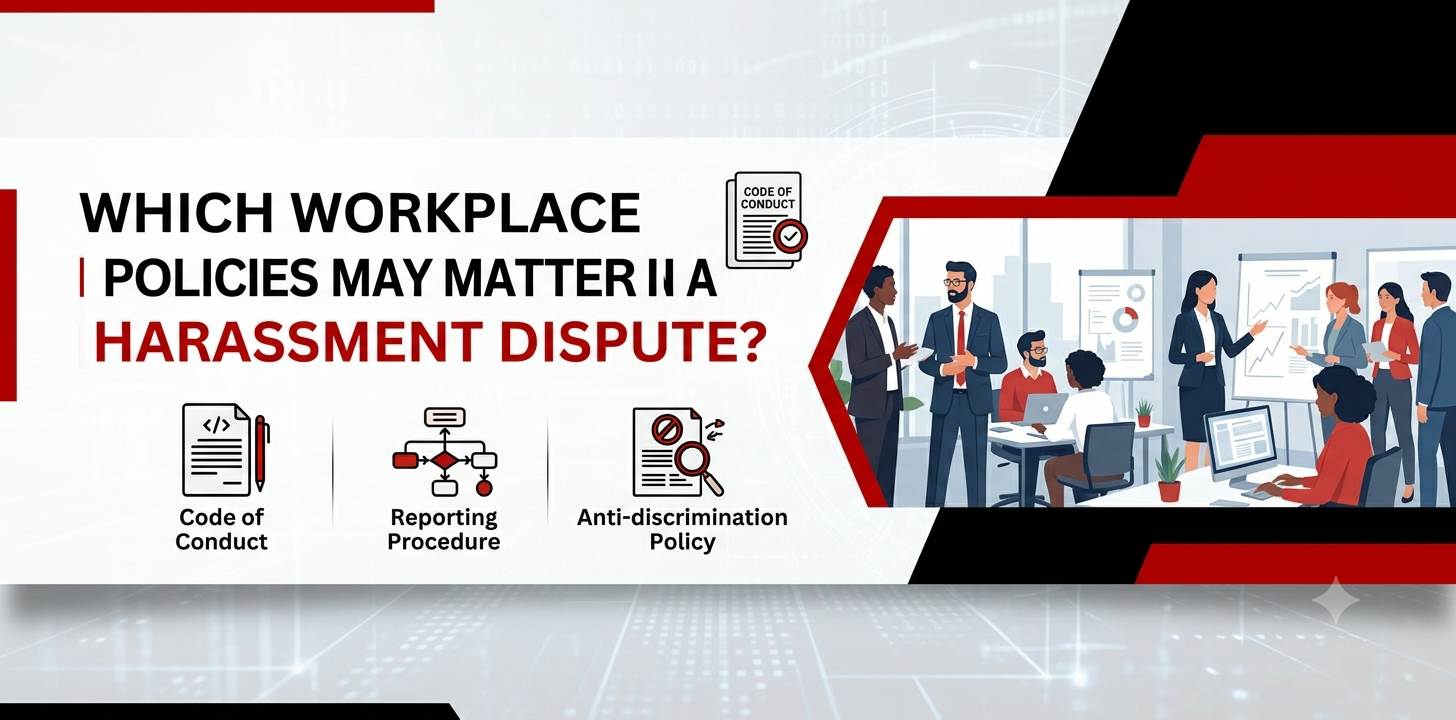
Workplace harassment disagreement usually goes beyond such behaviour. Company rules can set out what actions are not allowed, where employees can raise concerns, and the actions to take if a complaint is made. If you’re thinking about a workplace sexual harassment attorney, these policies could become relevant when you look at what transpired before, during and after a report.
Instead of a single policy called “harassment,” there may be a number of applicable rules inside an employee handbook. Depending on the circumstances, you may be subject to anti-discrimination rules, reporting procedures, prohibitions against retaliation, standards for workplace conduct, protocols for investigations, and so forth.
Which Policies Are Most Relevant to a Harassment Complaint?
The first policy to review is usually the employer’s anti-harassment or equal employment opportunity policy. Federal law protects against harassment based on protected characteristics, including sex. Employers are advised to have adequate complaint systems and to take appropriate corrective action.
A policy may address:
-
Conduct the employer prohibits
-
Who employees can contact with a complaint
-
Whether multiple reporting channels are available
-
How investigations are handled
-
Protection against retaliation
-
Potential corrective or disciplinary measures
The exact wording matters because workplace policies vary considerably between employers.
How Can Anti-Discrimination Policies Enter the Dispute?
Harassment may overlap with broader workplace discrimination concerns. For example, a sexual conduct complaint may also contain uneven treatment, job decisions, or other activity involving sex.
A workplace discrimination attorney in Los Angeles may therefore go beyond the particular instances mentioned in a complaint. For example, relevant enquiries include, did employment opportunities alter, was there a different treatment in the workplace, and if there were any other employment actions around the same time.
The EEOC defines harassment as employment discrimination in protected characteristics that fulfils the applicable legal requirement.
What About Policies Covering Retaliation?
Once an employee has made a harassment allegation, retaliation measures are particularly significant. Federal EEO rules prohibit retaliation against employees who use their rights under the law, including reporting discrimination, engaging in an investigation, or bringing an employment discrimination charge.
A workplace policy may specifically say that employees will not be penalised for making a complaint in good faith or for cooperating in an investigation. The time and circumstances of the initial complaint can then be used to consider subsequent events.
Employment activities that may generate suspicions include an unexpected change in schedule, disciplinary action, reassignment, greater scrutiny, or termination. It’s the context that matters.
What Should an Employer's Investigation Policy Address?
An investigation policy can be important since it states the strategy the company says it will take upon receipt of a complaint. EEOC advice has recognised some aspects of a good harassment policy, including accessible reporting routes, protection against retaliation, confidentiality to the extent practicable, and timely, comprehensive and impartial enquiry.
A dispute may therefore involve questions such as:
-
Was the complaint properly received?
-
Who was responsible for reviewing it?
-
Were relevant witnesses identified?
-
Was supporting documentation considered?
-
Were appropriate interim measures considered?
-
Was the employee informed about the process?
-
Did the employer take corrective action when warranted?
The absence of one particular step does not automatically determine legal liability. The significance depends on the applicable law and the circumstances surrounding the investigation.
Can Workplace Conduct Policies Provide Additional Context?
Yes. Many employee handbooks contain broader norms on professional conduct, workplace communications, bullying, inappropriate statements, physical behaviour, or interactions between employees.
Such clauses may be useful in considering a disagreement. Company policy may ban conduct that does not rise to the minimum level necessary to sustain a federal harassment claim. Failure of an employer to implement its own policy, however, may be a question of fact but is not, in and of itself, a legal infringement.
This is an essential distinction. A policy violation does not always constitute a legally actionable harassment allegation.
What Evidence Can Help Explain Whether a Policy Was Followed?
Policies are only half of the story. Disputes may include emails, text messages, performance appraisals, calendars, personnel files, complaint letters, witness testimony, and investigative data.
A sexual harassment legal counsel evaluation may take into account how these materials go together in chronological order. Keeping relevant records in their original form may make it easier to establish the timing of a complaint and the subsequent actions taken.
An employee can develop a verifiable timeline of dates, involved individuals, reported incidents, reactions and following employment actions instead of depending on memory.
FAQs
Can an employee's handbook be used in a harassment dispute?
Potentially. The handbook may set forth the employer’s stated policies, reporting methods, and pledges about addressing harassment and retaliation. Its importance is relative to the facts and the legal questions at stake.
Does breaking a company policy automatically create a legal claim?
No. An employer may ban conduct that does not constitute unlawful harassment on its own. Claims must be evaluated under the appropriate statutes and case law.
Can an employer be responsible for harassment by a coworker?
Potentially. The EEOC says employer culpability might rely on a number of variables, including who perpetrated the harassment, what the employer knew or should have known and whether corrective action was taken.
Conclusion
Workplace policies can provide an important factual underpinning in a harassment lawsuit. Anti-harassment regulations, discrimination policies, reporting procedures, investigative standards, conduct requirements and retaliation safeguards may each say something different about how a complaint was supposed to be handled.
For anyone thinking about a possible claim, looking at those policies in terms of the timing and what evidence there is might help to highlight the situations where legal attention is really needed. A Workplace discrimination lawyer los angeles can then aid to examine the facts under the statutes that apply to the particular circumstance.

 Arabic
 French
 Spanish
 Portuguese
 Deutsch
 Turkish
 Dutch
Dutch
 Italiano
 Russian
 Romaian
 Portuguese (Brazil)
 Greek
Greek
