
Managed SOC Providers: Trusted Security for Indian Banks
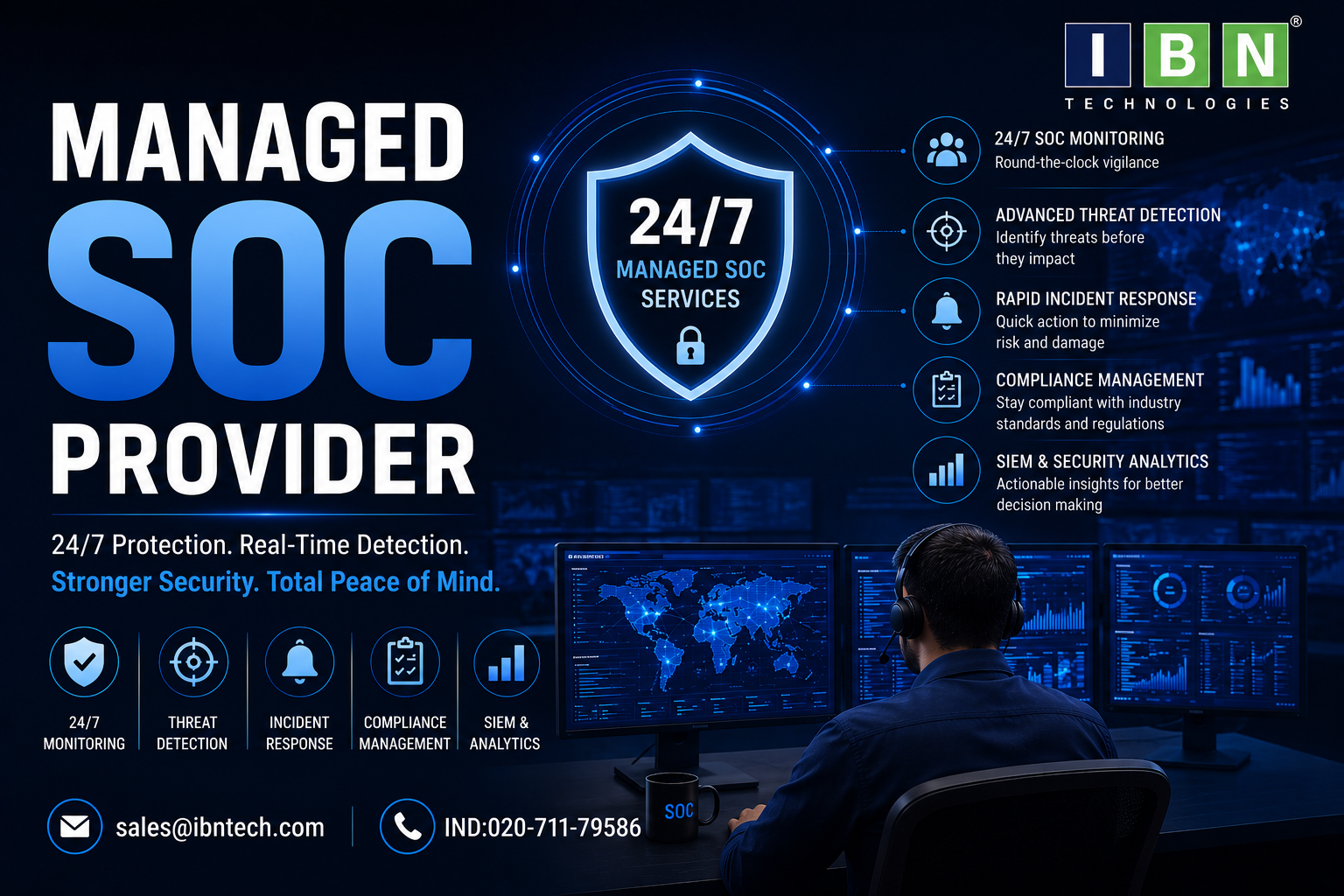
How Managed SOC Providers Can Strengthen Security for Indian BFSI Teams
For banks and financial institutions, managed SOC providers deliver structured security monitoring, threat detection, investigation, and incident escalation across critical technology environments. The model can combine SIEM visibility with analyst-led review, helping BFSI organizations strengthen security operations while keeping business, risk, compliance, and response responsibilities clearly defined.
Why security operations are different in BFSI
Transaction sensitivity: Banking environments handle customer identities, payment activity, account information, authentication data, and internal financial systems. A suspicious event can therefore require faster investigation and stronger business context than a routine IT alert.
Connected infrastructure: A financial institution may operate internet-facing applications, employee endpoints, databases, cloud workloads, authentication systems, network infrastructure, and third-party integrations. Monitoring must connect relevant signals rather than examining every event separately.
Operational accountability: Security decisions in BFSI often involve IT, information security, risk, compliance, and business teams. A managed SOC model should support those existing responsibilities instead of creating an isolated security process.
For Indian financial organizations, the objective is not simply to collect more logs. It is to create a repeatable method for identifying suspicious activity, investigating relevant events, and escalating incidents appropriately.
How a managed SOC works across banking environments
The operating model usually begins with identifying critical systems and deciding which security data should enter the monitoring process. Relevant events can then be collected into a SIEM environment, where rules and correlation help surface activity requiring analyst attention.
For organizations evaluating soc managed service providers for Indian banks, the important question is how the provider turns technical events into actionable security information. A useful process should connect monitoring, investigation, prioritization, escalation, and documentation.
Event intake: Security data enters the monitoring environment from agreed technology sources.
Correlation: Related events can be examined together to identify patterns that may not be obvious from an individual alert.
Investigation: Analysts review suspicious activity and determine whether further action is warranted.
Escalation: Relevant incidents are communicated to designated banking or security stakeholders according to agreed procedures.
Documentation: Findings and actions are recorded so that teams can review what happened and improve future response.
What risks should BFSI leaders consider?
Account compromise: Unusual authentication activity can become important when combined with other suspicious behavior. Monitoring should help security teams identify relationships between events instead of treating each login alert independently.
Privileged access: Administrative accounts can have significant impact across banking infrastructure. Activity involving privileged identities should receive appropriate monitoring and escalation attention.
Third-party exposure: Financial institutions depend on technology partners, payment ecosystems, service providers, and integrations. Security monitoring should account for relevant connections and clearly define responsibility when an incident crosses organizational boundaries.
Data movement: Unexpected transfers or unusual access patterns may require investigation, particularly when sensitive systems or information are involved.
Why traditional alert handling can fall short
A security console can generate alerts without resolving the operational question behind them: what happened, how important is it, and who needs to act?
When internal personnel manually review every event, routine alerts can compete with infrastructure work and urgent business requests. This creates a need for defined triage procedures that separate ordinary activity from events requiring deeper investigation.
Managed SOC operations can provide an additional security workflow around those alerts. The internal team can retain ownership of business decisions while security analysts focus on monitoring and investigation responsibilities defined in the operating model.
What should Indian banks evaluate before choosing a provider?
Monitoring scope: Document the systems, applications, endpoints, network devices, cloud services, and other sources that require visibility.
Response boundaries: Establish which actions are advisory and which actions require approval from the financial institution.
Escalation design: Define severity levels, responsible contacts, communication channels, and expected handling procedures.
Evidence handling: Determine how investigation findings and relevant security information are documented and made available to authorized teams.
Reporting needs: Clarify how recurring observations, incidents, and monitoring gaps will be communicated to security and management stakeholders.
How should SOC responsibilities align with BFSI governance?
Security operations should fit within the organization's existing governance structure. The SOC should not operate as a separate island disconnected from risk management, compliance, infrastructure, application teams, or senior decision-makers.
For example, an alert involving a customer-facing banking application may require technical investigation first. If the investigation identifies a material security concern, the matter may then move through the institution's established incident-management and governance process.
This separation is important because technical detection and business decision-making are different responsibilities.
What should a BFSI SOC operating checklist include?
A practical checklist can help financial institutions identify gaps before onboarding a managed service.
- Critical assets and applications are documented.
- Required log sources are identified.
- Authentication and privileged activity are considered.
- Escalation contacts are current.
- Incident severity definitions are agreed.
- Internal and external responsibilities are documented.
- Access permissions follow organizational controls.
- Security findings are reviewed periodically.
- Monitoring gaps are tracked and addressed.
- Incident records are retained according to organizational requirements.
How can SIEM and SOC processes support compliance work?
Security monitoring can provide operational visibility that supports an organization's broader control environment. However, SOC monitoring should not automatically be treated as proof of compliance.
The compliance team still needs to determine which controls, records, access restrictions, retention practices, and response procedures apply to the organization. The SOC's role is to provide relevant monitoring and security information within those established governance requirements.
What does a managed SOC provider need from a bank?
A provider needs clear technical and organizational context. Without it, analysts may see events without understanding which applications are business-critical or which systems require immediate escalation.
The bank should therefore maintain current asset information, approved contacts, access boundaries, incident procedures, and relevant business priorities. These details help make security monitoring more precise and useful.
FAQ
Can managed SOC providers monitor banking applications and infrastructure?
They can monitor agreed technology environments when appropriate security data is available and integrated into the monitoring process. The exact scope should be established during service planning.
Does a managed SOC replace a bank's security and risk teams?
No. A managed SOC can support defined monitoring and investigation activities, while internal teams retain organizational decision-making, governance, risk, and business responsibilities.
How should Indian banks measure the usefulness of managed SOC operations?
They can review monitoring coverage, alert handling, investigation quality, escalation effectiveness, documentation, and identified security gaps. These measures should reflect the institution's own risk and operational requirements.
IBN Technologies can be evaluated alongside an organization's existing requirements when planning managed security operations.
Contact Us
IBN Technologies
Phone: +91 20 6768 0404
Email: sales@ibntech.com

 English
 Arabic
 French
 Spanish
 Portuguese
 Deutsch
 Turkish
 Dutch
Dutch
 Italiano
 Russian
 Romaian
 Portuguese (Brazil)
