
24/7 Managed SOC Services Cost: A Smart Guide for Indian Banks
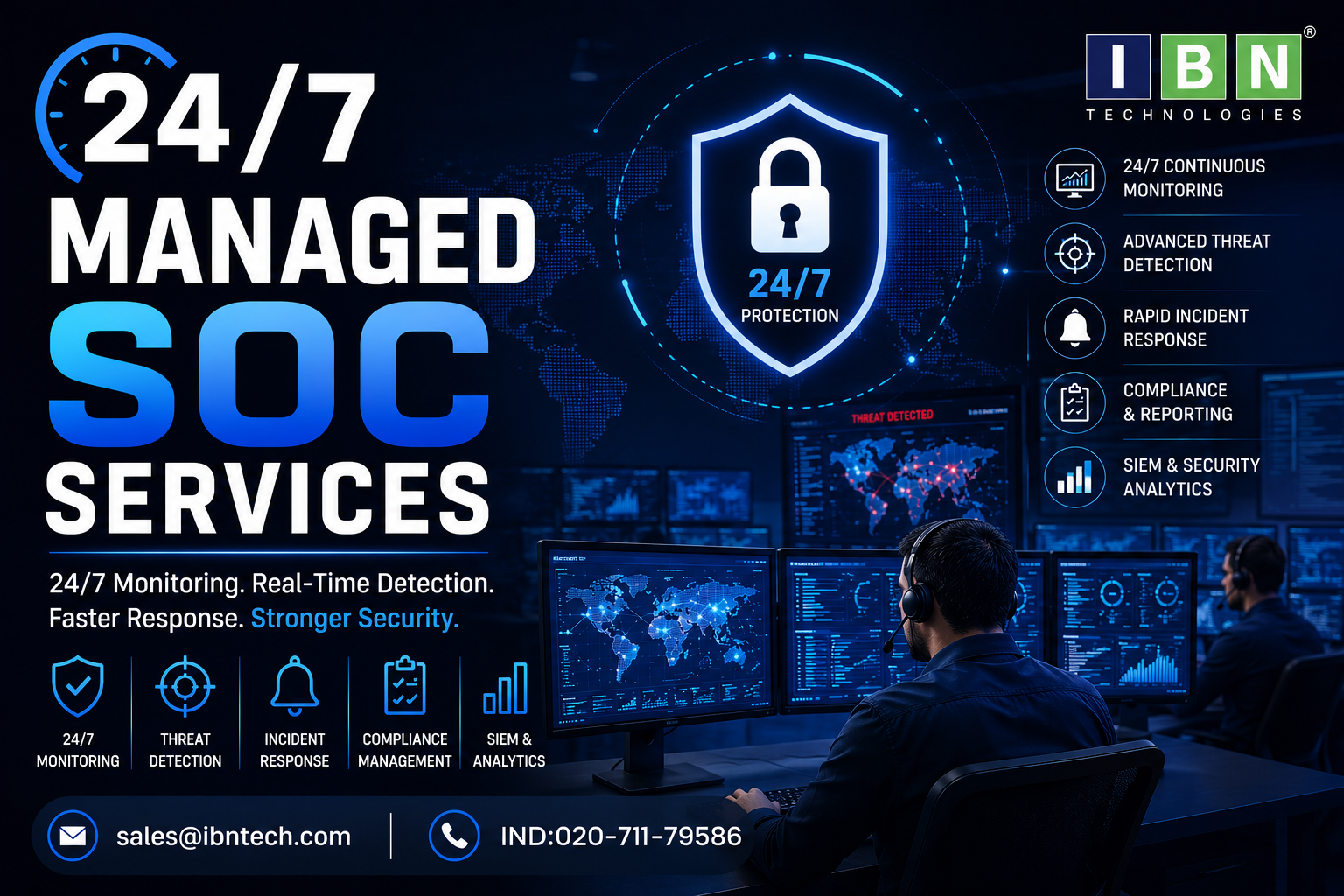
Understanding 24/7 Managed SOC Services Costs for Indian BFSI Teams
For Indian banks, 24/7 Managed SOC Services provide continuous security monitoring, threat detection, investigation, and incident response through an outsourced security operations model. The cost depends on factors such as monitoring scope, SIEM requirements, data volume, response responsibilities, integrations, compliance needs, and the level of specialist support required.
What determines managed SOC costs for banks
Monitoring scope: A bank's security environment can include endpoints, servers, network devices, applications, identity systems, cloud workloads, databases, and security appliances. The more systems included in continuous monitoring, the more complex the service design becomes.
When researching siem and soc services cost for Indian banks, security leaders should first define which assets need visibility and which events require investigation.
Log requirements: SIEM platforms collect and correlate security information from multiple sources. The number and type of log sources, retention requirements, correlation rules, and integration complexity can influence the overall service structure.
Response expectations: Monitoring alone is different from a service that includes investigation, threat hunting, containment support, and incident response. Banks should identify the response activities they expect before comparing proposals.
Why banking security needs a structured cost model
High-value systems: Banking environments connect sensitive customer information, payment systems, employee identities, applications, and financial operations. Security monitoring therefore needs to distinguish ordinary activity from events that could affect critical services or sensitive data.
Operational continuity: A security incident may require coordination between cybersecurity, infrastructure, application, risk, compliance, and business teams. The SOC operating model should support that coordination rather than operate as an isolated alert desk.
Regulatory expectations: Indian BFSI organizations need to consider applicable regulatory and security requirements when designing monitoring, logging, incident management, and reporting processes. RBI requirements may be relevant depending on the regulated entity and its activities.
Breaking down the service components
SIEM platform: SIEM provides centralized collection, correlation, and analysis of security events. Its cost considerations can include data ingestion, storage, integrations, use cases, administration, and ongoing tuning.
Security analysts: Human investigation remains important when alerts require context. Analyst coverage, escalation responsibilities, threat investigation, and incident coordination can therefore form a significant part of a managed SOC service model.
Detection engineering: Banks require detection logic that reflects their actual technology environment. Rules for authentication anomalies, privilege misuse, suspicious network activity, endpoint threats, and unusual application behavior may require continuing refinement.
What affects siem and soc services cost for Indian banks?
The main cost factors include the number of monitored assets, security data volume, SIEM architecture, integration requirements, monitoring coverage, analyst involvement, incident response expectations, reporting, and compliance needs. A useful evaluation separates these components so that the bank can understand what each service level actually includes.
Managed SOC versus building the capability internally
Internal investment: An in-house SOC can require recruitment, shift coverage, security platforms, infrastructure, training, detection development, maintenance, and management. The organization also needs processes for handling staff availability and specialist escalation.
Managed model: A managed SOC can combine technology and external security expertise under an agreed service arrangement. This can change the cost structure from building and operating every SOC capability internally to paying for defined services and coverage.
|
Cost consideration |
In-house SOC |
Managed SOC |
|
Security staffing |
Internal recruitment and coverage |
External analyst coverage under agreed terms |
|
SIEM operations |
Internal administration |
Provider-managed or jointly managed |
|
Detection tuning |
Internal security team |
Provider and customer collaboration |
|
Incident support |
Internal response resources |
Defined external escalation and response |
|
Infrastructure |
Customer responsibility |
Depends on service model |
|
Scaling |
Requires additional internal capacity |
Can be adjusted through service scope |
Where banks should avoid hidden costs
Integration work: Connecting security devices, applications, endpoints, identity systems, and cloud platforms can require configuration and testing. Confirm whether onboarding and integration activities are included in the proposed service.
Data retention: Security logs may need to be retained for operational, investigative, or compliance purposes. Clarify storage periods, archival arrangements, retrieval processes, and associated charges.
Response activities: A low-cost monitoring package may not include every action required during an incident. Ask whether investigation, threat hunting, containment support, forensic assistance, and after-incident reporting are included or separately scoped.
How should banks compare siem and soc services cost for Indian banks?
Banks should compare the complete operating model rather than only the quoted subscription or monthly fee. Review monitoring coverage, SIEM capabilities, staffing, response scope, integrations, reporting, retention, compliance support, and the internal resources still required after onboarding.
Compliance should influence the service design
Audit evidence: Security monitoring can generate records that support internal reviews and regulatory processes. Reporting should make relevant events, investigations, and response actions easier to document.
Incident readiness: A bank should know how security incidents are identified, escalated, investigated, and communicated. The SOC operating model should connect with the bank's existing incident response and governance procedures.
Data governance: Security information itself can contain sensitive operational or user information. Access controls, retention practices, and handling procedures should therefore be considered when selecting a service.
A practical way to evaluate proposals
Define the baseline: Document critical applications, infrastructure, identities, network zones, and security tools before requesting detailed pricing.
Separate mandatory services: Identify essential monitoring and response capabilities separately from optional services such as additional threat hunting or expanded reporting.
Ask about assumptions: Confirm expected log volumes, asset counts, integrations, retention, onboarding responsibilities, and response boundaries.
Review scalability: Banking environments change through new applications, cloud adoption, acquisitions, infrastructure modernization, and security initiatives. The service model should accommodate these changes without creating unclear pricing structures.
What should Indian banks clarify before selecting 24/7 managed SOC services?
Banks should clarify what is monitored, how alerts are investigated, who receives escalations, what response actions are authorized, how SIEM data is handled, and what reporting is provided. They should also document customer responsibilities so the service does not create gaps between the SOC, IT operations, risk, and compliance teams.
Frequently asked questions
Does SIEM automatically provide a complete SOC?
No. SIEM primarily supports security data collection, correlation, analysis, and detection. A SOC adds people, processes, investigation, escalation, and response activities around that technology.
Can a bank keep its existing SIEM while using a managed SOC?
Yes. Depending on the service model, a managed SOC can work with existing security infrastructure or provide managed SIEM capabilities as part of a broader arrangement.
What should be included in a bank's managed SOC cost review?
The review should cover monitoring scope, SIEM requirements, analyst coverage, incident response, integrations, retention, reporting, compliance requirements, onboarding, and ongoing service management.
IBN Technologies offers managed SOC and SIEM services that organizations can evaluate against their banking security requirements.
Contact Us
IBN Technologies
Phone: +91 20 6768 0404
Email: sales@ibntech.com

 English
 Arabic
 French
 Spanish
 Portuguese
 Deutsch
 Turkish
 Dutch
Dutch
 Italiano
 Russian
 Portuguese (Brazil)
 Greek
Greek
