
How Outsourced Eligibility Verification Services Improve Medical Billing Workflows
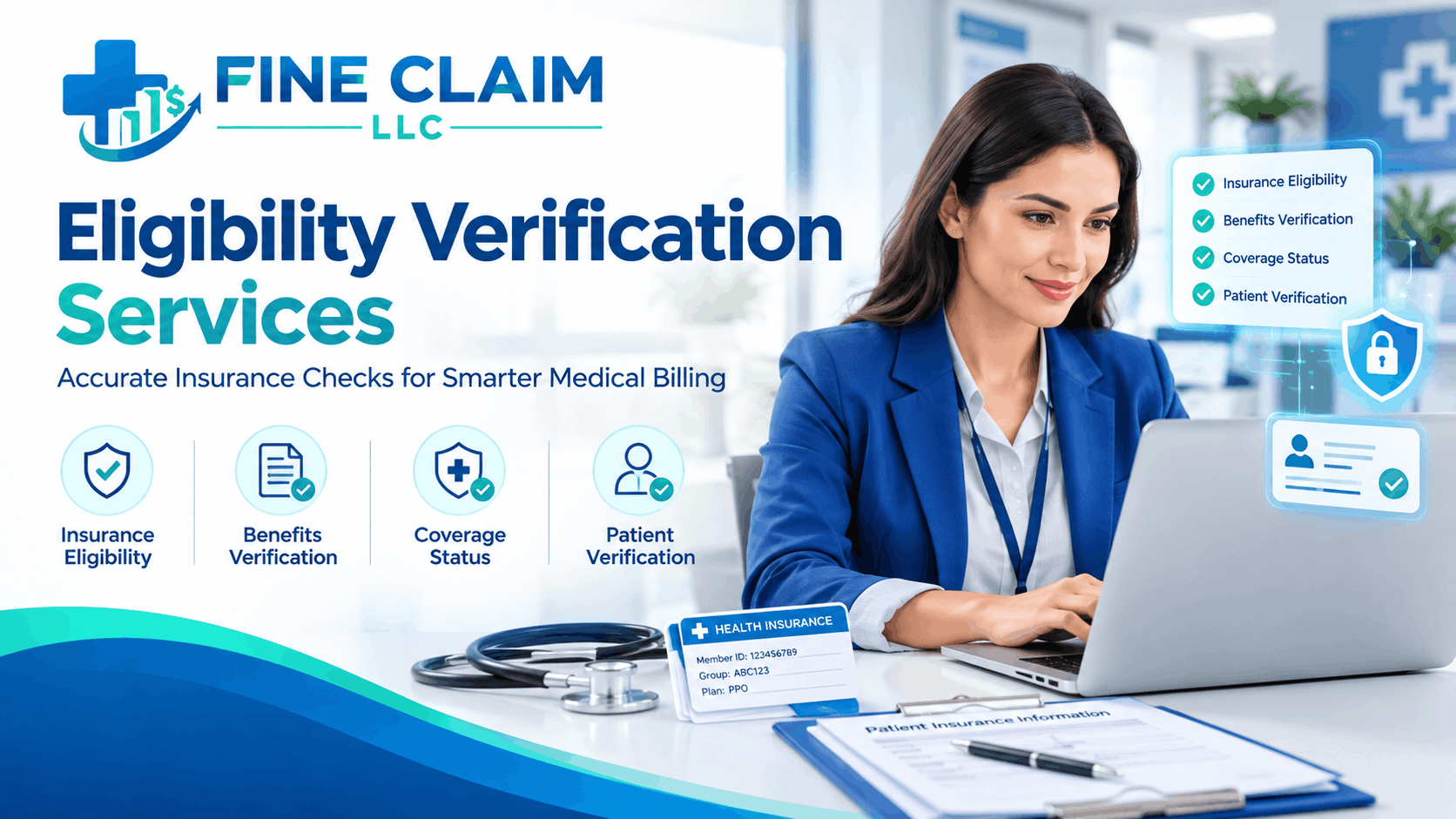
Medical billing begins before a claim is submitted. Patient registration and insurance verification establish the information that later supports billing and claims processing.
When insurance information is incomplete or incorrect, problems can continue into later stages of the revenue cycle.
Outsourced Eligibility Verification Services provide healthcare organizations with administrative support for checking insurance coverage and benefit information before services are provided.
What Does Outsourced Eligibility Verification Include?
The scope of outsourced services can vary, but commonly includes:
- Patient insurance verification
- Eligibility checks
- Benefits verification
- Member information review
- Deductible verification
- Copayment verification
- Coinsurance verification
- Network status review
- Authorization requirement checks
- Documentation of verification results
Healthcare providers can establish workflows based on their specialty and patient volume.
Why Outsource Insurance Verification?
Manual verification can take significant staff time, particularly when a practice has a high number of daily appointments.
Internal staff may need to access multiple payer portals or contact insurance companies to obtain information.
Outsourcing can provide additional administrative resources.
Outsourced insurance eligibility verification services may help practices handle repetitive verification tasks while internal staff focus on patient-facing responsibilities.
Supporting the Revenue Cycle
Revenue cycle management includes front-end and back-end activities.
Eligibility verification belongs primarily to the front-end portion of the cycle.
The information collected during verification can support later processes such as:
- Charge entry
- Claim submission
- Payment posting
- Denial management
- Accounts receivable follow-up
Accurate information at the beginning of the cycle can help create a more organized workflow.
Identifying Insurance Problems Earlier
One major purpose of eligibility verification is early identification.
If a patient's insurance is inactive, staff may be able to request updated information before services are delivered.
If a referral or authorization may be required, the practice can review its workflow accordingly.
Early identification does not guarantee that a claim will be paid, but it can give the practice an opportunity to address known issues before billing.
Patient Financial Communication
Insurance verification can also help practices prepare patients for possible financial responsibility.
For example, the verification response may provide information about deductibles, copayments, or coinsurance.
Staff should explain that insurance benefit information is not necessarily a guarantee of payment and that final responsibility depends on the patient's plan and payer processing.
Choosing an Eligibility Verification Partner
Healthcare organizations considering outsourced medical billing and eligibility verification services should evaluate:
- Experience with healthcare insurance
- Verification workflow
- Payer coverage
- Documentation practices
- Data security
- Turnaround expectations
- Communication process
- Reporting capabilities
The provider should also be able to adapt workflows to the organization's specialty and patient volume.
FAQs
Is outsourced eligibility verification suitable for large practices?
Yes. Large practices may use outsourced verification to handle high appointment volumes and multiple payer relationships.
Can outsourced teams verify benefits?
Depending on the service scope and available payer information, verification teams may review available benefit details.
Can eligibility verification eliminate denials?
No. Denials can have many causes. Eligibility verification may help identify certain insurance-related issues before claim submission.
Conclusion
Outsourced Eligibility Verification Services can support healthcare practices by handling repetitive insurance verification tasks and organizing benefit information before patient services.
For organizations managing high patient volumes, outsourcing may provide additional administrative capacity and support a more consistent front-end revenue cycle workflow.
When combined with medical billing, coding, denial management, and accounts receivable services, eligibility verification can contribute to a coordinated healthcare revenue cycle strategy.

 English
 Arabic
 French
 Spanish
 Portuguese
 Deutsch
 Turkish
 Dutch
Dutch
 Italiano
 Russian
 Portuguese (Brazil)
 Greek
Greek
