
How Scientists Develop Next-Generation Single-Domain Antibodies (SdAbs)—And Why It’s So Challenging
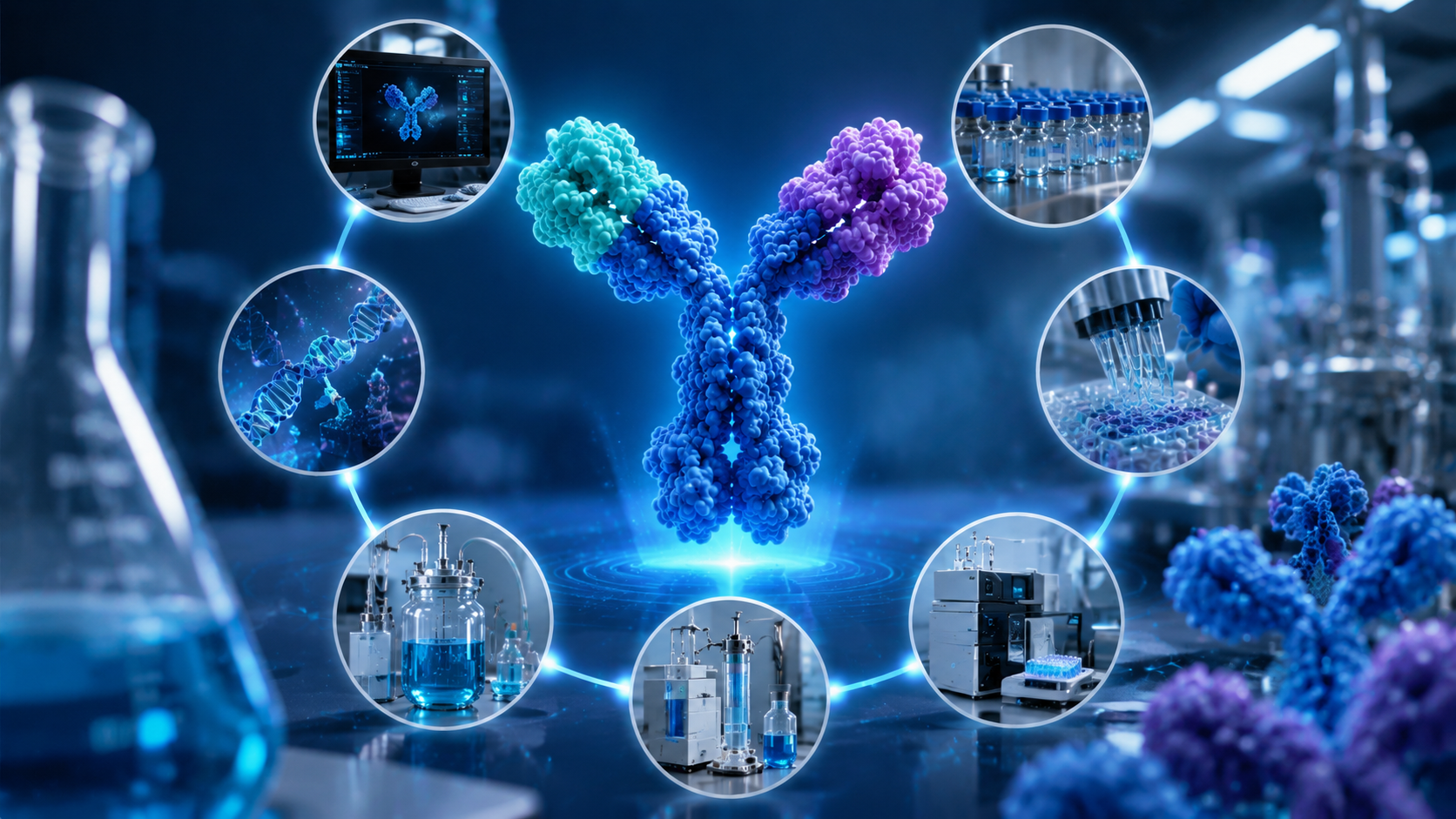
Single-domain antibodies (SdAbs), also called VHH antibodies, are among the most exciting innovations in modern biotherapeutics. With their tiny size, high stability, and exceptional target specificity, SdAbs can reach binding pockets that traditional antibodies simply can’t. They’re being explored for treating cancer, infectious diseases, autoimmune disorders, and even as diagnostic tools.
But turning an SdAb concept into a functional therapeutic isn’t easy. Behind every candidate lies a maze of structural, biochemical, and engineering challenges that require a deep understanding of protein folding, antigen recognition, and manufacturability. This article breaks down the major technical hurdles scientists face when developing advanced SdAb formats—bispecific, neutralizing, anti-PTM, and anti-idiotypic—and explains the strategies used to overcome them.
What Makes Bispecific SdAb Development So Complex?
Bispecific antibodies can simultaneously bind two different targets, opening new possibilities for precision therapy and immune modulation. In the case of SdAbs, the challenge starts with epitope geometry—the physical alignment between two tiny VHH domains and their respective antigens. If the domains are positioned incorrectly or connected by a poorly designed linker, binding affinity and functional activity can drop dramatically.
Researchers use computational modeling and molecular docking simulations to predict the most compatible binding orientations. Then, rational linker engineering helps fine-tune spacing, flexibility, and solubility. Too short a linker restricts motion; too long increases hydrodynamic size and aggregation risk.
Developability is another hurdle. Scientists perform stability and aggregation testing (such as SEC-MALS, nanoDSF, and DLS analyses) to identify candidates that can survive large-scale production and long-term storage. Early screening reduces costly failures in late development, a crucial aspect of bringing bispecific SdAbs to market efficiently.
Why Are Neutralizing SdAbs So Hard to Perfect?
Neutralizing SdAbs are designed to block toxins, viral proteins, or immune receptors. Their key challenge lies in conformational epitopes—the natural three-dimensional structures of antigens. Linear peptides used for antibody discovery rarely replicate these complex shapes, leading to binders that fail in real biological settings.
To address this, scientists rely on cell-based display platforms or stabilized antigen scaffolds to present the target in its native form. Machine-learning-assisted epitope mapping is increasingly used to pinpoint regions least likely to mutate, reducing the risk of escape variants that could undermine therapeutic efficacy.
Once candidates are identified, they undergo stress-testing under different temperatures, pH levels, and buffer systems to confirm their resilience. A neutralizing antibody may look powerful in a test tube, but only those stable under physiological stress can move forward to clinical evaluation.
How Are Anti-PTM SdAbs Developed for Molecular Precision?
Post-translational modifications (PTMs)—such as phosphorylation, acetylation, or ubiquitination—are critical for protein function and disease regulation. Generating SdAbs that specifically recognize a modified residue, and not the unmodified version, is one of the toughest goals in antibody science.
Scientists use counter-selection strategies during phage or yeast display to remove binders that cross-react with non-modified or closely related motifs. For instance, a phospho-specific SdAb must distinguish between phosphorylated and non-phosphorylated serine residues even when surrounded by similar amino acids.
To confirm true specificity, orthogonal assays are essential: LC-MS/MS peptide mapping, peptide arrays, and mutant-panel testing. This multilayered validation ensures the resulting SdAb delivers accurate biological insights for cell-signaling research or diagnostic applications.
What Role Do Anti-Idiotypic SdAbs Play in Drug Development?
Anti-idiotypic (anti-ID) SdAbs are indispensable tools for measuring therapeutic antibodies in biological samples. They’re used in pharmacokinetic (PK), pharmacodynamic (PD), and immunogenicity studies throughout clinical development.
The challenge is to engineer anti-IDs that mimic or block a therapeutic antibody’s binding site without interfering with assay performance. Scientists use surface plasmon resonance (SPR) or bio-layer interferometry (BLI) to classify binders as blocking or non-blocking, ensuring proper pairing for each analytical purpose.
These SdAbs must also exhibit long-term stability in complex biological matrices. Rigorous buffer, pH, and temperature testing guarantee reproducibility—a critical requirement for regulatory compliance and reliable bioanalytical data.
Why Integration Matters: From Discovery to Manufacture
Another major barrier in SdAb development is the fragmentation of workflows. When discovery, protein engineering, and manufacturing are handled separately, valuable information about sequence liabilities, charge variants, or solubility issues can be lost.
Modern pipelines now emphasize integrated “gene-to-assay” approaches, combining computational prediction, high-throughput expression screening, and early developability assessment. Parallel testing in multiple expression systems (E. coli, Pichia pastoris) helps identify the most scalable option, while release-like analytics—such as endotoxin and aggregation profiling—ensure CMC readiness before scale-up.
This holistic process not only reduces timeline disruptions but also improves reproducibility and data continuity—two pillars of scientific reliability.
Key Takeaway
Single-domain antibodies are redefining the boundaries of biologics engineering. However, their success depends on mastering the technical nuances—from epitope geometry and molecular stability to PTM specificity and analytical precision. By combining computational design, orthogonal validation, and integrated workflows, scientists are transforming SdAb research from a niche concept into a cornerstone of next-generation therapeutics.
As the field continues to evolve, expect to see more sophisticated formats, AI-assisted design tools, and automated manufacturing pipelines—all driving the same goal: smaller, smarter, and more effective antibody therapeutics.

 English
 Arabic
 French
 Spanish
 Portuguese
 Turkish
 Dutch
Dutch
 Italiano
 Russian
 Romaian
 Portuguese (Brazil)
 Greek
Greek
