
Precision Optical Manufacturing for Modern Eyewear
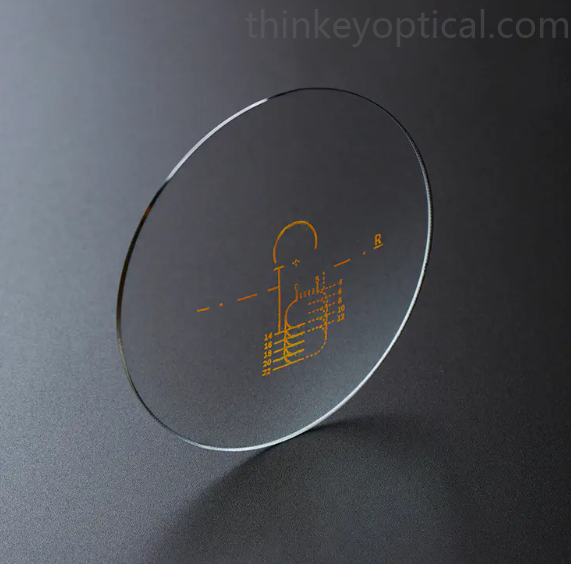
Choosing the right Lenses Factory involves more than evaluating the appearance of finished optical products. For professional buyers, manufacturing capability influences consistency, optical accuracy, processing efficiency, coating compatibility, customization, and long-term supply stability. A reliable production partner should therefore combine material knowledge, digital design, controlled processing, inspection systems, and clear communication throughout the order cycle.
Optical manufacturing begins with material selection. Different lens materials offer different combinations of optical clarity, weight, impact resistance, processing characteristics, and surface treatment compatibility. Resin-based materials are widely used in modern eyewear because they can support a broad range of optical designs while remaining practical for shaping and finishing. Material selection should be based on the intended application, prescription requirements, processing method, and target market rather than on a single performance characteristic.
Digital technology has also changed the way optical products are designed and manufactured. Computer-assisted optical calculations can help create precise lens geometries for different prescriptions and applications. When digital design information is connected with production equipment, manufacturers can reduce unnecessary manual adjustments and improve process repeatability. This is particularly important for buyers managing multiple product types or recurring orders that require consistent manufacturing standards.
Surface processing represents another important stage. Grinding, polishing, and finishing determine the final surface quality and contribute to the optical characteristics of the finished lens. Each stage needs appropriate process control because uneven processing can affect transparency, geometry, and coating performance. Modern production systems therefore combine machinery with inspection procedures to identify inconsistencies before products move to subsequent stages.
Coating technology is equally relevant to contemporary eyewear manufacturing. Anti-reflective treatments, scratch-resistant layers, and other surface technologies can be selected according to the intended product application. Successful coating depends on proper substrate preparation, cleaning, controlled application, curing, and inspection. Manufacturers need to maintain stable processes so that coating appearance and performance remain consistent across production batches.
Quality management should not be limited to final inspection. A comprehensive system can include incoming material verification, equipment calibration, process monitoring, surface inspection, optical measurement, and final product checks. By controlling multiple stages, a Lenses Factory can identify potential production variation earlier and maintain more predictable output. For international buyers, this approach can also simplify communication when specifications need to be repeated across different orders.
Customization is another consideration for B2B optical sourcing. Buyers may require different materials, optical designs, coatings, edging requirements, packaging formats, or labeling arrangements depending on their market. A capable manufacturer should be able to translate these requirements into practical production instructions without creating unnecessary ambiguity. Accurate technical communication between the buyer and production team helps reduce errors and supports smoother order execution.
Frame compatibility should also be considered during lens development and processing. Lens geometry, dimensions, fitting information, and frame structure can affect the final assembly process. Manufacturers that understand the relationship between lens production and eyewear fitting can better coordinate production requirements with downstream assembly. This becomes especially relevant for customized eyewear programs involving multiple frame shapes and prescription combinations.
Consistency is particularly important for distributors and optical businesses that reorder the same product over time. A single successful production run does not necessarily demonstrate long-term manufacturing reliability. Repeatable materials, documented processes, equipment maintenance, inspection procedures, and production records can provide a stronger foundation for stable supply. Buyers can therefore evaluate suppliers by examining how their manufacturing systems support repeat orders rather than focusing only on individual samples.
Sustainable manufacturing practices are also becoming part of sourcing discussions. Efficient production planning, responsible material utilization, optimized processing, durable products, and appropriate packaging can help reduce unnecessary resource consumption. For international businesses, these considerations may become increasingly relevant as customers and markets place greater attention on manufacturing responsibility and product lifecycle factors.
Ultimately, optical manufacturing is a coordinated process involving materials, optical engineering, production technology, surface treatment, inspection, and communication. Buyers seeking dependable supply should look beyond basic product descriptions and examine how a manufacturer manages each stage from design through delivery. Thinkey Optical Co.,Ltd provides optical manufacturing capabilities for professional eyewear markets, with further information about its production and optical solutions available at https://www.thinkeyoptical.com.

 English
 French
 Spanish
 Portuguese
 Deutsch
 Turkish
 Dutch
Dutch
 Italiano
 Russian
 Romaian
 Portuguese (Brazil)
 Greek
Greek
