
SOC SIEM Consulting: An Essential Guide for Indian Banks
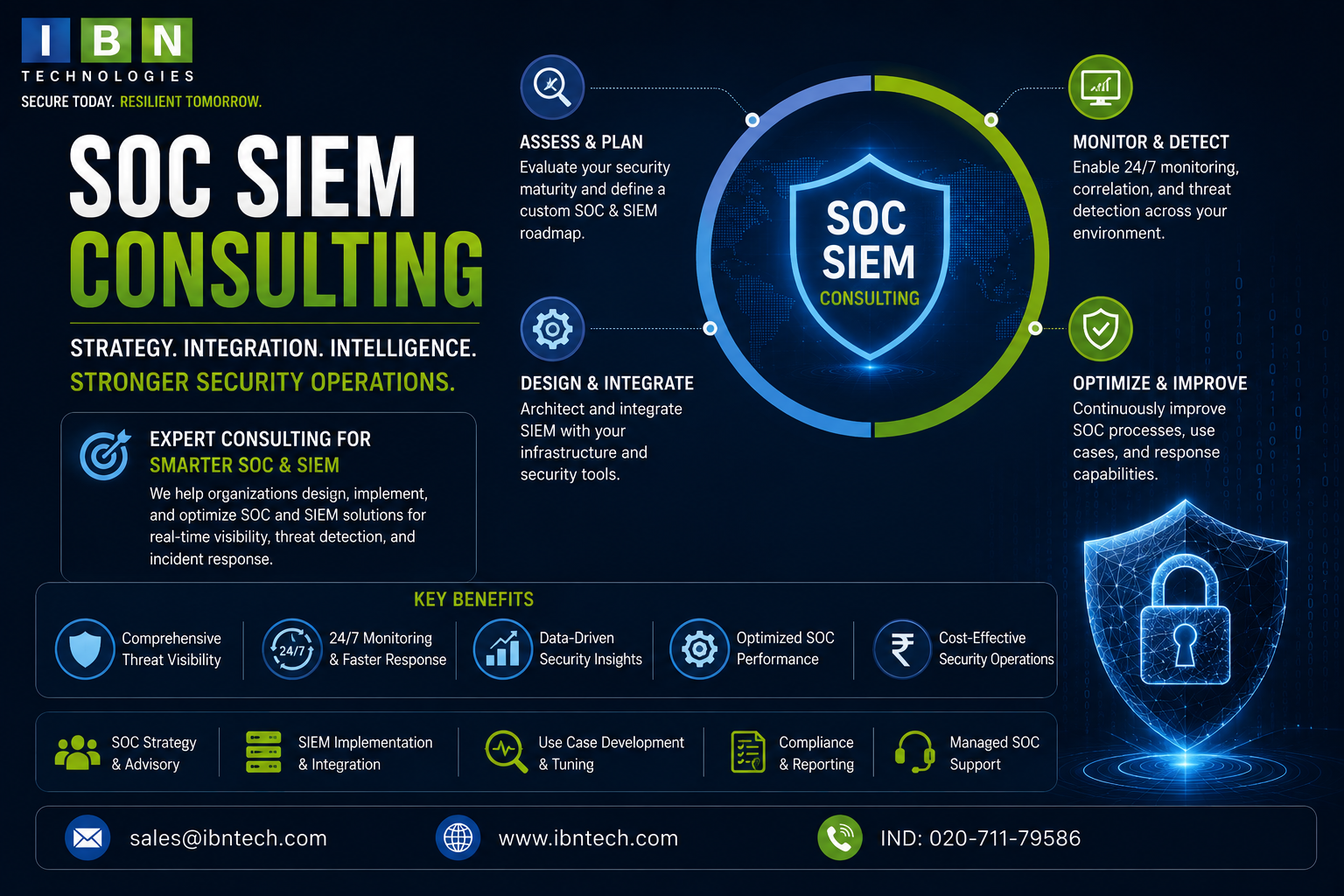
What Indian Banks Need From SOC SIEM Consulting
For Indian banks, soc siem consulting connects security monitoring, SIEM architecture and incident response with the operational and compliance demands of financial services. It helps security leaders define relevant data sources, establish investigation workflows and align SOC responsibilities with critical banking applications, identities, infrastructure and governance processes.
Why compliance should shape SOC planning
Regulatory exposure: Banks operate within a closely governed technology environment. Security operations need to support applicable banking, cybersecurity, data protection and incident-handling obligations rather than treating compliance as a separate documentation exercise.
Operational sensitivity: A security response that ignores banking workflows can create unnecessary disruption. Investigation and containment procedures should account for critical applications, privileged access and service continuity.
Evidence requirements: Security teams need a consistent way to investigate suspicious events and document relevant activity. A well-defined SOC process can support internal governance and applicable compliance reviews.
Accountability: Compliance responsibility remains with the financial institution. External security support can perform agreed operational tasks, but the bank must retain appropriate governance and decision-making authority.
Where SIEM consulting fits
A SIEM provides a central point for collecting and correlating security events. Consulting helps determine which sources should be connected, what detections are useful and how alerts should move through investigation and escalation.
Banks may need visibility across identity systems, endpoints, network devices, applications, databases and cloud infrastructure. The objective is not simply to collect more logs but to create useful security context.
Organizations evaluating soc as a service provider for Indian BFSI compliance should therefore examine how the service supports the bank's existing security governance and technical environment.
What banks should establish before implementation
Critical assets: Identify banking applications, privileged accounts, sensitive environments and infrastructure where a security incident could create significant operational consequences.
Data requirements: Determine which events are necessary for meaningful investigation. Authentication activity, privilege changes, endpoint events and network activity may each contribute important evidence.
Detection priorities: Define the behaviors that deserve attention. Suspicious authentication, unusual privilege use and unexpected access to critical systems may require different investigation paths.
Escalation: Specify who receives significant alerts and who can authorize containment. Security teams should not have to establish these responsibilities during an active incident.
Documentation: Define how investigations, escalations and response actions will be recorded. Documentation should align with the institution's internal policies and applicable obligations.
How can a soc as a service provider for Indian BFSI compliance support a bank?
A provider can support defined monitoring, investigation, escalation and reporting activities within the bank's security operating model. The bank should establish which responsibilities remain internal and how the provider's processes support applicable compliance requirements.
The service should be evaluated against the institution's architecture, governance framework and response procedures rather than compliance terminology alone.
Why disconnected security tools create problems
Fragmented evidence: A suspicious login may appear in an identity platform while related activity occurs on an endpoint or server. Reviewing each event separately can make the overall sequence harder to understand.
Alert volume: Financial environments can generate substantial security telemetry. Without prioritization and investigation procedures, analysts can spend time on events that have limited business significance.
Multiple teams: Banking incidents can involve security, infrastructure, application, identity and risk teams. Without defined handoffs, an investigation can lose momentum.
Legacy and modern systems: Banks may operate established applications alongside newer digital platforms and cloud services. Security monitoring must account for different technology generations.
A banking scenario
Consider a bank where a privileged account authenticates unexpectedly and subsequently accesses a sensitive application. The login itself may not establish malicious intent because legitimate administrative activity can occur outside normal patterns.
A SOC can correlate identity, endpoint and application events to establish context. If the activity appears inconsistent with authorized work, analysts can escalate it according to the bank's approved response process.
The important point is that SIEM technology supports the investigation; it does not replace analyst judgment or institutional governance.
Building a compliance-aware SOC model
Connect governance: Security monitoring should reflect the bank's existing policies for access, incident management, data handling and risk escalation.
Classify incidents: Establish categories that distinguish routine security investigation from events requiring immediate management attention.
Protect investigation records: Define how relevant security information is stored, accessed and retained according to applicable organizational requirements.
Test response paths: Validate communication and escalation procedures before a significant incident occurs.
Review regulatory changes: Compliance requirements can evolve. Security leaders should periodically confirm that SOC processes remain aligned with applicable obligations.
What should Indian banks ask before choosing a SOC SIEM model?
Banks should ask how the provider will integrate with existing security technologies, which systems will be monitored and how alerts will be investigated. They should also clarify escalation responsibilities, reporting, documentation and the boundaries between provider operations and internal governance.
A structured evaluation can cover:
- Critical asset monitoring.
- SIEM architecture.
- Identity and privileged access visibility.
- Incident investigation.
- Escalation procedures.
- Security reporting.
- Data handling.
- Governance responsibilities.
India-specific compliance considerations
Banking controls: Financial institutions should map SOC operations to applicable internal controls and regulatory expectations. The exact requirements depend on the institution and its activities.
CERT-In obligations: Where applicable, incident handling and security monitoring processes should take relevant CERT-In requirements into account.
Data protection: Security operations should also be designed with applicable Indian data protection obligations in mind, particularly when logs contain information associated with users or customers.
Third-party governance: When external providers participate in security operations, banks should clearly document responsibilities, access boundaries and oversight arrangements.
Keeping the model practical
Avoid over-collection: More security data does not automatically mean better monitoring. Focus on sources that contribute meaningful investigative context.
Tune detections: Detection logic should reflect the bank's actual systems and normal activity. Regular review can reduce unnecessary investigation.
Coordinate teams: Security analysts, IT operations, application owners and risk teams should understand their respective responsibilities.
Review privileged access: Administrative accounts can provide broad access to critical systems. Their activity should receive appropriate monitoring and investigation attention.
Maintain readiness: Incident procedures should be tested periodically so stakeholders understand their roles before an actual security event occurs.
FAQ
Can SOC SIEM consulting help banks prepare for compliance reviews?
It can help structure monitoring, investigation and documentation processes that support an organization's broader governance framework. Compliance responsibility remains with the bank and should be assessed against its specific obligations.
Should a bank replace its existing SIEM before using external SOC support?
Not necessarily. Existing technology should first be assessed for functionality, integrations and operational suitability. A consulting exercise can identify gaps before any platform decision is made.
What should a BFSI organization prioritize in SOC monitoring?
Priority should reflect the institution's architecture and risk environment. Identity activity, privileged access, critical applications, endpoints and important network events are common areas for consideration.
IBN Technologies provides SOC and SIEM capabilities that can support structured security monitoring and incident response for organizations with complex technology environments.
Contact Us
IBN Technologies
Phone: +91 20 6768 0404
Email: sales@ibntech.com

 English
 Arabic
 French
 Spanish
 Portuguese
 Deutsch
 Turkish
 Dutch
Dutch
 Italiano
 Russian
 Romaian
 Greek
Greek
