
Payroll Employee List Not Showing in QuickBooks: A Practical Troubleshooting Guide
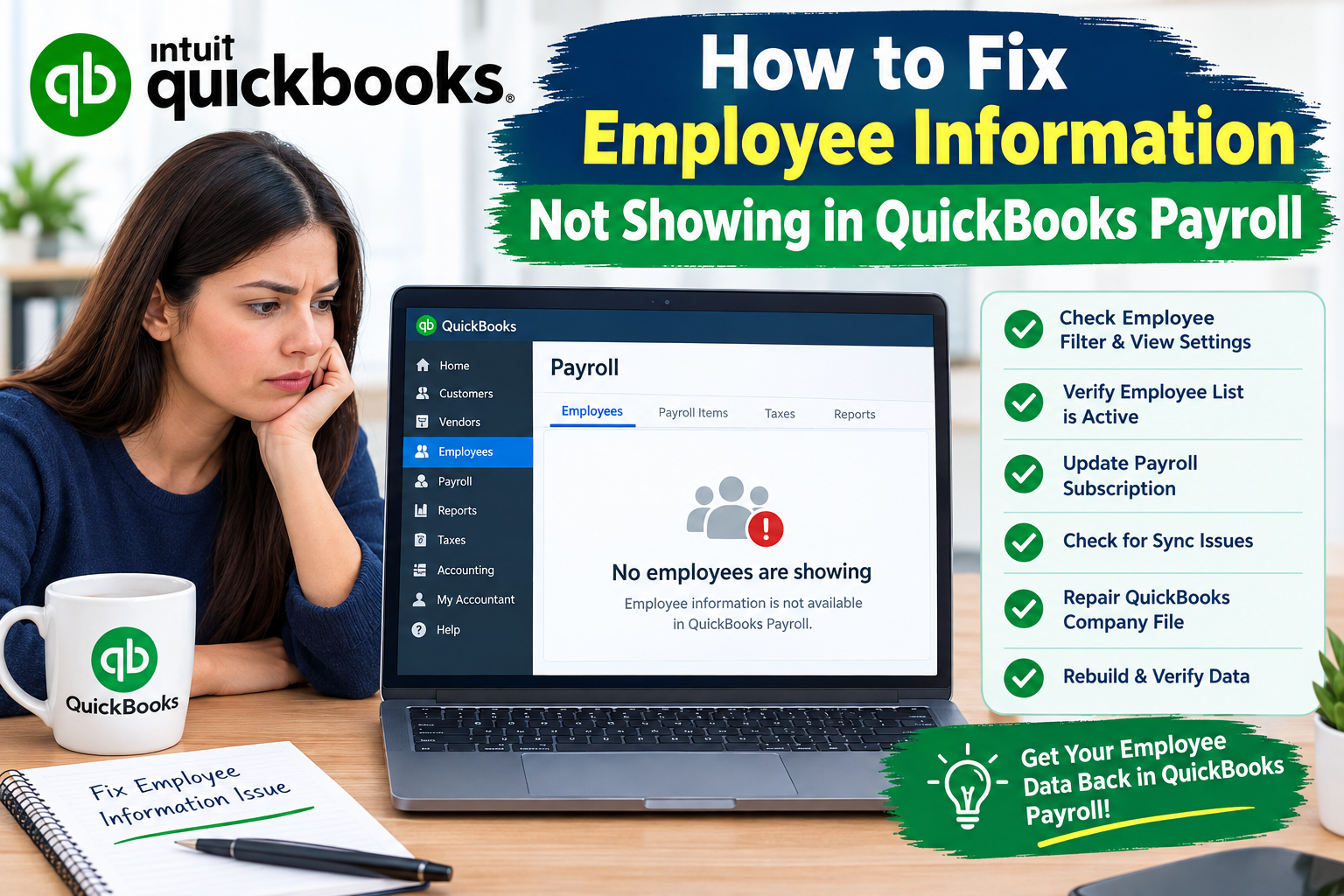
When the payroll employee list is not showing in QuickBooks, it can make routine payroll tasks difficult. Employees may be missing from the employee center, unavailable while creating payroll, or visible in one area of the software but absent from another. These situations can happen because of employee status, filters, payroll schedules, employment dates, company-file selection, or incomplete payroll information.
If you are troubleshooting this type of issue, QuickBooks Payroll Support resources can provide useful guidance while you work through the available checks. The important thing is to identify whether the employee record is actually missing or simply being hidden by a setting.
Check the Employee Center
The Employee Center is the first place to look when an employee cannot be found.
In QuickBooks Desktop, open the company file and go to the employee section. Review the employee list and search for the affected employee by name.
If the employee is not visible in the normal list, check whether the list is displaying only active employees. An employee who has been marked inactive may still remain in the company file but may not appear in the active employee view.
Change the employee filter to display all employees and search again.
If you find the employee, review the record before making any changes. Avoid creating a second employee profile simply because the original record was not immediately visible.
Check Active and Inactive Employee Status
Employee status is an important part of payroll troubleshooting.
An employee who is no longer active may not appear in the same list as current employees. This can create the impression that the employee record has disappeared.
Review the employee status and determine whether the employee should currently be active.
If the employee was accidentally marked inactive, update the status according to the employee's actual employment situation. Afterward, return to the payroll area and check whether the employee list has been updated.
Do not reactivate employees without confirming their current status. Payroll records should reflect the actual employment relationship.
Review Employee List Filters
A filter can hide employees without deleting their records.
When the payroll employee list is incomplete, review the available filters and search settings. Look for options related to:
-
Active employees
-
Inactive employees
-
Employee type
-
Payroll schedule
-
Search terms
-
Dates
-
Locations or departments, where applicable
Clear unnecessary filters and display the broadest employee list available.
If the missing employee appears after changing a filter, the record itself may not have been damaged. The issue may simply have been related to how the list was being displayed.
Confirm the Correct Company File
Businesses that maintain multiple QuickBooks company files should verify that the correct file is open.
Employee records are associated with specific company files. If another file is opened, employees from the expected company may not appear.
Check the company name and business information before editing employee records.
This is particularly important when an organization has separate company files for different businesses, locations, or reporting periods.
If you discover that the wrong company file was open, close it and open the appropriate file before making any employee changes.
Search for the Employee by Name
If the employee list contains many records, use the available search functionality to locate the employee.
Try searching by the employee's first name, last name, or another identifying detail available within the QuickBooks employee record.
Pay attention to spelling differences, extra spaces, abbreviations, and duplicate names.
If the employee appears under a slightly different name, review the record carefully before changing it. Payroll records should be kept consistent and accurate.
Open the Employee Record
If the employee appears in the Employee Center but does not appear in payroll, open the employee record and review its settings.
Check whether the employee has the required payroll information.
Depending on your QuickBooks Payroll configuration, this may include:
-
Pay type
-
Pay rate
-
Payroll schedule
-
Employment information
-
Tax information
-
Earnings
-
Deductions
-
Sick or vacation settings
-
Direct deposit information, where applicable
A missing or incomplete payroll setting can affect how an employee appears during payroll processing.
Make only the changes that are appropriate for the employee's actual information.
Check the Payroll Schedule
A payroll schedule can be especially important when an employee is missing during scheduled payroll.
An employee may exist in the Employee Center but not appear in a particular scheduled payroll if the employee is assigned to a different payroll schedule.
Open the employee's payroll information and review the assigned schedule.
Compare it with the payroll schedule you are currently processing.
If the employee belongs to another schedule, use the appropriate schedule rather than changing it simply to force the employee into a particular payroll.
This helps keep payroll processing aligned with the company's actual pay frequency.
Review Employment Dates
Employment information can also affect employee visibility during payroll.
Review the employee's hire date and any termination or release information.
An incorrect employment date may cause an employee to be excluded from payroll processing when the software determines that the employee is outside the applicable employment period.
If a termination or release date was entered accidentally, verify the correct information before making a correction.
Avoid removing legitimate historical employment information simply because an employee does not appear in the current payroll list.
Check Payroll Information
If an employee appears in the employee list but cannot be selected for payroll, review the payroll-related sections of the employee profile.
Look for incomplete information or settings that differ from other employees who are successfully included in payroll.
For example, compare the affected employee with another employee who has a similar role and pay structure.
The comparison should be used as a troubleshooting reference rather than an instruction to copy information blindly. Tax, pay, deduction, and employment settings should always reflect the individual employee's actual circumstances.
Check Tax Information
Payroll depends on accurate tax information.
If employee information is missing or payroll cannot process the employee correctly, review the employee's tax-related information.
Depending on the employee's location and payroll setup, this may include federal and state tax information.
Make sure the appropriate information is present and consistent with the employee's actual circumstances.
Because payroll tax settings can have financial and compliance implications, avoid entering guessed information just to make an employee appear in the list.
Determine Whether One or Several Employees Are Missing
The number of affected employees can provide a useful troubleshooting clue.
If only one employee is missing, investigate that employee's:
-
Status
-
Payroll schedule
-
Employment dates
-
Payroll information
-
Tax settings
-
Recent changes
-
Duplicate records
If many employees are missing, investigate broader settings such as:
-
Employee filters
-
Payroll configuration
-
Company-file selection
-
User permissions
-
Software updates
-
Multi-user access
This approach helps prevent unnecessary changes to individual employee records.
Restart QuickBooks
If the employee list was working correctly earlier and suddenly stopped displaying information, restart QuickBooks.
First save your work and close the application. Reopen QuickBooks and the correct company file, then check the employee list again.
A restart can help when a temporary application or display issue prevents information from appearing correctly.
If restarting does not change anything, continue with the remaining troubleshooting steps rather than repeatedly reopening the application.
Check for QuickBooks Updates
Keeping QuickBooks Desktop updated can help ensure that the application has the latest available fixes and improvements for your version.
Check the update status through the normal QuickBooks update process.
Before making major changes to a company file, create a current backup.
Do not install software or updates from unknown third-party websites. Use trusted QuickBooks resources and verify that any update applies to your particular product and version.
Test the Issue on Another Authorized Computer
If your business uses QuickBooks Desktop across multiple workstations, determine whether the employee list is missing everywhere or only on one computer.
If the employee appears correctly on another authorized workstation, the issue may be related to the original computer's QuickBooks environment.
If the employee is missing across multiple workstations, investigate the company file and payroll configuration more closely.
This simple comparison can help distinguish a workstation-specific problem from a company-file issue.
Review Multi-User Access
In a multi-user environment, user permissions can affect access to certain information.
If one user can see the employee while another cannot, review the relevant user permissions.
The QuickBooks administrator can check whether the affected user has appropriate access.
Do not change access permissions unnecessarily. Employee information can contain sensitive personal and financial data, so access should be limited to authorized users.
Check Recent Changes
Think about what happened shortly before the employee list stopped showing the affected record.
Recent changes might include:
-
Adding a new employee
-
Editing an existing employee
-
Changing employee status
-
Changing a payroll schedule
-
Updating tax information
-
Installing a QuickBooks update
-
Restoring a company file
-
Changing user permissions
-
Modifying payroll settings
If the issue started immediately after a specific change, review that change carefully.
Keeping a record of recent payroll changes can make future troubleshooting easier.
Look for Duplicate Employee Records
Duplicate employee records can make an employee list confusing.
For example, an employee may appear under two similar names, while one record contains the relevant payroll history and the other contains incomplete information.
Before deleting or modifying a suspected duplicate, determine which record is associated with existing payroll transactions.
Deleting an employee record without understanding its history can create additional complications.
If you are uncertain which record should be retained, document the records first and seek appropriate assistance before making irreversible changes.
Check Payroll Reports
Reports can help determine whether an employee exists in the company file even when the employee is not appearing in a particular payroll screen.
Run an appropriate employee or payroll report and review the available information.
Check the report's date range and filters carefully.
A report may exclude information because of its selected period, employee filter, or other reporting criteria. Therefore, a missing employee in one report does not automatically mean that the employee record has been deleted.
Expand the date range and review the report settings when necessary.
Review Date Ranges
Date filters are easy to overlook.
An employee may have historical payroll activity but no activity during the selected reporting period.
If you are checking a payroll report or employee-related transaction list, review the start and end dates.
Try a broader date range when appropriate.
This can help determine whether the employee's information is genuinely unavailable or simply outside the current reporting period.
Avoid Deleting and Recreating Employees Too Quickly
One common troubleshooting mistake is deleting an employee and creating a new record immediately.
This can lead to duplicate records and may complicate payroll history.
Instead, investigate the original record first.
Check its status, payroll settings, employment information, and historical transactions.
If the original employee record exists, correcting the relevant information is generally preferable to creating another profile without understanding the consequences.
Check Company File Health Carefully
If employee information is missing across multiple areas of the company file, additional company-file troubleshooting may be necessary.
Before performing major maintenance, create a reliable backup.
Document the problem and identify whether the issue affects:
-
One employee
-
Several employees
-
Employee Center
-
Payroll processing
-
Payroll reports
-
Multiple computers
-
Multiple users
This information can help determine the appropriate next step.
Protect Employee Information
Payroll data contains confidential information, so troubleshooting should be performed carefully.
Do not post employee Social Security numbers, bank details, passwords, security codes, or other private information on public websites.
When describing a payroll problem to another person, use a general description rather than exposing sensitive employee data.
Use trusted support channels when assistance is required.
Security is especially important when troubleshooting payroll, because employee records may contain personal and financial information.
Create a Backup Before Major Changes
A current company-file backup provides an additional layer of protection before significant troubleshooting.
If you need to make several changes to employee records, create a backup first and keep a record of the changes.
This can make it easier to understand what changed if another problem develops.
Backups should also be part of normal company-file management rather than something performed only after a problem occurs.
When to Seek Additional Assistance
If the payroll employee list remains incomplete after checking employee status, filters, payroll schedules, employment dates, tax settings, and company-file selection, additional assistance may be appropriate.
Before contacting a support professional, prepare the following information:
-
QuickBooks product and version
-
Payroll service details
-
Description of the problem
-
Number of employees affected
-
Exact error message, if displayed
-
Recent changes
-
Troubleshooting steps already attempted
-
Whether the issue occurs on another authorized computer
-
Whether other users experience the same problem
A clear description can make troubleshooting more efficient.
Quick Troubleshooting Checklist
When the payroll employee list is not showing in QuickBooks, work through this checklist:
-
Open the Employee Center.
-
Search for the employee by name.
-
Display all employees if available.
-
Check active and inactive status.
-
Review employee list filters.
-
Confirm the correct company file is open.
-
Open the employee profile.
-
Review payroll information.
-
Verify the payroll schedule.
-
Check employment dates.
-
Review tax information.
-
Determine whether one or several employees are affected.
-
Restart QuickBooks.
-
Check for available updates.
-
Test the issue on another authorized workstation.
-
Review user permissions.
-
Check recent changes.
-
Look for duplicate employee records.
-
Review payroll reports and date ranges.
-
Create a backup before major changes.
Following these steps in order can help narrow down the cause without making unnecessary changes.
Frequently Asked Questions
Why is my employee not showing in QuickBooks Payroll?
The employee may be inactive, hidden by a filter, assigned to another payroll schedule, affected by employment dates, or missing required payroll information.
Why can I see an employee in the Employee Center but not in payroll?
Review the employee's payroll schedule, employment information, and payroll settings. The employee may be configured differently from the payroll currently being processed.
Can an inactive employee still exist in QuickBooks?
Yes. An inactive employee record can remain in the company file even though it is excluded from an active employee list.
Should I create a new employee record?
Not before checking the existing record. First determine whether the original employee is inactive, filtered, incorrectly configured, duplicated, or stored in another company file.
Why are several employees missing at the same time?
If multiple employees disappear from a payroll list, investigate broader settings such as filters, payroll configuration, user access, company-file selection, and software configuration.
Can employee dates affect payroll visibility?
Yes. Employment dates and termination or release information can affect whether an employee is included in payroll processing.
What should I do before changing employee records?
Create a current backup when appropriate, document the problem, and identify which employee information needs to be corrected.
Keep the Payroll Employee List Accurate
When the payroll employee list is not showing in QuickBooks, the best starting point is to determine whether the employee record is missing or simply hidden by a setting.
Check employee status, filters, company-file selection, payroll schedules, employment dates, payroll information, and tax settings before making major changes. If only one employee is affected, focus on that employee's record. If multiple employees are affected, investigate broader payroll and company-file settings.
Avoid deleting and recreating employee records without understanding their payroll history. Protect confidential employee information, maintain backups, and keep a record of important changes.
A systematic troubleshooting process can help identify the cause of an incomplete employee list while keeping payroll records organized and easier to manage.

 English
 Arabic
 French
 Spanish
 Portuguese
 Deutsch
 Turkish
 Dutch
Dutch
 Italiano
 Russian
 Portuguese (Brazil)
 Greek
Greek
