
Ergonomic Back Support for Comfortable Daily Seating
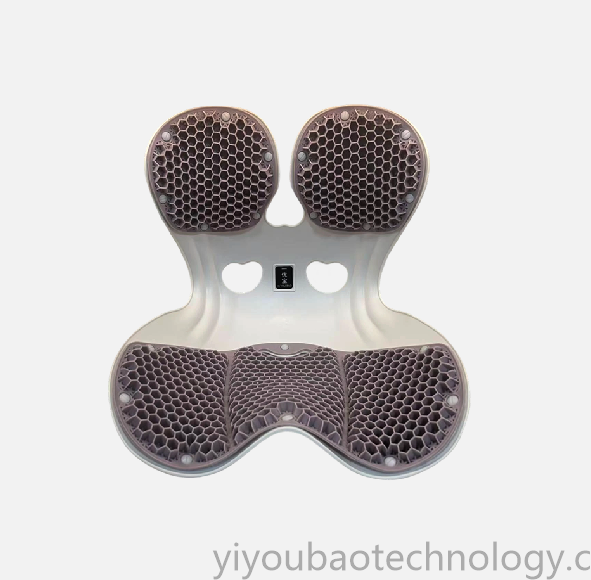
A Lumbar Support Backrest can provide a more supportive connection between the user's lower back and a chair during everyday sitting. Although the product may appear simple, its overall performance depends on several connected factors, including material selection, ergonomic shaping, surface construction, attachment stability, and manufacturing consistency. A well-developed support product needs to work naturally with different seating environments while maintaining comfort during regular use.
Material selection is one of the earliest considerations in product development. Foam, textile covers, elastic elements, fastening components, and internal support layers each contribute to the final structure. Foam is particularly important because it determines much of the cushioning experience. Its resilience and recovery characteristics influence how the product responds when pressure is applied and released. A suitable material should provide enough softness for comfort while retaining sufficient structure for dependable support.
Different applications can require different material approaches. An office chair may be used continuously during working hours, while a vehicle seat may involve frequent changes in body position. A home seating product may place greater emphasis on softness, appearance, and maintenance. Manufacturers should therefore evaluate the intended environment before deciding on the material combination. Matching material behavior to actual usage conditions can improve both usability and product consistency.
The outer cover also contributes to the overall experience. Since the surface remains close to the user's body, the selected textile should provide a comfortable touch while remaining suitable for repeated use. Breathable fabrics may support airflow, while durable textiles can resist friction from regular movement. In environments where multiple people use the same product, removable or easy-care covers can provide additional practical value.
Ergonomic shaping is another important part of development. A support product should create a natural contact area with the lower back without forcing the body into an overly rigid position. Curved surfaces can help distribute contact more evenly, while carefully designed cushioning can balance support and softness. At the same time, users should still be able to change their sitting position. Practical ergonomic design supports natural movement rather than attempting to eliminate it.
The attachment system influences how effectively the product works with different chairs. Straps, elastic bands, fastening structures, or other positioning methods can help keep the backrest in place. The attachment should be secure during ordinary use while remaining easy to install and adjust. If the product shifts repeatedly, the user may need to reposition it throughout the day. If installation is unnecessarily complicated, everyday convenience can be reduced.
Manufacturing technology determines how consistently the intended design can be reproduced. Depending on the construction, production may include material cutting, foam shaping, sewing, bonding, fastening, and assembly. Accurate cutting helps maintain consistent forms, while controlled sewing supports reliable cover construction. Proper assembly also reduces the possibility of loose components, uneven edges, or shifting internal materials.
Quality control should be integrated into multiple stages of production. Incoming materials can be checked for consistency before processing, while semi-finished components can be inspected during assembly. Finished products can then be evaluated for surface condition, stitching, cover fit, attachment stability, and overall construction. A multi-stage approach helps identify production issues earlier and supports more consistent results across larger orders.
Safety is another consideration in product development. Materials and construction methods should be appropriate for their intended environment. Seams, attachment points, and other connection areas should be securely finished, while the product should not contain avoidable loose components or uncomfortable edges. The support structure should work with the chair rather than create unnecessary pressure against the body.
For B2B customers, customization can also be an important consideration. Different markets may require different fabrics, colors, surface treatments, shapes, fastening systems, packaging formats, or branding. A flexible manufacturing process can accommodate selected changes while maintaining the core construction. Clear communication during sampling is useful because a change in one material or component may influence the performance of another.
Durability and material efficiency can contribute to a more practical product lifecycle. Resilient materials, stable seams, and reliable fastening components can help products withstand repeated use. Efficient cutting methods may reduce unnecessary material waste during manufacturing. Packaging can also be designed to protect products during transportation while avoiding excessive material consumption.
When evaluating a Lumbar Support Backrest, buyers should consider material quality, ergonomic design, attachment stability, manufacturing technology, quality management, customization, and long-term usability rather than focusing on appearance alone. Yongkang Yiyoubao Technology Co. Ltd. provides seating support solutions for different applications, with product information available at https://www.yiyoubaotechnology.com/product/lumbar-supports-seat-cushions/.

 English
 Arabic
 French
 Spanish
 Portuguese
 Deutsch
 Turkish
 Dutch
Dutch
 Italiano
 Russian
 Romaian
 Greek
Greek
