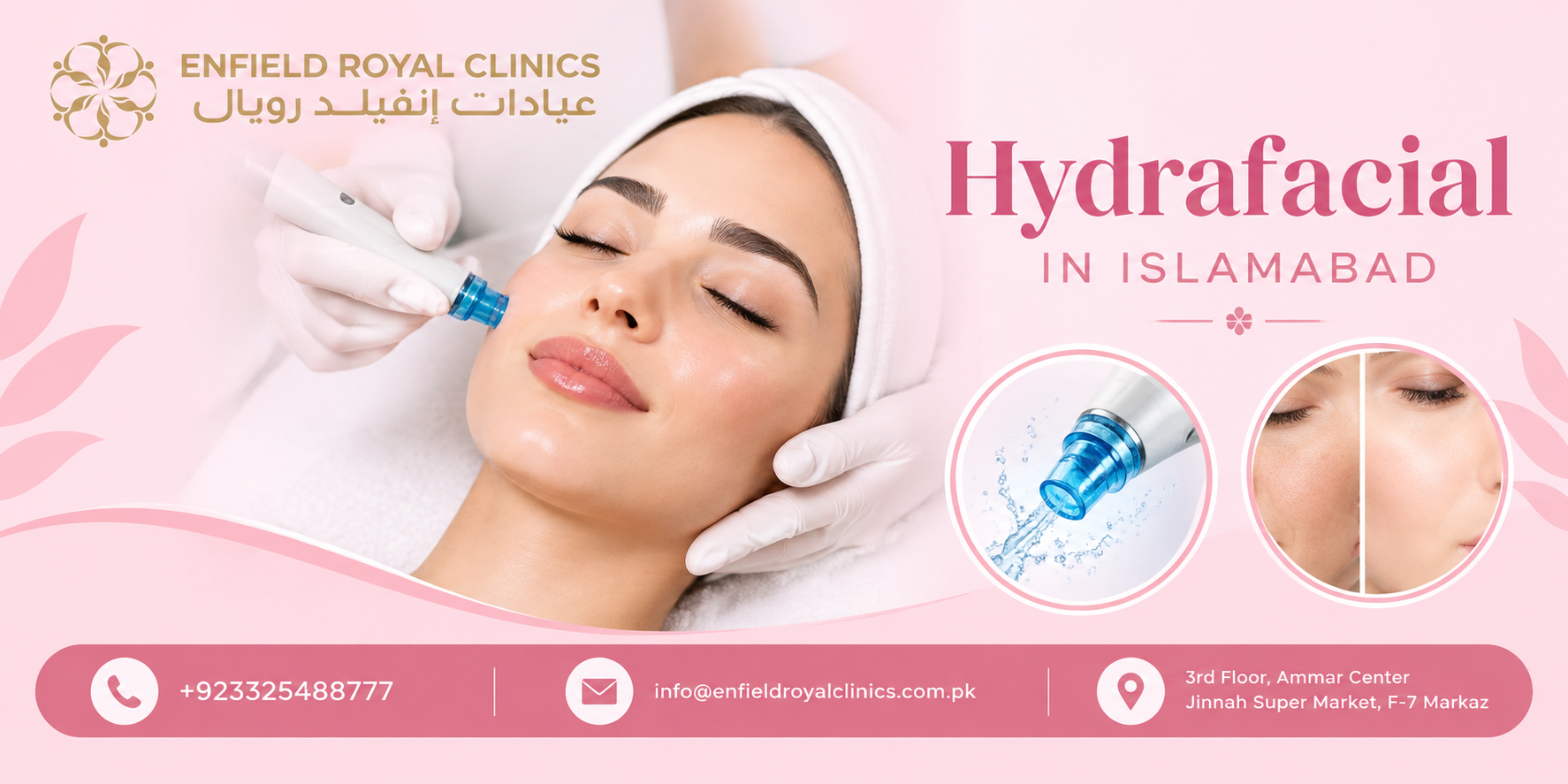
Hydrafacial has become a popular facial treatment for people who want smoother, cleaner, and more refreshed-looking skin without a lengthy recovery period. The treatment combines several skin-care steps into one session, helping remove surface impurities while supporting hydration and a more even skin texture. For people considering Hydrafacial In Islamabad, understanding how the treatment works can make it easier to know what to expect and whether it suits their skin concerns.
Skin texture can become uneven for many reasons. Dead skin cells, clogged pores, excess oil, dehydration, environmental exposure, and the natural aging process may leave the skin looking rough or dull. A Hydrafacial is designed to address several of these concerns through cleansing, exfoliation, extraction, and hydration.
How Does Hydrafacial Exfoliate the Skin?
One of the main ways Hydrafacial can improve skin texture is through gentle exfoliation. Over time, dead skin cells can build up on the surface, making the complexion appear rough, dry, or uneven. Removing this buildup helps reveal fresher skin underneath.
Unlike aggressive exfoliation methods, Hydrafacial uses a controlled process designed to cleanse and exfoliate the skin without relying on harsh scrubbing. The exfoliation step can help smooth the outer layer of the skin and improve its overall appearance.
Regular removal of surface buildup may also help skin-care products spread more evenly across the face. However, the frequency of treatment should depend on individual skin needs rather than following a fixed schedule.
Does Hydrafacial Help Clear Clogged Pores?
Clogged pores can contribute to an uneven skin surface. Oil, dead skin cells, and everyday impurities may collect inside pores, especially in people with oily or combination skin. When these impurities remain trapped, the skin may appear congested and less smooth.
Hydrafacial includes a gentle extraction stage that helps remove impurities from pores. This can make the skin look cleaner and more refined after treatment. By reducing surface congestion, the procedure may contribute to a smoother-looking complexion.
The extraction process is performed using a specialized device rather than manual squeezing. This approach can be more comfortable for many people and avoids some of the irritation that may occur when pores are repeatedly picked or squeezed at home.
How Does Hydrafacial Support Skin Hydration?
Dehydrated skin can look rough, flaky, and less flexible. Even when the skin produces enough oil, it can still lack adequate water content. Hydrafacial addresses this concern by incorporating hydrating ingredients during the treatment.
After cleansing and exfoliation, the skin receives moisturizing and nourishing solutions. Hydration can help the complexion appear softer, plumper, and more refreshed. Well-hydrated skin may also have a smoother visual texture because dryness and flaking become less noticeable.
For people whose uneven texture is partly related to dryness, this combination of exfoliation and hydration can be particularly useful. Maintaining hydration at home with an appropriate moisturizer and sun protection can also help support the results.
What Skin Concerns Can Hydrafacial Address?
Hydrafacial is commonly considered for several surface-level skin concerns rather than just one issue. Depending on the individual's skin condition, it may help improve the appearance of dullness, dryness, congestion, rough texture, and enlarged-looking pores.
It may also help the complexion look brighter by removing surface buildup and improving hydration. However, results can vary according to age, skin type, lifestyle, existing skin conditions, and the condition of the skin before treatment.
Hydrafacial should not be viewed as a universal solution for every skin concern. Deep acne scarring, significant pigmentation, active inflammatory conditions, or other persistent problems may require different treatment approaches. A professional skin assessment can help determine the most appropriate option.
Is Hydrafacial Suitable for Different Skin Types?
One reason Hydrafacial is widely considered is its adaptable approach. The treatment can often be adjusted according to the person's skin type and concerns. Someone with dry skin may require greater attention to hydration, while someone with oily or congested skin may benefit from a stronger focus on cleansing and extraction.
People with sensitive skin should discuss their skin history before treatment. Certain ingredients or treatment intensities may not be appropriate for everyone. Individuals experiencing active irritation, severe inflammation, open wounds, or certain skin conditions may need to postpone treatment until the skin has recovered.
A personalized approach is important because smoother skin should not come at the expense of irritation or damage to the skin barrier.
What Can Patients Expect After Hydrafacial?
Many people notice that their skin feels cleaner and softer after a Hydrafacial. The complexion may appear more hydrated and refreshed, while surface roughness can become less noticeable. Some people may experience temporary redness, particularly after extraction, but this generally settles relatively quickly.
The visible improvement is not necessarily permanent because the skin continues to produce oil, accumulate dead cells, and encounter environmental factors. Maintaining a simple skin-care routine can help support the appearance achieved through treatment.
Daily sunscreen is particularly important because ultraviolet exposure can contribute to uneven tone, premature skin aging, and changes in skin texture. Gentle cleansing, appropriate moisturizing, and avoiding excessive exfoliation can also help maintain healthier-looking skin.
For individuals exploring Hydrafacial In Islamabad, the treatment can be considered as part of a broader skin-care routine focused on cleansing, hydration, and improving the appearance of uneven texture.
Frequently Asked Questions
1. How does Hydrafacial improve skin texture?
Hydrafacial combines cleansing, exfoliation, extraction, and hydration. These steps can remove surface buildup, clear impurities, and improve moisture levels, helping the skin appear smoother and more refreshed.
2. Is Hydrafacial good for rough skin?
Hydrafacial may help improve the appearance of rough skin by removing dead surface cells and supporting hydration. Results depend on the underlying cause of the roughness and the individual's skin condition.
3. How often can Hydrafacial be performed?
Treatment frequency depends on skin type, concerns, and professional recommendations. Some people may benefit from occasional sessions, while others may require a different schedule based on their skin-care goals.
4. Does Hydrafacial have downtime?
Hydrafacial is generally considered a low-downtime facial treatment. Some individuals may experience temporary redness or sensitivity, especially after extraction, but many can return to normal activities soon afterward.
For more information visit Enfield royal clinic in islamabad


 English
 Arabic
 French
 Portuguese
 Deutsch
 Turkish
 Dutch
Dutch
 Italiano
 Russian
 Romaian
 Portuguese (Brazil)
 Greek
Greek
