
Space Waves: The Simple Arcade Game That Keeps Me Coming Back
I usually enjoy games that are easy to understand but difficult to master. I don't always want a long story, complicated upgrades, or a huge map to explore. Sometimes I just want to open a browser game, play for a few minutes, and see if I can beat my previous attempt.
That is exactly what happened when I started playing space waves.
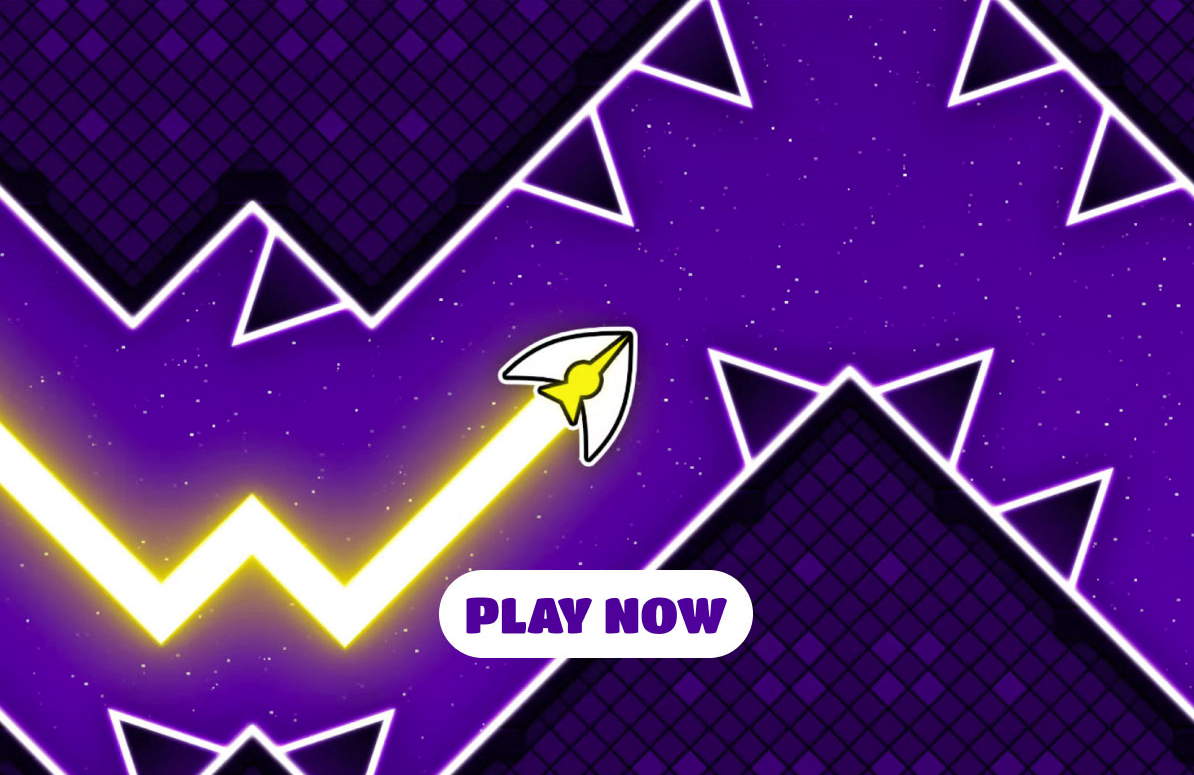
At first, the game looked almost too simple. You control a small arrow flying through a neon space tunnel, and the main control is basically just holding a button to move upward and releasing it to move downward. That's it. There are no complicated combinations to memorize.
But after a few attempts, I realized that the simple controls were actually the difficult part. Every movement matters.
What Is Space Waves?
Space Waves is a fast-paced arcade game built around precision, timing, and quick reactions. Your arrow automatically moves forward while you control its vertical movement through a series of obstacle-filled paths.
The objective is straightforward: get through the level without crashing.
The obstacles can include walls, spikes, rotating gears, and narrow passages. A small mistake can end a run immediately, which makes every successful section feel rewarding. The web version is commonly presented with 33 levels, ranging from relatively forgiving stages to much more demanding challenges.
What I like about this design is that there is almost no learning curve when it comes to the controls. You can understand the basic mechanic within seconds. The real learning happens while playing.
How the Gameplay Works
The basic movement is very easy to explain.
Hold the control button and your arrow moves upward. Release it and the arrow starts moving downward. On desktop, common controls include Space, W, the Up Arrow, or the left mouse button, depending on the version. Touch controls are also available on versions that support mobile play.
The tricky part is controlling how long you hold the button.
If you hold for too long, you can hit the ceiling or another obstacle. If you release too early, the arrow can drop into a spike or wall. The game therefore becomes a constant rhythm of short holds and releases.
After a while, I stopped thinking about each button press individually. I started watching the path ahead and trying to predict where my arrow needed to be a second later.
That small change made a noticeable difference.
The First Few Attempts
My first attempts were not impressive.
I understood the controls immediately, but understanding something and actually controlling the arrow are two completely different things. I would see an opening and try to move toward it, only to realize that I had started moving too late.
The most frustrating moments were the sections where the path looked easy.
A wide opening would appear, and I would think, “That's easy.”
Then I would overcorrect, hit the opposite wall, and restart.
That is probably one of the main reasons Space Waves is so addictive. Failure happens quickly, but restarting is also quick. There is very little waiting between attempts, so it is easy to tell yourself, “I'll try one more time.”
And then one more attempt becomes ten.
Why Timing Matters So Much
The biggest lesson I learned from Space Waves is that reacting is not always enough.
When an obstacle appears directly in front of you, it may already be too late to make a large movement. The better approach is to look farther ahead and prepare your position before reaching the obstacle.
Short movements are especially useful in narrow sections. Instead of holding the button for a long time, I found it easier to make smaller adjustments and keep the arrow closer to the center of the available space.
This is also consistent with common gameplay advice for Space Waves: controlled taps and looking ahead generally give you more room to correct mistakes than large, sudden movements.
My Best Tips for Playing Space Waves
1. Don't Hold the Button Too Long
This was probably my biggest mistake at the beginning.
A long hold feels like it should give you better control, but it can quickly send the arrow too high. Try shorter presses when the tunnel becomes tight.
2. Look Ahead
Don't stare only at the arrow.
Check the next obstacle and identify where you want to be before you reach it. This gives you more time to adjust your movement.
3. Stay Near the Middle When Possible
When you have an open section, avoid flying too close to the ceiling or floor for no reason.
Keeping some space around your arrow gives you more options when the next obstacle appears.
4. Learn From Every Crash
A crash isn't completely wasted if you understand why it happened.
Was the hold too long? Did you react too late? Did you panic when the tunnel became narrow?
Once you identify the mistake, the next attempt becomes more useful.
5. Don't Rush Difficult Sections
The game moves quickly, but that doesn't mean every movement needs to be fast.
Sometimes the best move is a tiny correction followed by a short release. Precision matters more than frantic button pressing.
6. Repeat Difficult Levels
If a particular section keeps defeating you, replaying it can help build a sense of timing.
Eventually, the movement starts feeling more automatic. You don't have to consciously calculate every rise and fall.
What Makes Space Waves Addictive?
For me, the best part is the combination of simplicity and difficulty.
There is almost nothing to learn before starting. You don't need to spend ten minutes reading instructions or learning a complicated character build. You simply start flying.
But mastering the game is another story.
The gap between “I understand how to play” and “I can actually complete this level” is surprisingly large.
That creates a satisfying progression. You might fail a section repeatedly and then suddenly get through it. Even if the improvement is only a few seconds of extra progress, it feels meaningful because you know the improvement came from your own timing.
The quick restart also helps. There is no major punishment for trying again, so failure naturally becomes part of the gameplay loop.
The Hardest Part for Me
The most difficult situations are usually the sections where the tunnel gets narrow and several obstacles appear close together.
Those moments test whether I can stay calm.
When I panic, I tend to hold the button for too long. That creates an even bigger problem, because now the arrow is too high and I have to make another correction.
The better approach is almost the opposite: smaller movements, earlier decisions, and fewer unnecessary corrections.
Once I started doing that, difficult sections became much more manageable.
Why I Keep Coming Back
Space Waves doesn't need a complicated reward system to keep me interested.
The challenge itself is enough.
There is always another level to attempt, another section to improve, or another personal best to beat. The game works particularly well when you have a short amount of free time because you can start playing almost immediately.
It also has that classic arcade feeling where failure doesn't necessarily make you want to quit. Instead, it makes you curious about whether you can do better on the next attempt.
I have definitely had moments where I planned to play for five minutes and ended up staying much longer because I was convinced the next run would be the successful one.
Final Thoughts
Space Waves is a good reminder that a game doesn't need complicated mechanics to be challenging.
The controls are simple: hold to rise and release to fall. The challenge comes from everything happening around that basic mechanic. Walls, spikes, gears, narrow paths, changing layouts, and increasingly demanding sections force you to improve your timing and concentration.
What started for me as a quick browser game became a surprisingly focused test of patience.
If you enjoy arcade games that are easy to start but difficult to master, Space Waves is worth trying. Just don't be surprised if one quick attempt turns into a much longer session.
And if you crash on the same obstacle ten times in a row, remember: the eleventh attempt might finally be the one.

 English
 Arabic
 French
 Portuguese
 Deutsch
 Turkish
 Dutch
Dutch
 Italiano
 Russian
 Romaian
 Portuguese (Brazil)
 Greek
Greek
