
Metal Rack And Pinion for Industrial Linear Motion
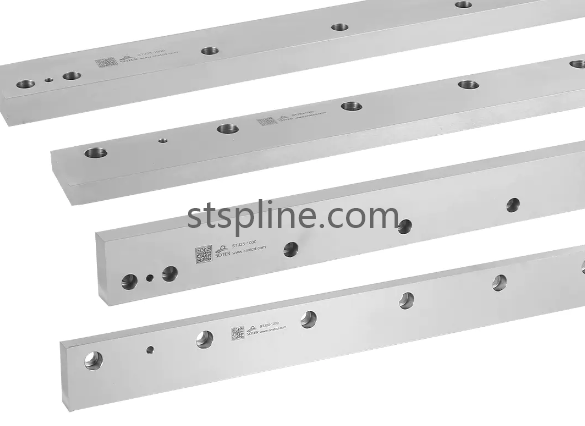
Metal transmission components are widely used in industrial machinery because they can combine structural strength with controlled tooth geometry and reliable mechanical engagement. A Metal Rack And Pinion system converts rotary movement into linear travel through the interaction between a toothed rack and a matching pinion. This mechanical principle is suitable for CNC equipment, automation machinery, industrial robots, laser systems, material handling equipment, and production lines requiring coordinated linear movement.
Material selection is one of the first considerations when manufacturing metal rack and pinion components. Engineering steels and other suitable metal materials can be selected according to the intended application and manufacturing process. Material properties influence machinability, hardness, dimensional stability, wear behavior, and resistance to repeated mechanical contact. The rack and pinion should be considered as a matched transmission pair because their tooth surfaces work together throughout the operating cycle.
Tooth geometry has a direct influence on transmission performance. The rack must maintain consistent tooth spacing and an appropriate tooth profile along its working length, while the pinion needs to correspond accurately with the rack. Precision machining processes can be used to establish these characteristics. Controlled production helps reduce variations that could otherwise lead to uneven engagement, vibration, or irregular movement during machine operation.
The manufacturing process can involve several stages, beginning with material preparation and rough machining before the tooth profile is formed. Depending on the required design, milling, gear shaping, grinding, and other machining methods may be used. Secondary finishing processes can improve the condition of working surfaces or provide suitable surface characteristics for the intended operating environment. Each stage should be controlled to maintain dimensional consistency between the finished component and the original engineering requirements.
Heat treatment can also be incorporated when the application requires particular mechanical properties. Properly selected treatment processes can modify the characteristics of suitable steel materials and improve their resistance to repeated contact. However, heat treatment needs careful process control because dimensional changes or deformation can affect tooth accuracy. Subsequent inspection is therefore important for confirming that the finished component remains suitable for assembly.
Rack length and installation configuration are additional factors in industrial applications. Large machinery may require long transmission paths that use several rack sections installed sequentially. The joint areas between sections need accurate positioning so that tooth engagement remains consistent as the pinion travels along the complete axis. Reference surfaces, mounting holes, and fastening arrangements should also be produced according to the machine's structural requirements.
Metal rack and pinion systems can be integrated into various types of automated equipment. CNC machines may use rack-based drives for extended linear axes, while laser cutting machines can require long travel movement across a working area. Industrial robots and truss manipulators may incorporate rack transmission for positioning assemblies along horizontal or vertical paths. Automated production lines can also use these components where motors must drive equipment along a predetermined route.
Guide components are an important part of the complete motion system. The rack transmits the driving force, while guide rails, rollers, linear bearings, or other support mechanisms control the path of the moving assembly. Proper alignment between the rack and guide system helps distribute mechanical forces and maintain consistent tooth contact. For this reason, rack installation should be planned together with the machine's guiding and supporting structure.
Quality inspection should cover more than the visible tooth surface. Dimensional checks can verify rack length, tooth spacing, profile accuracy, mounting features, and reference surfaces. Surface inspection can identify machining irregularities, while appropriate testing can help confirm consistency between production batches. For customized components, comparison with technical drawings or approved samples is particularly useful because each finished part must correspond to its intended machine configuration.
Maintenance contributes to the long-term condition of the transmission system. Operators can periodically inspect the teeth, mounting points, guide components, and contact surfaces for signs of wear or contamination. Suitable lubrication should be applied according to the equipment requirements and operating environment. Keeping the transmission area clean can also help prevent foreign particles from interfering with tooth engagement.
For machinery manufacturers and automation integrators, selecting a suitable Metal Rack And Pinion requires consideration of material, tooth geometry, machining method, installation structure, guide alignment, and operating environment. A manufacturer with precision machining and inspection capabilities can support different rack lengths, configurations, and drawing-based requirements. Further information about related rack products and linear transmission solutions is available at https://www.stspline.com/product/straight-teeth-rack/.

 English
 Arabic
 French
 Spanish
 Portuguese
 Deutsch
 Turkish
 Dutch
Dutch
 Italiano
 Russian
 Portuguese (Brazil)
 Greek
Greek
