A bright, confident smile can make a noticeable difference in a person’s overall appearance. Over time, teeth can become stained or lose their natural brightness because of coffee, tea, certain foods, tobacco use, aging, and other lifestyle factors. Regular brushing helps maintain oral hygiene, but it may not remove deeper or stubborn discoloration. This is where professional teeth whitening can help.
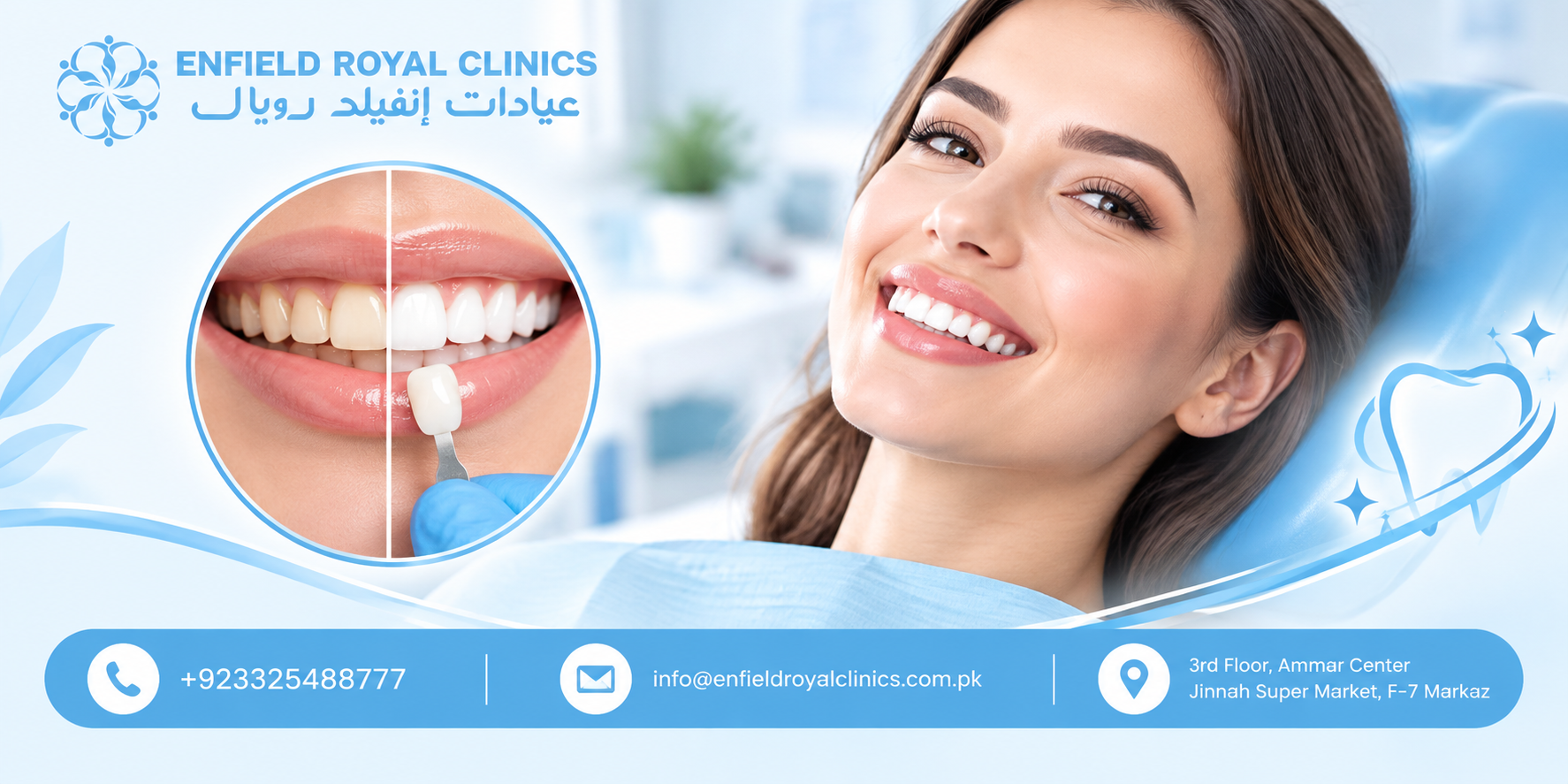
Laser Teeth Whitening in Islamabad is a professional cosmetic dental procedure designed to reduce tooth discoloration and create a visibly brighter smile. The treatment uses a specially formulated whitening gel, often activated or enhanced with a dental light or laser system, depending on the technology used by the dental professional. When performed correctly, it can provide more noticeable whitening than many over-the-counter products.
What Is Laser Teeth Whitening?
Laser teeth whitening is a cosmetic dental treatment used to improve the color of natural teeth. During the procedure, a dental professional generally applies a professional-strength whitening gel to the teeth. A specialized light or laser may then be used according to the treatment system to activate or accelerate the whitening process.
The whitening agent works on stains and discoloration within the tooth structure. As the treatment progresses, certain staining compounds are broken down, allowing the teeth to appear lighter.
Unlike whitening toothpaste, which mainly helps remove surface stains, professional whitening is designed to address more noticeable discoloration. The exact whitening effect can vary depending on the original tooth shade, type of staining, enamel condition, and individual response to treatment.
How Does the Treatment Brighten Teeth?
The main whitening effect comes from the professional bleaching agent rather than the laser or light alone. Whitening gels commonly contain peroxide-based ingredients that can penetrate the tooth surface and react with stain molecules.
When the whitening agent interacts with these compounds, it helps break them down into smaller components that are less noticeable. This can make the teeth look cleaner, lighter, and brighter.
The light or laser component used in some systems may help activate the whitening material or speed up the process. However, the exact mechanism depends on the technology and whitening system selected by the dental professional.
This combination allows professional treatment to target discoloration more effectively than ordinary brushing. It is particularly useful for people who want a noticeable improvement in their smile without changing the natural shape of their teeth.
What Types of Stains Can Whitening Improve?
Teeth can become discolored for many reasons, and professional whitening may be useful for several common types of staining.
Extrinsic stains develop on the outer surface of the teeth. Coffee, tea, colored foods, tobacco, and certain beverages can contribute to this type of discoloration. These stains may respond well to professional cleaning and whitening.
Intrinsic discoloration develops deeper within the tooth. Aging can naturally make teeth appear darker because enamel becomes thinner and the underlying dentin becomes more visible. Certain medications, dental trauma, or developmental conditions can also cause internal discoloration.
Professional whitening can improve many types of natural tooth discoloration, but it does not work equally well for every stain. Crowns, veneers, fillings, and other dental restorations generally do not respond to bleaching agents in the same way as natural teeth. A dental assessment can help determine whether whitening is appropriate.
What Can Patients Expect During Treatment?
The treatment process is generally straightforward and is carried out under professional supervision. Before whitening begins, the teeth and gums can be examined to identify cavities, gum problems, cracks, or other conditions that may need attention first.
The teeth are cleaned if necessary, and the gums and surrounding soft tissues are protected. The whitening gel is then carefully applied to the visible tooth surfaces. Depending on the system being used, a specialized light or laser may be directed toward the teeth for a specific period.
The treatment may involve more than one application of the whitening gel. The dental professional monitors the process and adjusts the treatment according to the patient's needs.
Many people appreciate professional whitening because the procedure does not require extensive downtime. However, individual experiences can vary, particularly when teeth are sensitive.
What Are the Benefits of Professional Teeth Whitening?
One of the main advantages of professional whitening is its ability to provide a more noticeable change in tooth shade than many basic whitening products. Other potential benefits include:
- A brighter and cleaner-looking smile
- Improvement in common food and beverage stains
- A professionally supervised whitening process
- Treatment that can usually be completed within a relatively short appointment
- Greater control over the whitening process
- A cosmetic improvement without altering natural tooth structure
A brighter smile can also encourage people to maintain better oral hygiene habits. However, whitening is a cosmetic treatment and should not be considered a replacement for regular brushing, flossing, dental examinations, or professional cleaning.
Is Laser Teeth Whitening Safe for Everyone?
Professional teeth whitening is generally considered safe when appropriate products are used correctly and the treatment is performed under dental supervision. Still, it may not be suitable for everyone.
People with untreated cavities, significant gum disease, cracked teeth, severe enamel problems, or certain types of discoloration may need other dental care first. Patients with existing restorations should also understand that whitening generally changes the color of natural teeth but not the shade of restorations.
Temporary tooth sensitivity or mild gum irritation can occur after whitening. These effects are often short-lived, but patients should inform their dental professional if they experience significant or persistent discomfort.
A dental examination before treatment is important because it helps identify oral health issues and determines whether professional whitening is suitable.
How Can Patients Maintain a Brighter Smile?
After professional whitening, daily habits play an important role in maintaining the results. Patients can help preserve their brighter smile by brushing twice a day with fluoride toothpaste and cleaning between the teeth regularly.
Reducing frequent consumption of strongly colored drinks and foods may also help limit new staining. Coffee, tea, cola, tobacco, and highly pigmented foods can gradually contribute to discoloration.
Regular dental checkups and professional cleanings can further support oral health. Patients should also avoid using excessive amounts of whitening products at home, as unnecessary or repeated bleaching may increase sensitivity.
The longevity of whitening results varies from person to person. Lifestyle habits, oral hygiene, diet, age, and the original condition of the teeth can all influence how long the smile remains bright.
Frequently Asked Questions
1. How long does laser teeth whitening take?
Treatment time varies depending on the whitening system and the amount of discoloration being addressed. A professional appointment may involve preparation, one or more whitening applications, and monitoring of the teeth throughout the procedure.
2. Does laser teeth whitening permanently whiten teeth?
No whitening treatment can prevent teeth from becoming stained again indefinitely. Natural aging, food, beverages, and lifestyle habits can gradually cause new discoloration. Good oral hygiene and appropriate dental care can help maintain the results for longer.
3. Can laser teeth whitening cause sensitivity?
Some patients may experience temporary tooth sensitivity after professional whitening. The likelihood and intensity can vary depending on enamel condition, existing sensitivity, and the whitening system used. A dental professional can recommend appropriate measures if sensitivity occurs.
4. Is laser teeth whitening suitable for everyone?
Not necessarily. People with untreated cavities, gum disease, damaged teeth, or certain types of discoloration may need dental treatment before whitening. A professional assessment can determine whether whitening is appropriate and what results may reasonably be expected.
Laser Teeth Whitening in Islamabad can be an effective cosmetic option for people seeking a noticeably brighter smile. With proper assessment, professional application, and good aftercare, the treatment can improve the appearance of natural tooth discoloration while keeping the focus on safe and appropriate dental care.


 English
 French
 Spanish
 Portuguese
 Deutsch
 Turkish
 Dutch
Dutch
 Italiano
 Russian
 Romaian
 Portuguese (Brazil)
 Greek
Greek
