
Can Oscar TV Service Center repair problems with USB media file compatibility?
INTRODUCTION
An Oscar TV Service Center can help troubleshoot problems with USB media file compatibility when a television recognizes a storage device but cannot display, open, or play certain files. USB playback allows users to access videos, music, photographs, and other supported media directly through a television. However, different file formats, codecs, resolutions, audio standards, folder structures, and storage configurations can affect playback. A USB device may appear normally while individual files fail to open or show an unsupported-format message. Understanding the difference between device recognition and media compatibility is important when diagnosing these problems.
Understanding USB Media File Compatibility
USB media compatibility involves more than simply connecting a flash drive or external storage device. The television must first recognize the storage device, read its file system, scan the folders, identify individual files, and determine whether their formats are supported.
A file may have a familiar extension but still contain a codec or encoding method that the TV cannot process. For example, two video files may both use the same extension while relying on different video or audio codecs. One may play normally while the other fails.
Therefore, troubleshooting should examine the specific file characteristics instead of assuming that the USB device itself is defective.
Identifying the Type of Playback Problem
The first step is to identify exactly what happens after connecting the USB device. If the TV does not recognize the storage device at all, the issue may involve the USB port, storage format, device capacity, or connection.
If the TV recognizes the device but some files are missing, the folder structure or file system may be involved. If the files appear but refuse to play, media format, codec, resolution, bitrate, or audio compatibility may be more relevant.
A file that plays video without sound can indicate an unsupported audio codec, while a file that displays an error immediately may involve a video-format or container compatibility problem.
Checking Supported Video Formats
Televisions support a defined range of video containers and codecs. Common video extensions can include MP4, MKV, AVI, and others, but extension support does not guarantee that every file using that extension will play.
The internal encoding of the file matters. Resolution, frame rate, bitrate, codec profile, and audio encoding can all affect playback. A high-resolution file may also exceed the television's supported decoding capabilities.
Checking the television's user documentation for supported media specifications can help determine whether the affected file falls within the supported range.
Oscar TV Service Center in Hiranandani Thane
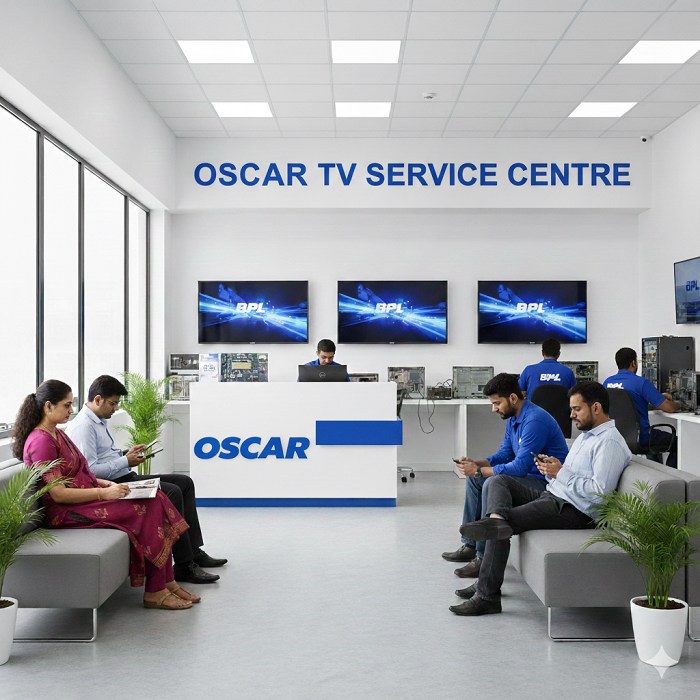
Oscar TV Service Center in Hiranandani Thane can assist with diagnosing USB media compatibility problems when supported files do not behave as expected. Troubleshooting may involve comparing different file types, checking USB recognition, testing compatible media, and examining whether the problem affects individual files or the entire storage device.
A technician can also distinguish between a software-related playback problem and a physical USB connection issue. If several known-compatible files play normally while one particular file fails, the file itself may be the main source of the problem.
This type of comparison helps create a clearer diagnosis before any television component is considered for inspection.
Checking Audio Codec Compatibility
USB playback problems are not always caused by video. A television may display the picture correctly while producing no sound because the audio codec inside the file is unsupported.
This can happen when a media file combines a compatible video stream with an audio format that the television cannot decode. Users may therefore assume that the television's speakers are faulty even though the actual issue is limited to the media file.
Testing another file with a known-compatible audio format can help separate an audio decoding limitation from a television hardware problem.
Checking Image and Video Resolution
Resolution can influence whether a television can successfully decode a media file. A file created at a resolution or frame rate beyond the TV's supported specifications may fail to play correctly, display an error, or produce unstable playback.
Users can compare the affected file with a lower-resolution file. If the lower-resolution file plays normally, the difference can provide a useful diagnostic clue.
This does not automatically mean that the TV has a hardware defect. The television may simply have defined decoding limitations for particular media specifications.
Examining File Names and Folder Structures
Long file names, unusual characters, deeply nested folders, or complicated directory structures can sometimes make media browsing less convenient. Some televisions may have limitations concerning how folders and file names are displayed.
Keeping test files in a simple folder can help determine whether the issue is related to file organization. Renaming a test file using a simple name can also make it easier to identify whether the TV is successfully reading the media library.
Users should avoid changing original files unnecessarily and should maintain backups of important media.
Oscar TV Service Center in Mankhurd
Oscar TV Service Center in Mankhurd can help troubleshoot USB media playback issues when files remain inaccessible despite using compatible storage devices and supported formats. The diagnostic process can compare different USB devices, media files, ports, and playback conditions.
If only certain files fail, their encoding characteristics can be examined. If every compatible file fails, the focus may shift toward the TV's media player software, USB subsystem, or internal hardware.
A systematic comparison can also help determine whether the problem occurs during file scanning, file selection, decoding, or actual playback.
Checking USB Storage Format
The storage device's file system can influence how a television reads its contents. A drive that works normally with a computer may not necessarily be fully compatible with every TV.
Different televisions can support different file systems and storage capacities. If the TV recognizes one drive but not another, comparing their configurations can reveal a compatibility difference.
Users should check the TV documentation before reformatting a drive. Formatting can remove stored information, so important files should always be backed up first.
Testing Multiple Media Files
Testing several files is one of the simplest ways to narrow down compatibility problems. Choose files that differ in format, resolution, and encoding characteristics.
If only one file fails, the problem may be limited to that file. If several files using the same format fail, the format or codec may be unsupported. If almost every file fails, the television's USB playback system deserves closer examination.
This method is useful because it avoids immediately assuming that a television component needs repair.
Checking for Software-Related Playback Problems
Television software manages USB scanning, media indexing, file browsing, and playback. Temporary software errors can sometimes interfere with these processes.
A complete restart may clear temporary system behavior. If the manufacturer provides a compatible software update, following the documented update procedure may also help address software-related compatibility or playback problems.
Updates should be performed carefully and should not be interrupted while the television is installing new software.
Separating Compatibility From Hardware Failure
A USB media problem does not automatically indicate hardware failure. Compatibility should be investigated before concluding that the USB port, main board, or media-processing circuitry is defective.
For example, if one supported video file plays correctly but another file fails, the evidence points toward differences in the media files. Conversely, if no compatible file plays and multiple USB devices produce the same result, television-side troubleshooting becomes more important.
A professional diagnosis can compare these conditions and determine whether further hardware inspection is appropriate.
Checking External Storage Device Behavior
Flash drives and external hard drives can behave differently. Some external drives may require more power or may have different storage configurations that affect how the TV accesses them.
If a flash drive works correctly but a particular external hard drive does not, the difference should be investigated. Power requirements, storage capacity, file system, and compatibility can all contribute to the behavior.
Testing a known-compatible storage device provides a useful reference point.
Safe Troubleshooting Practices
Users can perform basic compatibility checks without opening the television. They can test another USB port, use a different compatible storage device, compare known-supported media files, and review the TV's supported specifications.
The television should not be opened merely because a media file fails to play. Internal repairs require appropriate technical knowledge and equipment.
If USB recognition, file browsing, and playback all show unusual behavior, professional inspection can provide a safer way to identify the underlying problem.
When Professional Assistance Is Useful
Professional troubleshooting is useful when compatible files repeatedly fail, the TV freezes during USB playback, storage devices disconnect unexpectedly, or several USB ports behave abnormally.
Dial Service Centre can help users examine the problem systematically by considering the storage device, file format, codec, software behavior, USB connection, and television hardware.
A detailed diagnosis can determine whether the issue is caused by media compatibility or whether another television function is contributing to the problem.
Preventing Future USB Compatibility Problems
Using storage devices that meet the television's specifications can reduce compatibility problems. It is also helpful to keep media files in commonly supported formats and avoid relying on a single file type when troubleshooting playback.
Keeping television software updated according to the manufacturer's instructions may help maintain compatibility with supported media features. Important files should also be backed up before formatting or modifying storage devices.
Users should note the exact file format, resolution, and behavior when a problem occurs. This information can make troubleshooting more precise.
Conclusion
USB media file compatibility problems can occur even when a television successfully recognizes the connected storage device. Unsupported codecs, video formats, audio formats, resolutions, file systems, storage configurations, and software behavior can all affect playback.
Testing multiple files and storage devices helps identify whether the problem is limited to specific media or involves the television itself. When basic compatibility checks do not resolve the issue, professional troubleshooting can help determine whether software, USB connectivity, or internal hardware requires attention.
Frequently Asked Questions
1. Why does my Oscar TV recognize USB but not play some files?
The file may use an unsupported video codec, audio codec, container, resolution, bitrate, or other media specification that the television cannot decode.
2. Can an MP4 file still be incompatible with my TV?
Yes. MP4 is a container format, and different MP4 files can use different video and audio codecs. The television must support the specific encoding used inside the file.
3. Why does a USB movie show video but have no sound?
The video codec may be supported while the audio codec is not. Testing another file with a known-compatible audio format can help identify the difference.
4. Can changing the USB drive solve media playback problems?
It can help identify the source of the issue. If the same files work from another compatible drive, the original drive's format, condition, or configuration may require further investigation.
5. When should I seek professional help for USB media problems?
Professional troubleshooting is useful when multiple compatible files fail, the TV freezes, USB devices disconnect repeatedly, or several ports show similar playback or recognition problems.
Read Our Previous Blog------>Does Lloyd TV Service Center troubleshoot delayed recognition of external storage devices?

 English
 Arabic
 French
 Spanish
 Deutsch
 Turkish
 Dutch
Dutch
 Italiano
 Russian
 Romaian
 Portuguese (Brazil)
 Greek
Greek
