
Industrial Ball Valve Manufacturing for Pipeline Systems
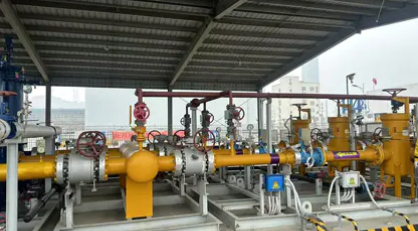
Industrial pipeline systems depend on shutoff equipment that can provide controlled flow isolation while maintaining mechanical integrity throughout repeated operating cycles. A Ball Valve Factory must therefore combine suitable materials, accurate machining, reliable sealing components, and systematic inspection rather than relying on a single manufacturing stage. The production process begins with understanding the intended service environment, including pressure, temperature, fluid characteristics, installation conditions, and operating frequency. These factors influence body construction, ball configuration, seat selection, stem design, and actuator compatibility.
Material selection is one of the most important stages in valve manufacturing. Carbon steel, stainless steel, alloy steel, and other engineered materials may be selected according to the operating environment and required mechanical properties. Carbon steel can support many general industrial pipeline applications, while stainless and alloy materials may be considered when corrosion resistance, temperature performance, or specific process conditions require additional material capability. The body material should also be compatible with the internal components and sealing system to reduce potential problems caused by different thermal expansion characteristics or chemical exposure.
Precision machining has a direct influence on valve assembly and sealing performance. Body cavities, stem interfaces, ball surfaces, and connecting areas must be manufactured within controlled dimensional tolerances. An accurately machined ball provides an appropriate contact surface for the seats, while properly finished stem components help support smooth operation. Manufacturing equipment and inspection instruments must work together to maintain consistency between individual components. This is particularly important when valves are produced in different sizes or configurations for specialized pipeline systems.
The sealing system is another central consideration. Valve seats must maintain effective contact with the ball while allowing the valve to operate without unnecessary mechanical resistance. Seat materials can be selected according to temperature, pressure, chemical compatibility, and expected operating conditions. Proper seat installation is equally important because even high-quality materials can perform poorly if assembly accuracy is inadequate. Stem seals and body connections also require careful attention because leakage control depends on the integrity of the complete valve assembly rather than the ball and seat alone.
Manufacturing quality control normally includes dimensional inspection, visual examination, pressure testing, sealing verification, and functional checks. Testing procedures help identify manufacturing problems before valves enter service. Pressure tests can evaluate body integrity and closure performance under controlled conditions, while operational checks can verify that the stem and ball move correctly. For valves equipped with actuators or other accessories, the complete assembly should also be evaluated to confirm appropriate mechanical interaction.
Production traceability can improve consistency across different manufacturing batches. Recording material information, machining processes, inspection results, and assembly details provides useful documentation for quality management and future maintenance. For industrial buyers, traceability can also support equipment identification when replacement parts or technical reviews are required later.
Application requirements should guide the final configuration. Oil and gas pipelines may require robust construction and dependable isolation, while chemical plants can place greater emphasis on material compatibility and sealing selection. Water treatment, district energy, power generation, and general process industries may have different requirements for temperature, pressure, installation space, and operating frequency. A flexible manufacturing process allows the valve configuration to be matched more closely with the actual pipeline environment.
Maintenance considerations should also be incorporated during production. Accessible components, suitable stem arrangements, standardized connections, and documented inspection procedures can simplify future service work. In demanding installations, appropriate design and manufacturing coordination can reduce unnecessary maintenance interruptions while supporting predictable operation over the equipment lifecycle.
For industrial buyers evaluating valve suppliers, manufacturing capability should be considered together with engineering support, inspection procedures, material control, and application knowledge. A well-organized Ball Valve Factory can integrate these elements from material preparation through final testing, creating a consistent production workflow for different industrial requirements. For additional information about industrial ball valve solutions and product configurations, visit https://www.ncevalve.com/product/ as part of the final equipment evaluation process.

 English
 Arabic
 French
 Spanish
 Portuguese
 Turkish
 Dutch
Dutch
 Italiano
 Russian
 Romaian
 Portuguese (Brazil)
 Greek
Greek
