
How Yakut Knives Are Made: Traditional Forging and Craftsmanship
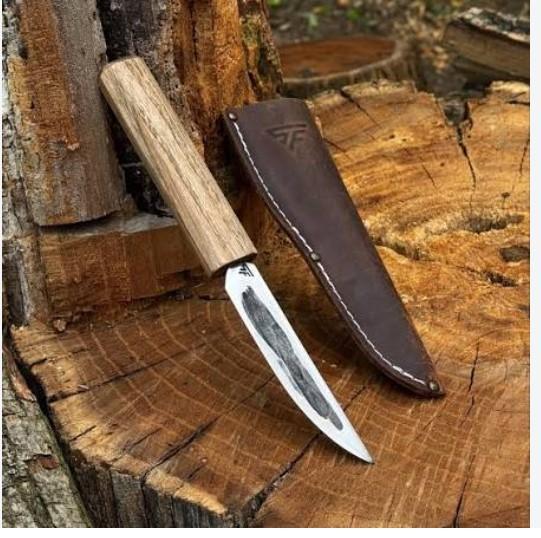
The Yakut knife is a traditional tool of the Sakha people of northeastern Siberia. Its production combines practical design with traditional blacksmithing skills. Although modern craftsmen may use contemporary equipment and materials, many still follow traditional principles when making the blade, handle, and sheath.
The first stage of making Yakut knife is preparing the blade material. Traditionally, blades were made from iron or steel available to local craftsmen. The metal was heated in a forge until it became soft enough to shape. The blacksmith then used a hammer to form the basic shape of the blade.
A special feature of the forging process is the creation of the blade's asymmetrical shape. One side is generally flatter, while the other has a convex surface. The blacksmith carefully shapes these sides to create the characteristic profile of a Yakut knife. Many traditional blades also have a central groove or fuller, which is formed during the forging process.
After the basic shape is completed, the blade is hardened and finished. Heat treatment can improve the strength and durability of the steel. The blade is then ground and sharpened to create a suitable cutting edge. Traditional craftsmen had to rely heavily on experience because the quality of the final knife depended on the correct combination of forging, heat treatment, and sharpening.
The handle is usually made separately. Traditional materials include wood, bone, or antler. Wood is particularly practical because it is relatively easy to shape and provides a comfortable grip. The handle is carefully fitted to the blade so that it remains secure during use. Some craftsmen also add decorative details that reflect local artistic traditions.
Another important part of the process is making the sheath. Traditional sheaths can be produced from wood, leather, birch bark, or combinations of natural materials. The sheath protects the blade and makes the knife easier and safer to carry. Its design can vary depending on the craftsman's traditions and the intended use of the knife.
Modern Yakut knives makers may use stainless steel, carbon steel, power tools, and modern heat-treatment equipment. However, many continue to preserve the traditional asymmetrical blade shape and handmade character of the knife.
The craftsmanship involved in making Yakut knife for sale requires patience and experience. Every stage, from forging the blade to fitting the handle, affects the final quality of the knife. Small differences in shape and proportions can give each handmade knife its own character.
In conclusion, making Yakut knife for sale is a combination of traditional craftsmanship and practical design. The distinctive blade, natural handle materials, and carefully made sheath reflect the traditions of the Sakha people and the environment in which the knife developed. Even as modern tools and materials become more common, traditional forging techniques continue to play an important role in preserving the identity of the Yakut knife.

 English
 Arabic
 French
 Spanish
 Portuguese
 Deutsch
 Turkish
 Dutch
Dutch
 Russian
 Romaian
 Portuguese (Brazil)
 Greek
Greek
