
How Does PRP Hair Treatment Improve Hair Thickness?
Hair thickness can gradually change with age, genetics, hormonal fluctuations, stress, nutritional issues, and different forms of hair loss. When individual strands become finer or the number of visible hairs decreases, the scalp may become more noticeable. This can make the hair appear less dense even when some follicles are still actively producing hair.
PRP hair treatment is one option that may help suitable patients improve the appearance of thinning hair. PRP stands for platelet-rich plasma, which is prepared from a small sample of the patient's own blood. It contains a concentrated level of platelets and growth-related substances that may support the environment around existing hair follicles.
For individuals considering PRP Hair Treatment in Islamabad, understanding how the procedure may influence hair thickness is important. PRP does not instantly create new hair or guarantee complete restoration. Instead, it aims to support existing follicles and may help improve the quality and thickness of hair over time when the follicles are still viable.
What Is PRP Hair Treatment?
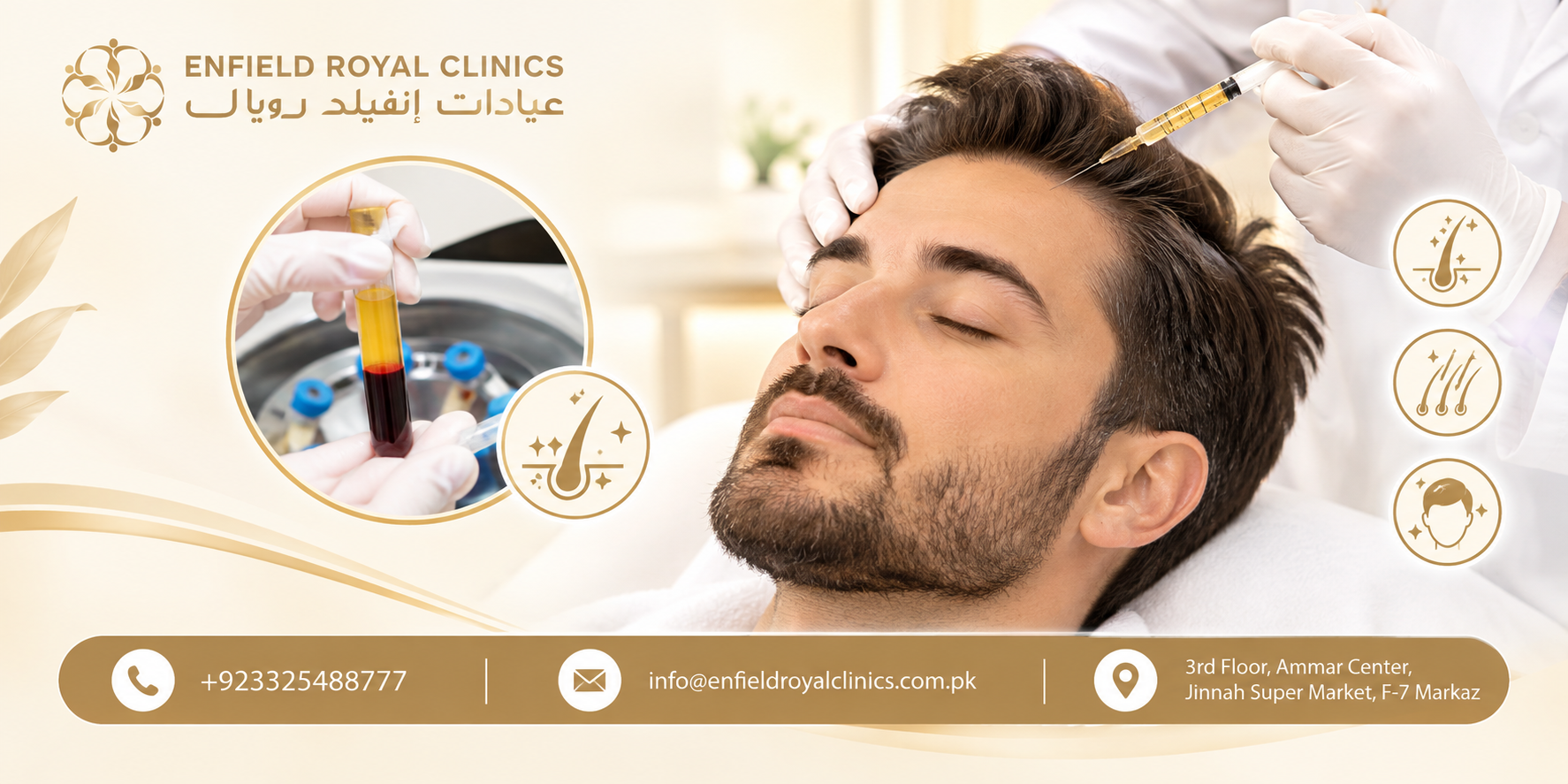
PRP hair treatment is a minimally invasive procedure that uses platelet-rich plasma derived from the patient's own blood. A small blood sample is collected and processed to separate the platelet-rich portion from other components.
The prepared PRP is then delivered into selected areas of the scalp through small injections. Platelets contain growth factors and other substances involved in natural tissue repair and cellular activity.
When used for hair thinning, PRP is intended to create a supportive environment around existing follicles. The treatment may encourage follicles to remain active and support healthier-looking hair growth.
Because PRP works with existing follicles, it is generally more relevant to people who have thinning hair rather than areas where follicles have been permanently lost.
How Can PRP Support Hair Thickness?
One of the main ways PRP may improve the appearance of hair thickness is by supporting weakened or miniaturized follicles. In some forms of hair loss, follicles gradually produce finer strands. These smaller strands can make the scalp appear more visible.
PRP may help support the activity of these follicles and contribute to healthier-looking hair production. When existing strands become stronger or appear thicker, the overall hair can look fuller.
The potential benefits may include:
- Supporting weakened hair follicles
- Improving the appearance of individual hair strands
- Supporting the natural hair-growth cycle
- Reducing the visual appearance of scalp show-through
- Contributing to a fuller-looking hair appearance
The response varies between patients. Hair thickness can be influenced by genetics, age, the cause of hair loss, scalp health, and the condition of the follicles.
Why Does Hair Become Thinner?
Understanding the cause of thinning is an important part of deciding whether PRP may be appropriate. Hair thinning can develop for many reasons, and not every cause responds to the same treatment.
Genetic or pattern hair loss is a common reason for gradual thinning. Hormonal changes can also influence the hair-growth cycle. Stress, nutritional deficiencies, certain medications, medical conditions, and scalp disorders may contribute to increased shedding or reduced hair quality.
In some cases, a person may have plenty of follicles but produce finer strands. In other cases, the number of active follicles may have decreased significantly.
This difference matters because PRP primarily aims to support follicles that are still present. A professional assessment can help identify the likely cause and determine whether PRP fits the patient's needs.
How Is PRP Treatment Customized for Hair Thickness?
Not every patient experiences thinning in the same location or to the same degree. Some may have diffuse thinning across the scalp, while others may notice changes around the crown, hairline, or parting area.
A customized treatment plan can focus on the areas where viable follicles remain. The treatment provider may assess hair density, strand thickness, scalp condition, and the pattern of hair loss before deciding where PRP should be delivered.
The number and spacing of sessions can also vary. Some patients may require a series of treatments, followed by monitoring to evaluate the response.
This individualized approach is important for people seeking PRP Hair Treatment in Islamabad, as a standardized plan may not address the specific pattern or progression of every person's hair loss.
What Happens During a PRP Hair Treatment Session?
A typical session begins with an evaluation of the scalp and hair. The patient's medical history, medications, previous hair treatments, and hair-loss progression may also be reviewed.
A small blood sample is then collected and processed to obtain platelet-rich plasma. The prepared plasma is introduced into selected areas of the scalp using small injections.
Some patients may experience mild discomfort during the injections. Temporary redness, tenderness, swelling, or sensitivity can also occur after treatment.
Because PRP is minimally invasive, there is generally no major surgical recovery period. However, aftercare instructions should be followed carefully. Depending on the treatment plan, patients may be advised to avoid certain hair products, strenuous exercise, excessive heat, or unnecessary scalp manipulation for a short time.
How Long Does It Take to Improve Hair Thickness?
PRP does not normally make hair thicker immediately after treatment. Hair follicles operate according to a natural growth cycle, so changes usually become visible gradually.
Some patients may notice changes in hair texture or shedding before they observe a clear improvement in density. More noticeable changes may take several months.
A series of sessions may be recommended depending on the patient's hair condition and treatment goals. Follow-up assessments can help determine whether the follicles are responding and whether additional sessions are appropriate.
Patients should avoid judging the outcome too early. Hair growth is a slow biological process, and gradual improvement can be easier to recognize through photographs taken at consistent intervals and under similar lighting.
Who May Benefit From PRP for Thinning Hair?
PRP may be considered for adults experiencing certain forms of hair thinning where active follicles remain. It may be useful for people who want a minimally invasive treatment focused on supporting their existing hair.
However, PRP is not suitable for every person with hair loss. Someone experiencing sudden or unexplained shedding may need an assessment to identify an underlying medical or nutritional cause before treatment.
Individuals with certain scalp infections, blood-related conditions, or other health concerns may also require additional evaluation.
A professional consultation can help determine whether PRP is appropriate and whether another hair-loss treatment may be more suitable.
What Results Can Patients Expect?
The goal of PRP treatment is generally gradual improvement in the appearance and quality of existing hair. Suitable patients may notice stronger-looking strands, improved visual density, or reduced scalp visibility.
The degree of improvement differs from one person to another. Some may experience a more noticeable response, while others may see modest changes.
PRP should not be viewed as a guaranteed way to restore all lost hair. It is primarily intended to support existing follicles. In areas where follicles have been permanently lost, another form of hair restoration may need to be considered.
Maintaining good scalp and overall health can also be important. Balanced nutrition, appropriate hair care, management of underlying conditions, and healthy lifestyle habits may complement a professional treatment plan.
Final Thoughts
PRP hair treatment may help improve the appearance of hair thickness by supporting existing follicles and creating a more favorable environment for healthy-looking hair growth. It may be particularly relevant for patients whose hair has become finer or less dense but who still have viable follicles in the affected areas.
For individuals considering PRP Hair Treatment in Islamabad, a personalized assessment is an important first step. The cause and pattern of hair loss, scalp health, follicle condition, and treatment goals can all influence the recommended approach.
PRP does not provide instant results and cannot guarantee complete hair restoration. However, when used for suitable patients with realistic expectations, it may support gradual improvements in hair thickness, density, and overall appearance.
FAQs About PRP Hair Treatment
1. Can PRP make existing hair strands thicker?
PRP may support existing follicles and potentially improve the appearance of hair thickness in suitable patients. The response depends on the condition of the follicles and the underlying cause of thinning.
2. How many PRP sessions are needed for thicker hair?
The number of sessions varies according to the patient's hair-loss pattern, scalp condition, treatment goals, and response. A personalized plan may involve multiple sessions and follow-up assessments.
3. How soon can thicker-looking hair appear after PRP?
Changes generally develop gradually because hair follows a natural growth cycle. Visible improvements may take several months rather than appearing immediately after treatment.
4. Can PRP thicken hair where follicles are permanently lost?
PRP primarily supports existing follicles and cannot guarantee restoration where follicles have been permanently lost. Other hair-restoration options may be considered depending on the individual's condition.
For more information visit Enfield royal clinic in islamabad

 English
 Arabic
 Spanish
 Portuguese
 Deutsch
 Turkish
 Dutch
Dutch
 Italiano
 Russian
 Romaian
 Portuguese (Brazil)
 Greek
Greek
